
The Jesuits in Asia Pacific 2026
Becoming Neighbours

Walking with the excluded
20 years of Yiutsari’s journey with migrant workers
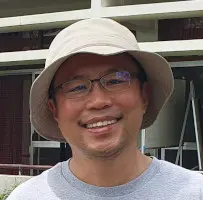
By Juchan Albert Kim SJ
Yiutsari Jesuit Center for Migrant Workers Vice Director
JCAP Migrant & Refugee Network Korea Coordinator
The beginning — a ministry of becoming neighbours
In 2005, the Korean Province of the Society of Jesus recognised the pastoral care of migrant workers as a sign of the times and founded the Yiutsari Jesuit Center for Migrant Workers in Gimpo. Its name, Yiutsari—meaning “being neighbours”—was inspired by the Parable of the Good Samaritan (Luke 10:25–37). The vision was to cross boundaries of nationality, language, and religion and to accompany those most marginalised, especially migrant labourers, not as clients but as neighbours and friends.
The ministry began humbly in a single rented office. Fr Ahn Jeong-ho Isidore SJ, the founder, had studied law before joining the Society of Jesus and was already helping workers with unpaid wages. When a group of Thai workers asked for a place to stay, he opened his community house to them. Later, those same migrants collected their savings to buy him a car, saying, “Father, please use this for your ministry.” That simple gesture revealed what this apostolate is truly about: not one-way charity but shared humanity—the mutual exchange of love and dignity that Jesus called “neighbour”.

Fr Ahn Jeong-ho Isidore SJ with migrant workers
Migrant workers in Korea — a growing reality
When Yiutsari was founded, South Korea hosted about 500,000 migrant workers. Today, there are over 1.6 million—1.2 million documented and around 400,000 undocumented.
The country entered the UN-defined “super-aged society” in 2024 with a birth rate of 0.75. Few Koreans are willing to work in 3D (dirty, difficult, dangerous) jobs. So demand for foreign labour keeps increasing. However, government policy focuses mainly on “multicultural families” and permanent settlers, while temporary migrant workers remain excluded. Their visas are limited to up to four years and 10 months, job transfers are heavily restricted, and access to justice is constrained by language barriers and costs. The state views them as an economic resource. The Church, however, sees them as persons of equal dignity. That difference in perspective defines our mission.
Yiutsari today — A community of shared life
1. Labour counselling
Wages are about dignity, not merely figures.
Unpaid wages in Korea exceeded 2 trillion KRW (≈ USD 1.5 billion) in 2024, affecting some 280,000 workers annually. According to the National Human Rights Commission, migrant workers experience wage theft at rates more than three times higher than Korean nationals due to language and systemic barriers.
Yiutsari accompanies victims through legal claims, petitions to the Labour Ministry, and direct advocacy. Since 2023 the centre has produced 15 five-minute educational videos explaining Korea’s labour standards in six native languages—Cambodian, Vietnamese, Thai, Myanmar, Filipino, and Nepali—so that workers can understand and claim their rights.

In the Parable of the Vineyard Workers (Matthew 20:1–16), the landowner insists on paying each labourer enough to live. Catholic Social Teaching echoes this: Rerum Novarum and Laborem Exercens affirm that just remuneration is a moral duty, for withholding wages wounds both justice and humanity.
As part of its advocacy, Yiutsari convened a policy forum at the Korean National Assembly on “Countermeasures for the Eradication of Wage Theft”. This forum showed how the Church, inspired by the Gospel, can engage in public discourse for justice.
Five members of the National Assembly— including two from the Environment and Labour Committee and one from the Legislation and Judiciary Committee —joined legal experts, migrant centre directors, and officials from the Ministries of Labour and Justice and the National Human Rights Commission’s Migrant Human Rights Team. I presented a paper on the need to enact a Wage-Theft Criminalisation Act. Under current law, wage delays are treated mainly through mediation, not punishment. But intentional or habitual non-payment is a form of systemic injustice.
Wage claims are not ordinary civil debts—they are the foundation of livelihood and dignity. I proposed a step-by-step roadmap distinguishing “simple delay” from “wage theft”, with corresponding sentencing guidelines. In the long term, Korea could look to US states such as New York, California, and Minnesota, as well as Australia and Norway, where wage theft is explicitly criminalised.

2. Shelters
Like the inn of the Good Samaritan
For migrant workers who lose their jobs or fall ill, finding housing in Korea is difficult, especially with no income to pay rent. Yiutsari operates two free shelters for documented and undocumented workers—one above the centre and another in a former Jesuit residence. Both shelters host about 50 men and women from Cambodia, Vietnam, Thailand, the Philippines, Myanmar, Nepal, and even Azerbaijan. They offer rest, safety, and companionship—small “inns” where wounds can heal and hope can return. At night, voices in many languages blend into one shared humanity.

3. Korean-language classes
Learning, eating, and belonging together
Every week about 150 students attend 10 Korean-language classes taught by volunteers. Because space is limited, some classes are held in a nearby parish hall and a local library. After Sunday lessons, over 200 meals are served in the “Rainbow Cafeteria,” so-named to symbolise diversity and unity. Sharing a meal becomes an act of communion—the Gospel lived around a table.
“Over the past eight years of working with migrants, I have come to realise that Yiutsari has become a place of comfort and a warm neighbour for migrant workers. I am always grateful that my small role can make someone’s life a little warmer. That gratitude is what keeps me going in this work.”
Mrs Seo Hyo-jung, Yiutsari Staff (Education Program Coordinator)

4. Medical support
Caring for the body of Christ
For migrants without health insurance, medical costs are tremendous. Yiutsari links them with Catholic hospitals and volunteer doctors and hosts free quarterly medical check-ups at the centre. For those who are sick and unable to work, such accompaniment is often the difference between despair and survival.

5. National communities
Faith in One’s Own or Shared Language
Every weekend, the second-floor chapel hosts community Masses: Vietnamese on Saturday evenings; English-language Masses for the Filipino, Timorese, and Myanmar communities on Sundays; and cultural gatherings for Cambodians, Nepalis, and others on feast days. Praying in one’s own or shared language is not only about devotion but also about recovering their dignity.

6. “Dream Space”
Education for the children of migrants
Though Yiutsari primarily serves workers, the growing number of multicultural families has created new needs. This led to the creation of Dream Space for music, art, and sports programmes led by volunteers. About 30 children of migrant families from nearby neighbourhoods participate. Their laughter reminds us that migrant ministry is also about the next generation.
“I have been volunteering at Dream Space since 2016. Children of different nationalities, languages, cultures, and religions come together here, painting a beautiful watercolour of dreams, love, and joyful laughter. The bright smiles in that picture remind me of the words, ‘Hope does not disappoint us’ (Romans 5:5), inspiring me to begin each day with joy and gratitude.”
Mrs Jeong-ok, Dream Space volunteer

Walking together — Korea, Japan, and the JCAP Network
As the Korean coordinator of the Jesuit Conference of Asia Pacific (JCAP) Migrants and Refugees Network (MRN), I experience how collaboration transforms old wounds into friendship. Historically, relations between Korea and Japan have been strained, yet Jesuits of both provinces now work hand-in-hand in migration ministry. Fr Jun Nakai once publicly apologised for the colonial past, reminding us that as Jesuits, we belong to one body.
Every year, our teams meet alternately in Korea and Japan for dialogue and joint reflection as part of the Social Apostolate gathering. I often joke, “Let’s not fight — let’s get along well!” But behind the humour lies a real spirituality of reconciliation and shared mission.
During the 2024 JCAP Major Superiors’ Meeting in Seoul, the Major Superiors suggested to Fr Nakai, as JCAP MRN Coordinator, the possibility of establishing a formation programme similar to the Pedro Arrupe Summer Course in Oxford in line with the JCAP context. This inspiration led to our plan for the Asia Pacific Summer Course for Migrant and Refugee Pastoral Formation, which will be launched in Manila in 2027. The course will integrate the Gospel, theology, international law, and field experience, forming pastoral leaders from across Asia to discern and act together.

Fr Jun Nakai SJ and Juchan Albert Kim SJ
Yiutsari’s spirituality — The way of the Good Samaritan
The essence of our mission is not “helping the poor” but becoming neighbours. Sometimes it is a slow and hidden work: binding wounds, sharing space, listening without judgement. Yet this is precisely the way of the Gospel. To accompany migrants is to walk beside Christ himself—wounded, displaced, and yet radiant with hope.
To become a neighbour is to see and act from the perspective of migrants and refugees. We are not called to work for them but to work with them. In walking with them, we encounter Christ, who also walks with us. Sharing in His mission, we do not lose heart in trials but continue the journey — together with Him and with our migrant brothers and sisters — as Pilgrims of Hope.

Thanksgiving Mass for Yiutsari benefactors
Next Article: Ex-Preso: Your Fresh Start