
The Jesuits in Asia Pacific 2026
A Chronicle of Renewal
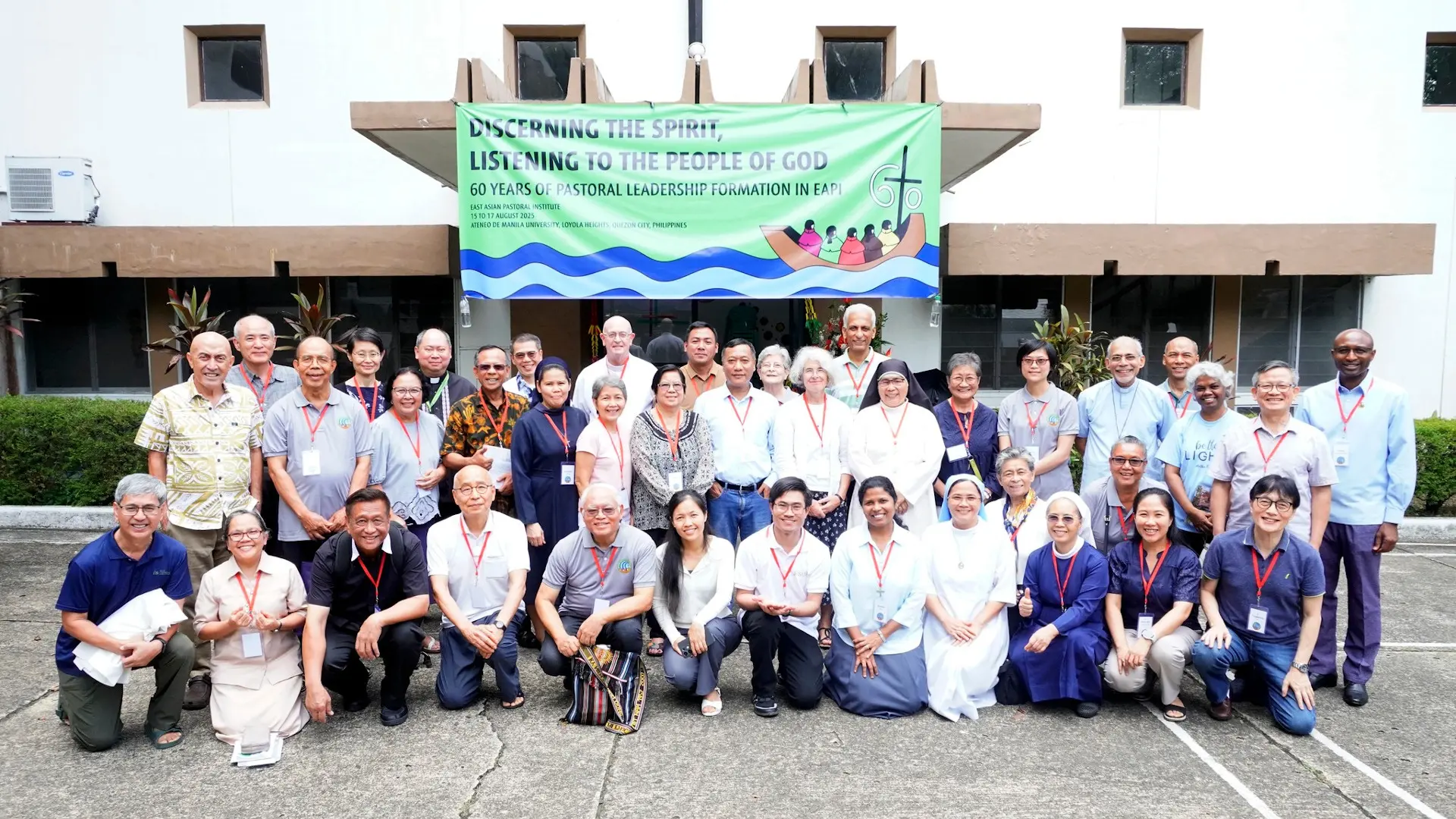
Walking with the church
Looking back on EAPI’s six decades of mission
The East Asian Pastoral Institute (EAPI) has spent over six decades fostering intercultural training for clergy, religious, and laity from across Asia Pacific and beyond, blending liturgical innovation, catechetics, and pastoral leadership development. But before it became Asia’s pioneering hub for pastoral renewal and missionary formation, it emerged from the displacement of Jesuit missionaries in mainland China with the communist takeover in 1949.
Jesuit missionaries, expelled from mainland China, find a new home in the Philippines, settling in a former military barracks in Mandaluyong, Manila.
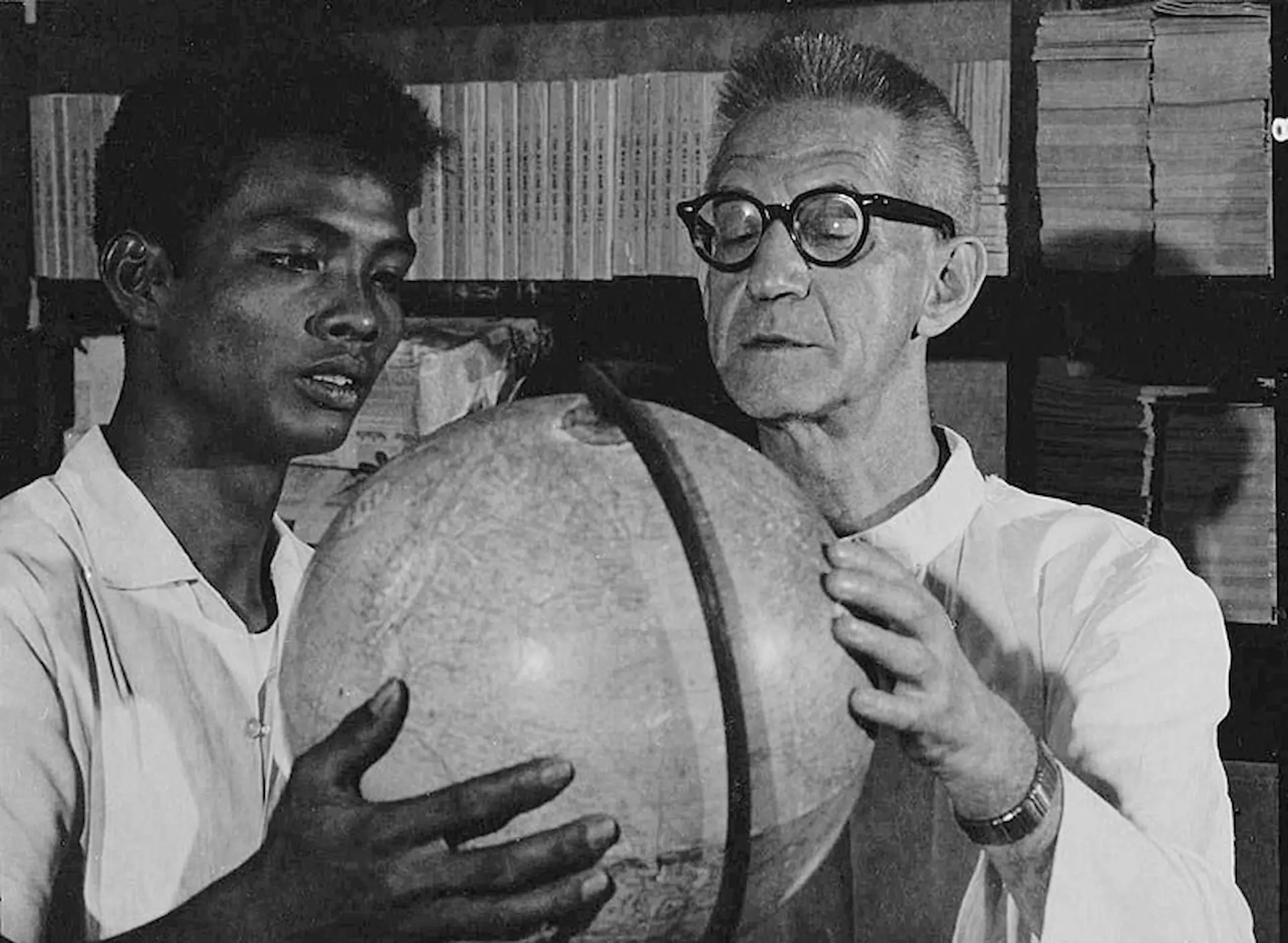
Fr Joannes B Hofinger SJ, an Austrian missiologist, opens the Institute of Mission Apologetics, focusing on liturgical renewal and catechetical or religious education.
Fr Paul Brunner SJ, a founding member, introduces the “Community Mass” ad experimentum in Chabanel Hall chapel for residents of nearby squatter communities. His “Alleluia Singers” gain fame in parishes, turning the chapel into the first centre of liturgical experimentation in the region.
The institute is renamed East Asian Pastoral Institute (EAPI) to reflect a broader pastoral focus, becoming a key resource for missionary training in Asia on liturgical, catechetical updating, and Church missionary aspects. The pioneering team consisted of Fr Hofinger and his four collaborators, who remained with him until 1966, namely, Fathers Paul Brunner, Martin Ramsauer, John Seffer, and Jose Calle.
“One evening in September 1961 Fr (Paul) Brunner and myself were taking a walk with Fr Hofinger around the quarters of Chabanel Hall. He had just arrived from giving several courses in South Africa. At one point he stopped and said: ‘You know, quite a good number of people who attend my lectures, find rather strange the name of our institute. They don’t know what do we mean by ‘Mission Apologetics’. ‘Neither do I’ – I said. That evening of September 1961, among the Quonset huts of Mandaluyong, through a very informal sharing, the name East Asian Pastoral Institute was heard for the first time. And as a result, the EAPI Team was born.”
~ Fr Pepe Calle SJ during EAPI’s 42nd alumni homecoming in 2008
Fr Pedro Arrupe SJ reorganises EAPI as an international formation centre promoting Vatican II’s pastoral vision. He appoints Fr Alfonso Nebreda SJ, a Spanish Jesuit missionary from Japan, as the first director, with Fr Hofinger as assistant director for publications.
EAPI becomes an inter-provincial work of the East Asian Assistancy upon the recommendation of the Jesuit curia in Rome.
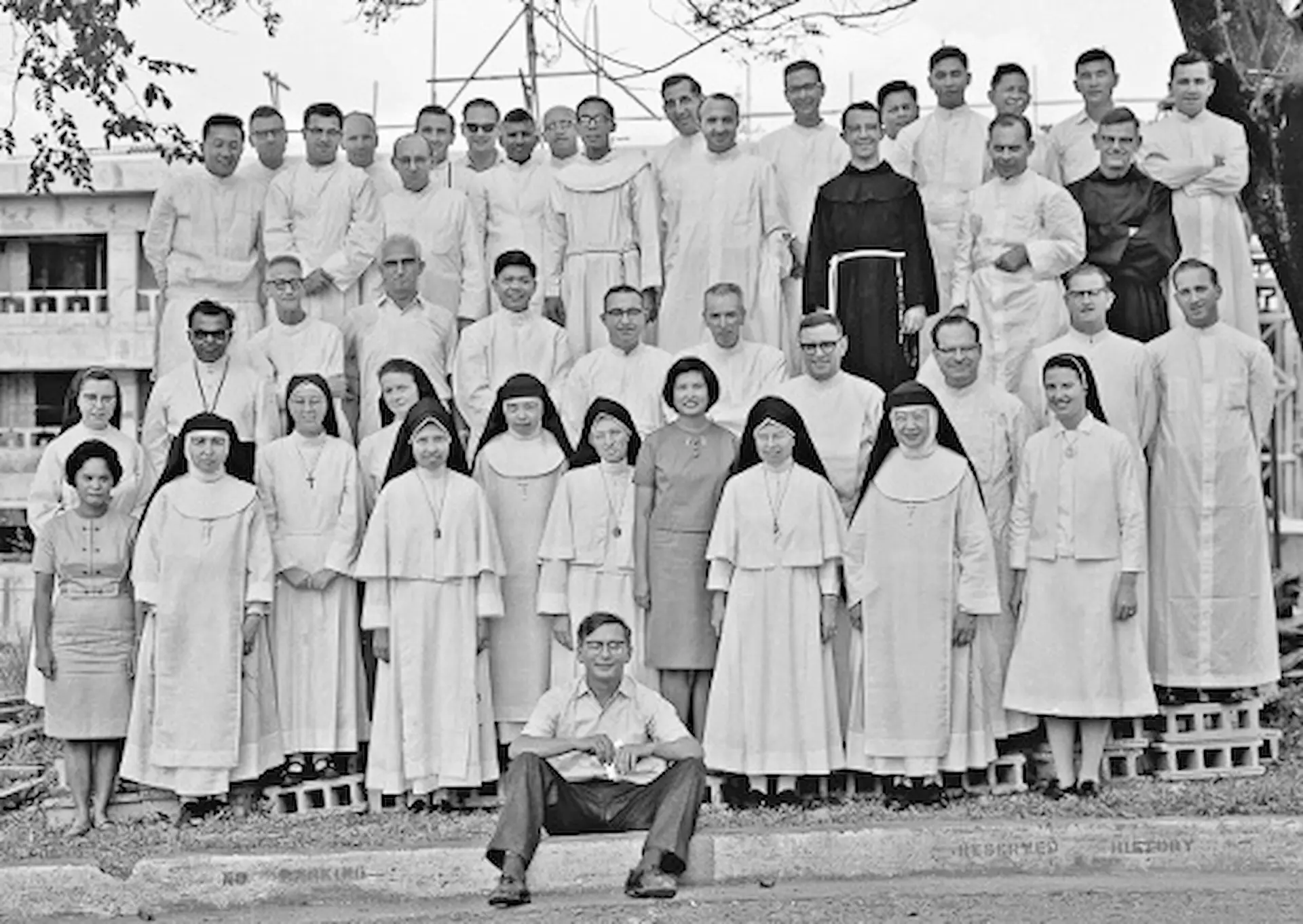
The first pastoral renewal course opens with 37 students, focusing on intercongregational, intercultural, life-in-community formation. Classes are held in Bellarmine Hall of the Ateneo de Manila University campus in Quezon City. Accommodation is scattered on and off campus while facilities are being completed.
“We began the first year of the EAPI in the campus of the Ateneo University on September 15th, 1966, with a group of 37 students from 12 different Asian countries. Average age, late thirties. Most of them bring along some years of missionary experience. To lecture to them is indeed quite challenging. In the final evaluation they were very appreciative for the program offered to them and did enjoyed the rich polyphony of more than 25 different lecturers. They were aware that this was our first experiment and accepted with patience and understanding our lack of proper accommodations.”
~ An entry from Fr Alfonso Nebrada’s personal diary
Teresita Nitorreda, recognised in South East Asia as the pioneer of Experiential Methodology applied to Religious Education, joins EAPI. Her presence and position as a lay woman in the permanent staff is emblematic of a new era.
The International Study Week on Mission Catechetics and Liturgy is held in Manila, following the seminars previously organised by Fr Hofinger in Assisi, Nijmegen, Eichstaett, Bangkok, and Katigondo. More than 150 pastoral experts, including Fr Josef Andreas Jungmann SJ, as well as some Protestant observers gather at the auditorium of the Loyola House of Studies.
EAPI blesses its new building complex at its current location inside the Ateneo de Manila University campus. First Lady Imelda Marcos attends the inauguration. Meanwhile, Fr Francis Clark joins the staff, strengthening administration, finances, and the library.
The staff participates in the International Study Week of Medellín in Colombia. Their inputs are incorporated in the Final Conclusions published in a book entitled Medellín Papers.
Participant numbers surge, fully occupying new facilities, representing 21 nations and missionaries from over 15 congregations. In 1969, Maryknoll’s Fr Jim Gavin initiates one-month aggiornamento courses, leading to 623 participants from 32 regions by 1978.
“In that period of the EAPI history (1968-1970), there was, it seemed, the right blending of talents among the members of the resident staff. For somehow, they were able to create a warm ambiance of mutual trust and graceful acceptance of one another in such a multinational and multicultural group of people. Fr Toni Leetai, of very happy memory, contributed a lot to this spirit.”
~ Fr Pepe Calle, during EAPI’s 42nd alumni homecoming in 2008
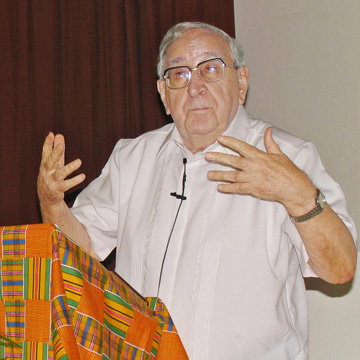
Fr Pepe Calle shares the Origin and Historical Highlights of the EAPI during the EAPI homecoming in 2008
EAPI inaugurates two women’s hostels behind book service (now Community Room), enabling full on-campus living for the first time.
President Ferdinand Marcos declares Martial Law. Despite political tension, EAPI records its largest class, comprising 92 participants from 22 countries. Through intervention by President Marcos and First Lady Imelda Marcos, EAPI receives a special permit allowing foreign students to study in the Philippines with simplified visa procedures.
The first aggiornamento is held for 23 bishops. The EAPI team leads Retreat-Renewal Seminars for clergy nationwide. The Christian Communities Program is launched using environmental, experiential, and communitarian catechesis and later adopted in dioceses across Luzon, Visayas, and Mindanao.
EAPI forms a Central Board, an innovative governance structure including Jesuits, religious from other congregations, clergy, and laity. The model promotes subsidiarity, co-responsibility, and collaboration in church leadership.
The Viêt Cộng expels Fr Felipe Gómez and Fr Roger Champoux from Vietnam; they join the resident staff.
The search ends for a new director: Fr Adolfo Nicolás.
“The long search has ended to the satisfaction of everyone. The new director is a much appreciated theologian in Japan and is well known in other parts of Asia. Here in the EAPI we have made it clear to the superiors that he was our favorite candidate, and are therefore delighted with the choice. His name you know: Adolfo Nicolás, the pioneer of new beginnings…”
~Fr Alfonso Nebrada in his letter for Christmas of 1977
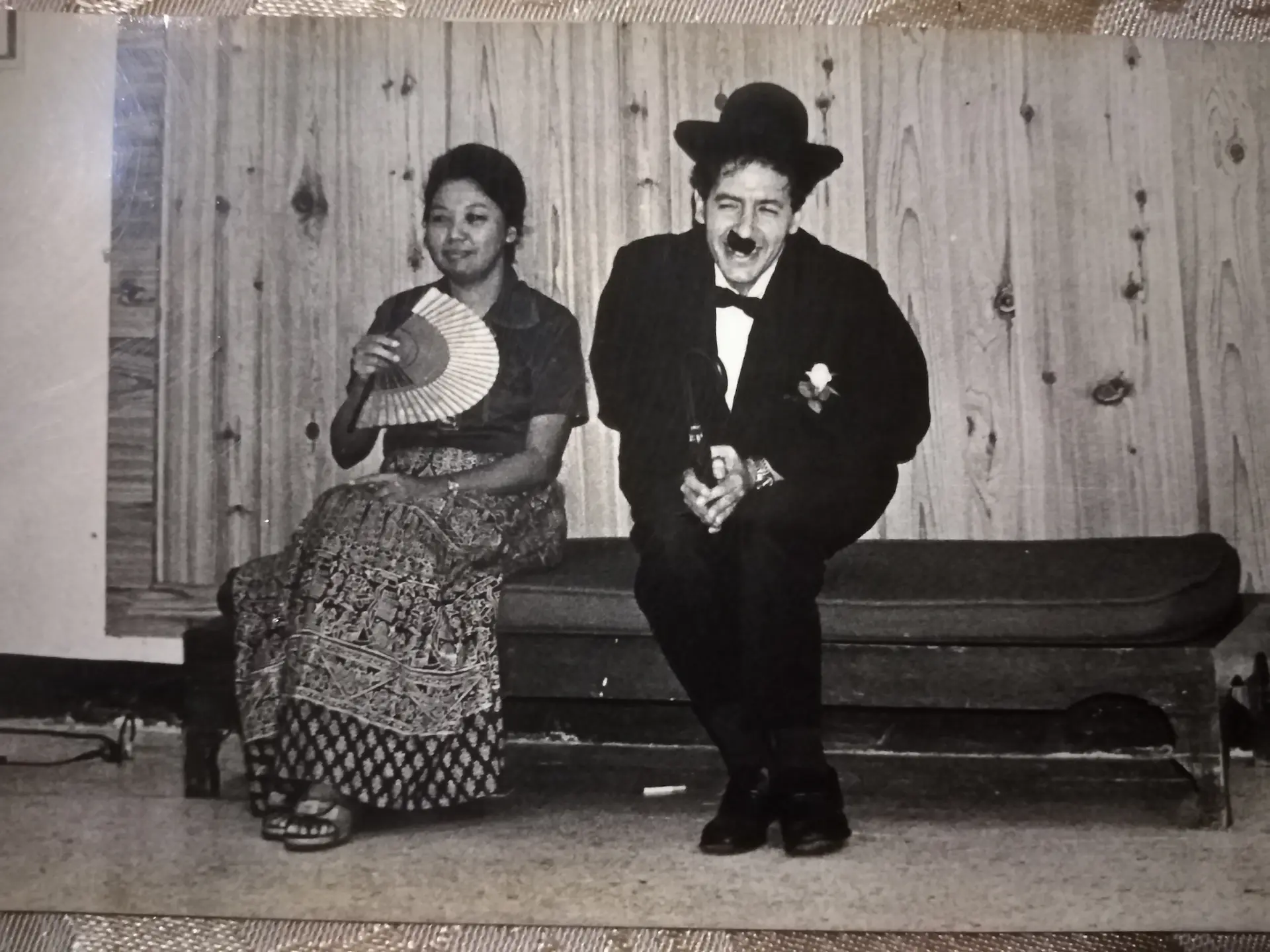
Fr Nicolás as Charlie Chaplin during an EAPI community night | Image from Victoria Faicol
EAPI prepares hundreds of sandwiches for participants of the EDSA Revolution, although foreigners are largely restricted from joining the protests.
EAPI celebrates its 25th anniversary. Training Ministers of the Word (TMW) is started with Fr Herb Schneider and Fr Geoffrey King. Summer programmes expand and EAPI participates in regional biblical federations.
The 90s is a challenging decade for EAPI. Enrollment drops and the institute faces financial strain. EAPI responds by offering shorter programmes and focusing on integration and local church needs.
The English for Formation programme is launched for clergy/religious, blending intermediate English with spiritual formation and adult catechesis.
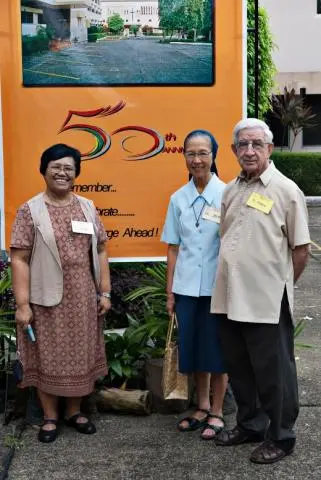
EAPI celebrates the 50th anniversary of its renaming
Four programmes are introduced: Pastoral Leadership and Management for Mission, Pastoral Renewal Programme, and the long and short Flexible Sabbatical Programmes. The Centre for Effective Mission for Asia Pacific is established to provide consultancy and on-site training programmes for local churches in Asia Pacific, primarily for dioceses, religious congregations, lay societies, and other Catholic institutions and organisations.
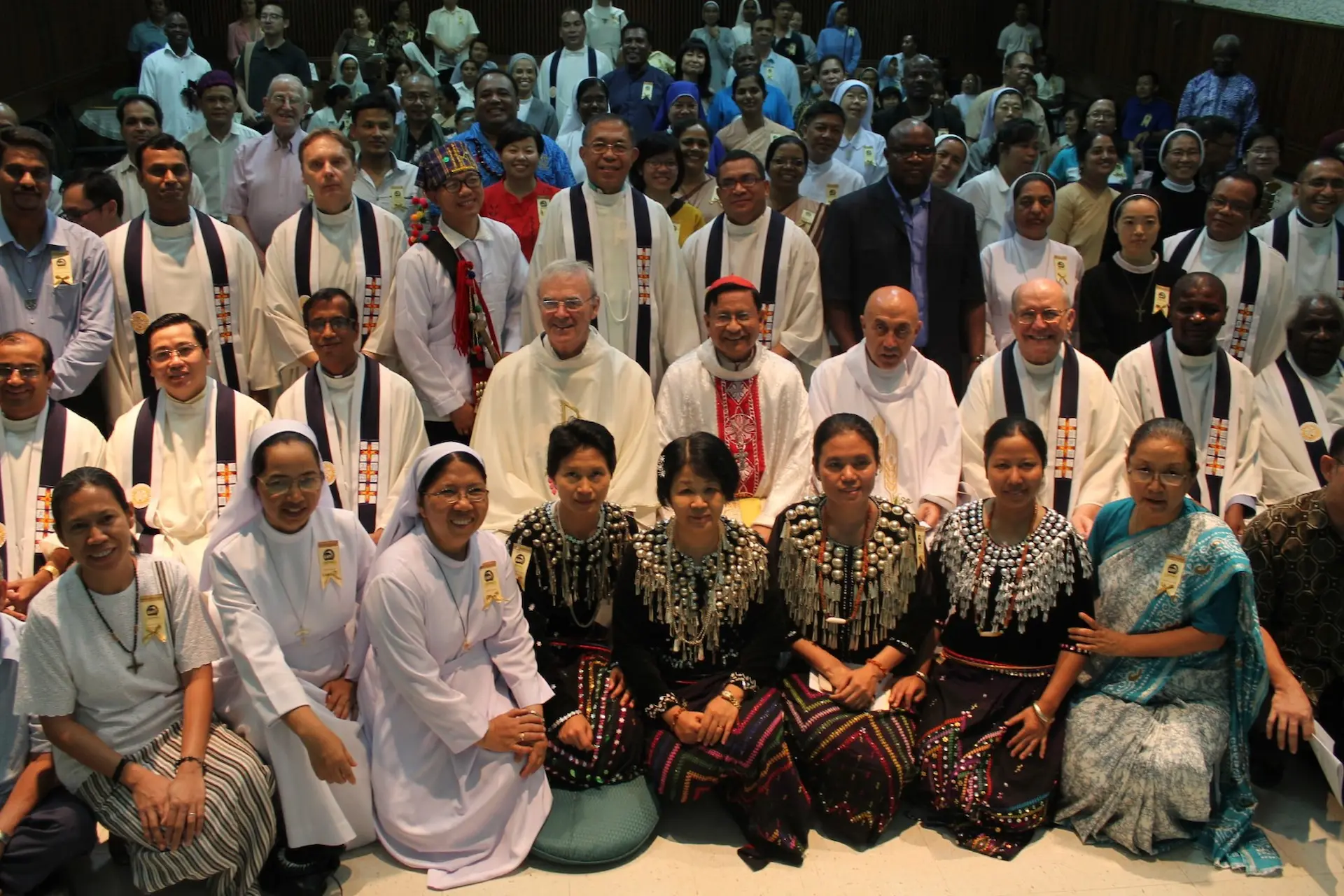
EAPI marks 50 years of Vatican II renewal/aggiornamento programmes. The institute partners with Loyola School of Theology in Manila for a graduate programme in Pastoral Leadership and Management.
“For many priests and church personnel who came from Myanmar, emotionally, spiritually bruised and broken, the stay in EAPI was comprehensively healing… We went back with a great resolve to be better disciples of Jesus.”
~ Cardinal Charles Maung Bo, Archbishop of Yangon and an EAPI alum
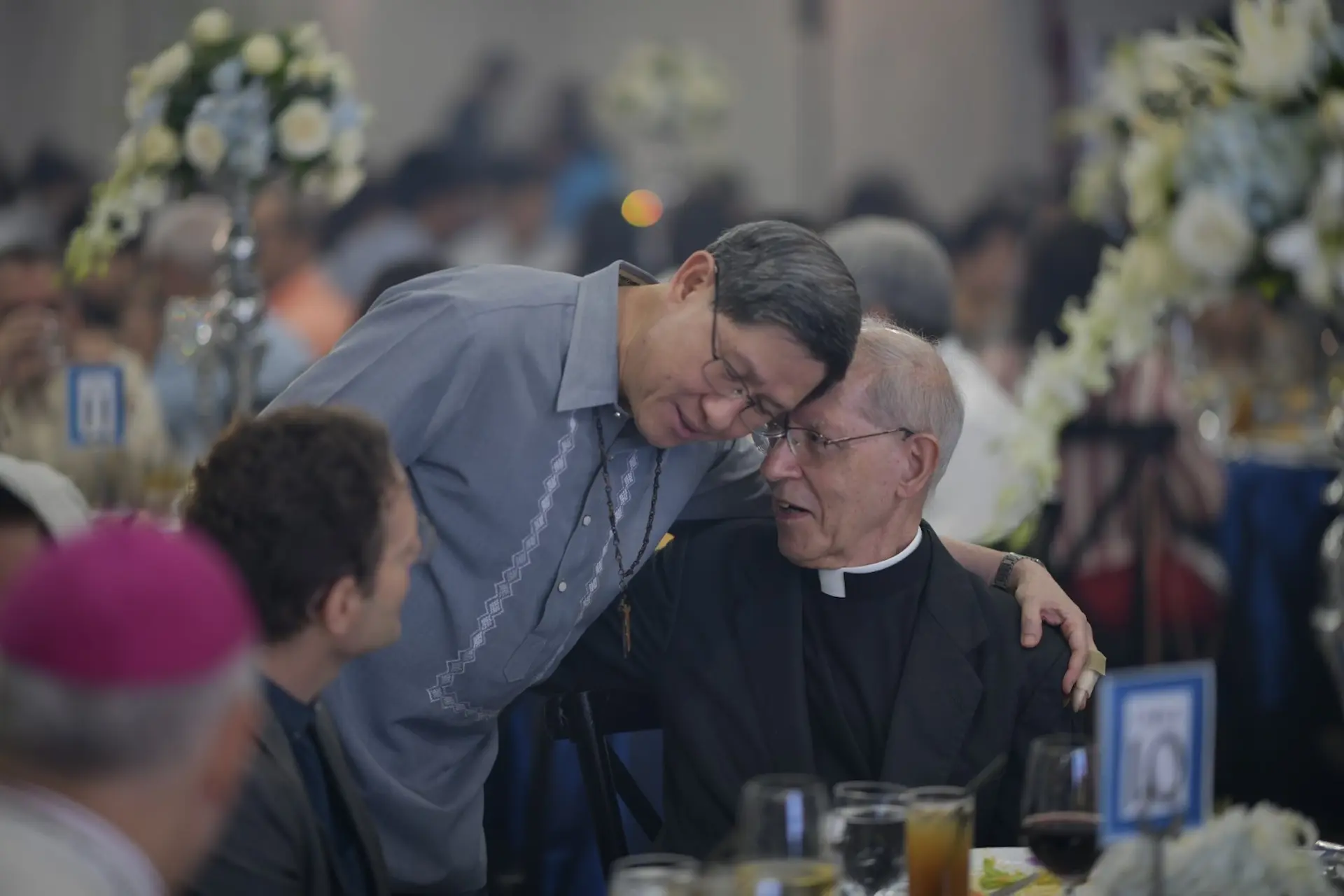
(Cardinal Luis Antonio Tagle with Fr Nicolás at the testimonial dinner )
The Jesuit Conference of Asia Pacific and the Philippine Province host a testimonial dinner for Fr Adolfo Nicolás, Superior General from 2008 to 2016 and EAPI director from 1978 to 1984. EAPI launches the Adolfo Nicolás Endowment Fund, raising approximately US$200,000.
“In my years in Rome, I had the chance to visit almost the whole world. I am convinced now that Asia is the Way, Europeans and Americans are preoccupied with Truth, and Africa and Latin America with Life. We need all the cultures of the World to have the fullness of Christ.”
~ Fr Adolfo Nicolás SJ, Superior General 2008–2016, EAPI director 1978–1984
Asia Pacific Mission Studies (APMS) online journal launches in September, replacing the East Asian Pastoral Review.
EAPI celebrates its diamond jubilee.
Next Article: Planting Roots of Resilience