
 When I ask myself what I am most grateful for in life, the answer is clear: that I was born Indigenous. I was raised with the wisdom of my ancestors and nurtured by a family that continues to live, practice, and protect our Indigenous culture. I consider this one of my life’s greatest blessings, as it grounds me and shapes my sense of identity and belonging.
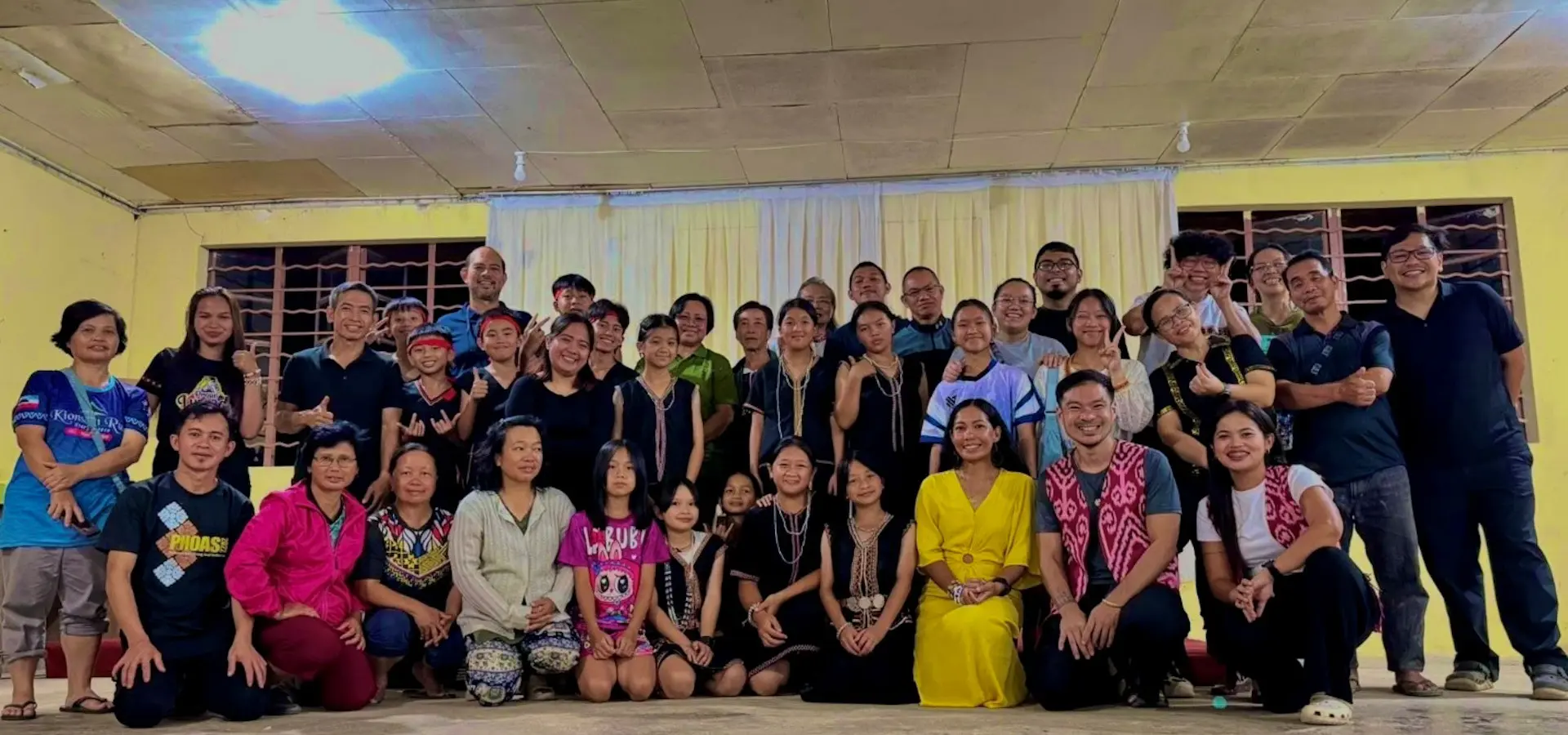
At 22, I had the opportunity to travel to Malaysia through the Asia Pacific Contextual Theology for Engagement Program (ACOTEP), where I immersed myself in the lives and realities of other Indigenous communities, particularly in Kiau Nuluh and Penampang.
What I experienced touched my heart deeply. I witnessed their unwavering commitment to protecting the environment and preserving their culture. The youth and elders worked hand in hand, sharing responsibilities and wisdom. They demonstrated a profound understanding of Kadazandusun cosmology and ecology—their environment was not just a resource but a sacred part of their spiritual life.
Their efforts to safeguard their heritage were evident in their cultural museum, which showcased their traditions and history. They documented their rituals to ensure preservation for future generations. They established an organisation for boboilans (spiritual leaders), where elders mentored the youth. They embraced both Kadazandusun spirituality and the Catholic faith.
I asked Boboilan Angelica how she reconciles her Indigenous culture with her Catholic faith, a question that had long lingered in my heart. As an Indigenous Catholic, I have met people who say that Indigenous spirituality and Catholicism cannot coexist.
Boboilan Angelica admitted that she had doubts at first, wondering whether the two faiths could live together. But through the guidance of leaders like Fr Jojo Fung SJ, who has spent decades studying Indigenous spirituality, she came to understand that there is no contradiction. Catholicism, rather than undermining her Indigenous values, strengthened her resolve to safeguard them.
She said with conviction: “I am proud to be Kadazandusun, and Catholic.”
As I took it all in, a heaviness settled in my chest. I felt a pang of jealousy. I envied their strong faith, their forests, and their children, who would grow up knowing who they are and where they come from.
Then, I thought of my own community, my own country, where social, cultural, and environmental divisions run deep. The weight of these challenges pressed upon me, and I asked myself a hard question: Am I too young to carry the burden of these struggles? Or am I already too old to ignore them?
I realised an important truth: there is no age for responsibility. No one is too young or too old to care, act, or lead. Being Indigenous is not a privilege—it is a responsibility.
 Even in moments of doubt, I know I am not alone. I have the support of my tribe, elders, fellow youth, and family. I am the daughter of a Tribal Datu and Ritualist. I am guided by the spirits of my ancestors.
Anyone can claim to be Indigenous, but the real question is whether we have done something to uphold and strengthen our Indigenous culture. This is my challenge and my inspiration.
I want my fellow Indigenous youth and community to understand that our culture and our Catholic faith do not have to be in conflict. They can coexist, uplifting and strengthening each other. Through this understanding, we can heal divisions, reclaim our identity, and rise in unity.
I pray that I may become a light to others, helping them see that our faith and our culture are not enemies.
I am blessed to walk alongside Jesuit priests, who do not journey with us as outsiders but as true companions in our struggle and growth.
Through this experience, I am reminded that I always carry with me my identity, faith, and calling—to walk with my people, speak truth with love, and protect what is sacred.


