

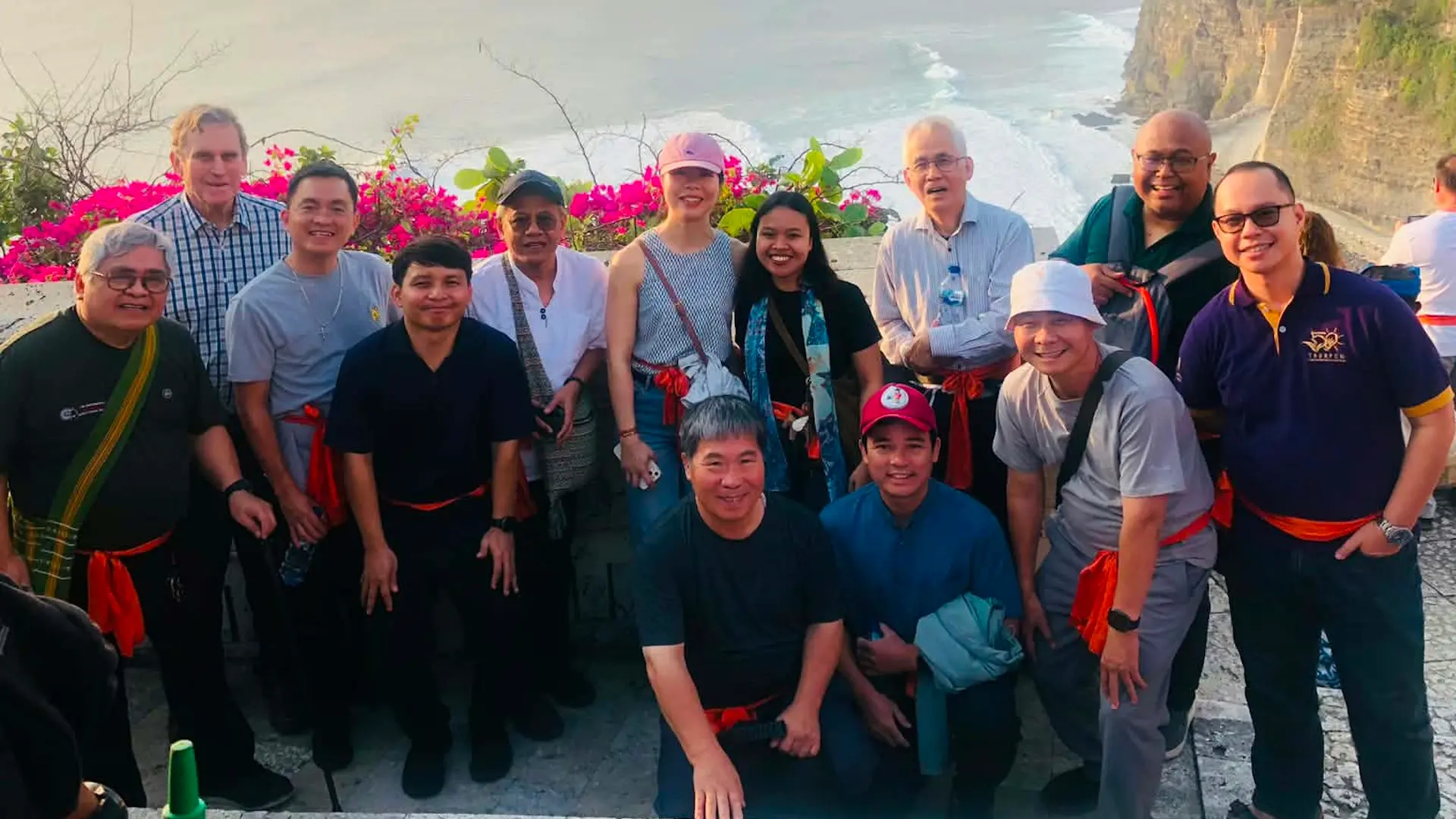
 From 7 to 10 September, the treasurers of the Jesuit Conference of Asia Pacific (JCAP) gathered at the Catholic Center Denpasar in Bali, Indonesia for their annual meeting. This came after months of deliberation on whether to hold the meeting online or onsite. It was finally decided to have a face-to-face meeting, given the importance of the central topics that would benefit greatly from in-person interaction.
The gathering, hosted by the Treasurer’s Office of the Indonesian Province and headed by Fr Andreas Mantiri SJ, began with talks from two resource persons. Fr Klaus Heinrich Radito SJ, a newly ordained Indonesian Jesuit who pursued a diplomatic career before entering the Society, spoke on the “Geopolitical Realities and Regional Dynamics in Asia-Pacific”. Dr Agustinus Prasetyantoko, an Indonesian economist and scholar and former Rector of Unika Atma Jaya, shared his insights on “Regional Macroeconomic Volatility and Institutional Treasury Implications”.
The scholarly and well-researched inputs provided JCAP treasurers, as stewards of the Society’s temporal goods, with a perspective on how macro-geopolitical and economic forces influence regional financial stability and practical frameworks to refine institutional financial risk assessments, foreign exchange management, and long-term asset allocation across JCAP provinces.
The first major topic for discussion was the proposed conference-level common health care fund, in response to Father General’s letter dated 10 March 2025. The letter instructed the major superiors to engage in a serious process of discernment to find a way to assist units with insufficient funds for health care and to determine a fixed amount from the surplus to be sent to the General Curia. Several important points were raised during the discussions. There was prior consensus on setting up a common Conference Health Care Fund, with the provinces and regions making initial commitments to contribute to the fund.
The questions raised were:
- What units will need the most assistance?
- How can the other units benefit from the common fund?
- What other forms of sharing resources can be made aside from unit contributions?
- What will be the target amount for the fund, and how will it be determined?
 After three rounds of spiritual conversation, the units identified as most in need of assistance were Thailand, Timor-Leste, and Myanmar. It was also noted that other units could benefit from the fund if a portion were set aside as an emergency fund to respond to urgent funding requests. Possible beneficiaries of the fund would include Jesuit missionaries assigned to common JCAP missions like Pakistan, whose health care needs may not be covered by their mother provinces, and Jesuits sent abroad or outside the conference for studies or Regency. It was also proposed that the units avail themselves of their respective countries’ health care and pension plans as part of their overall health care planning. The treasurers agreed to hold a follow-up online meeting to finalise the proposals after gathering additional data and information from their respective units.
On the topic of the conference Solidarity in Formation (SIF) Fund, which was extended from 2025 to 2028, it was proposed that unit contributions be further extended for another year, until 2029. This is intended to allow the Arrupe International Residence trust fund to mature to a more financially self-reliant level, with less dependence on the Roman Curia. At present, about 70 per cent of the annual budget of the JCAP scholarship fund is covered by the Global SIF fund and 30 per cent from JCAP sources. By 2030, it is projected that JCAP, through a proposed realignment of contributions from the provinces and regions, can cover the greater portion of the programme expenses for scholastics supported by the JCAP scholarship fund.
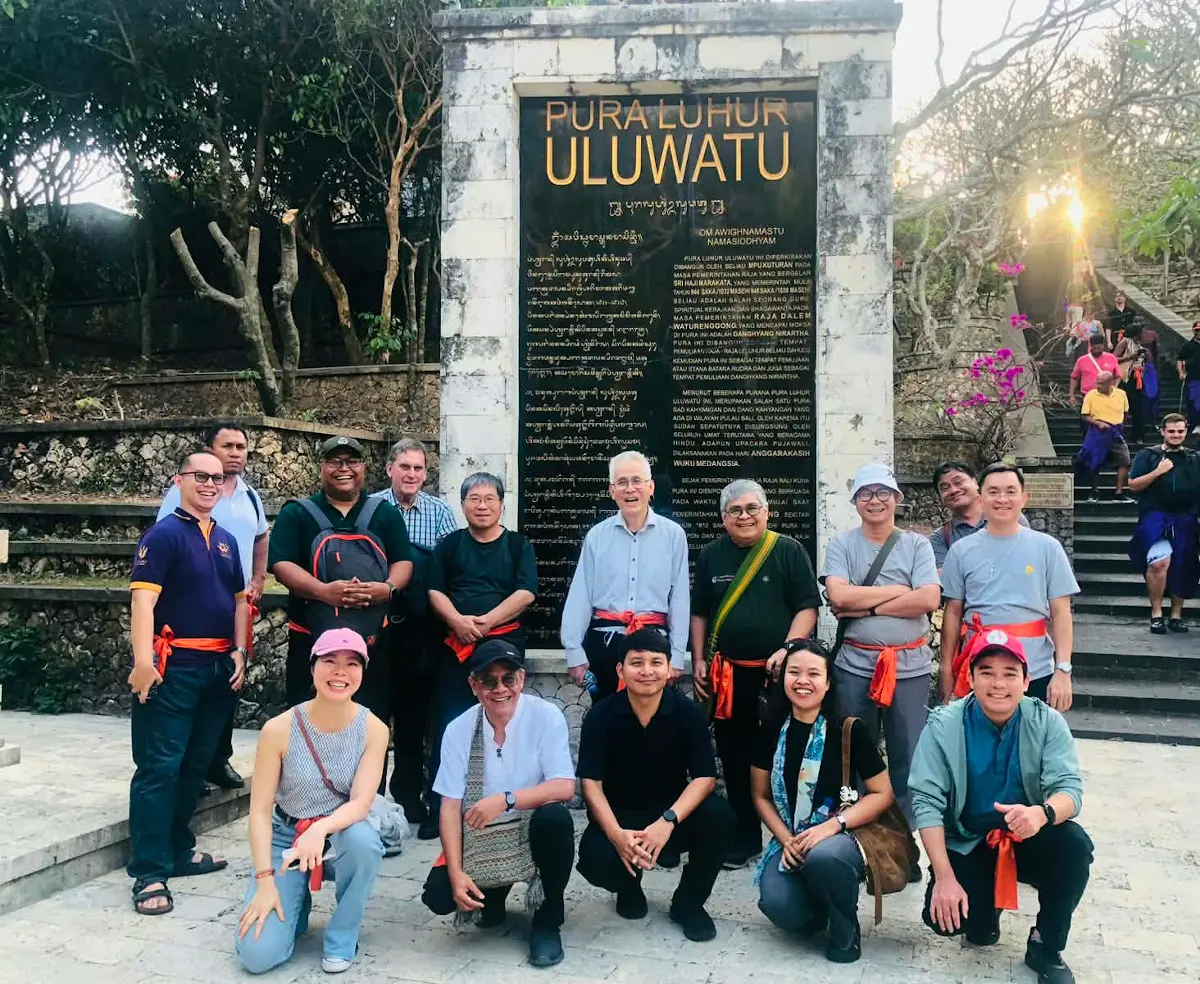
JCAP treasurers meetings are never complete without the host treating the group to an organised tour and outing. The first activity on the itinerary was watching the Tari Kecak, a fire dance inspired by a sacred Balinese ritual, followed by a trip to the Monkey Forest in Ubud and its famous Art Market. The tour was capped by a visit to the Penglipuran Village, a traditional Balinese village depicting native Balinese architecture and reflecting much of the local culture and Hindu tradition, fittingly, old and authentic Bali in a nutshell.