

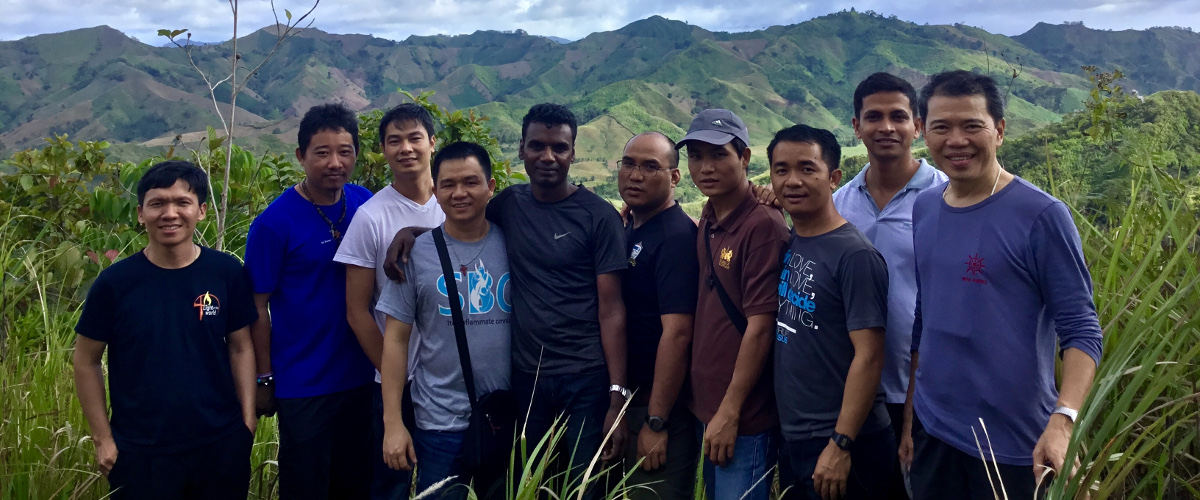
 While on school break in January, a group of us from Arrupe International Residence travelled to Bendum in Mindanao for a workshop on reconciliation with creation. From the busy and hectic atmosphere of Metro Manila, we were refreshed and reenergised by the forests and natural springs of Bendum and inspired by our encounters with the indigenous community who warmly welcomed us into their village. The chieftain called a “datu” led the ritual by offering a chicken and inviting us to partake in the sacrifice as a symbol of a host welcoming his guests.
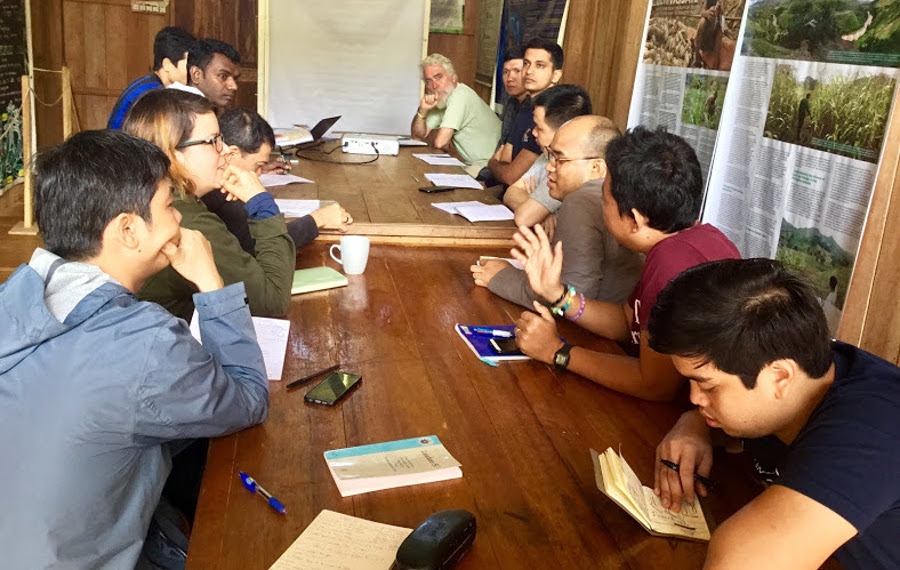
After our formal acceptance into the community, Fr Pedro Walpole SJ, Research Director at the Environmental Science for Social Change of the Philippine Jesuit Province, began his discussion on Laudato si’. He stressed the spirit behind the Holy Father’s encyclical on the Care for our Common Home. It gave a lot of affirmation and consolation to the local community in Bendum to know that they are understood and recognised by the Church through the document. The discussion highlighted a call to action with confidence, simplicity and solidarity. There is no need to fear; time is greater than space; we are invited to act at any time with gratitude and respect to the ancestors of the land. Simplicity of life is a process, not a checklist, said Fr Walpole, who is also Coordinator of the global Jesuit network for Ecology (EcoJesuit).
 We visited a nearby village called Nalumusan where corn has become the main source of income. Within the last few years, the surrounding mountains in the village have been turned into corn fields with hardly any big indigenous trees left. The soil is now overused and over-drained with chemical fertilisers and pesticides to facilitate corn harvest thrice a year. There have been landslides and the Pulangi river has been contaminated. The people long to return to organic farming, yet they are not able to do so because of financial challenges and higher demands from the market.
The situation in Nalumusan contrasts sharply with Bendum, where the community is free to choose to grow a variety of crops and vegetables. The locals are not pressured to meet the demands of the market. Instead, they value the forest and the whole biodiversity. They share an ancestral land, which they treat respectfully in honour of their ancestors, and make a tremendous effort in teaching and living out eco-agriculture.
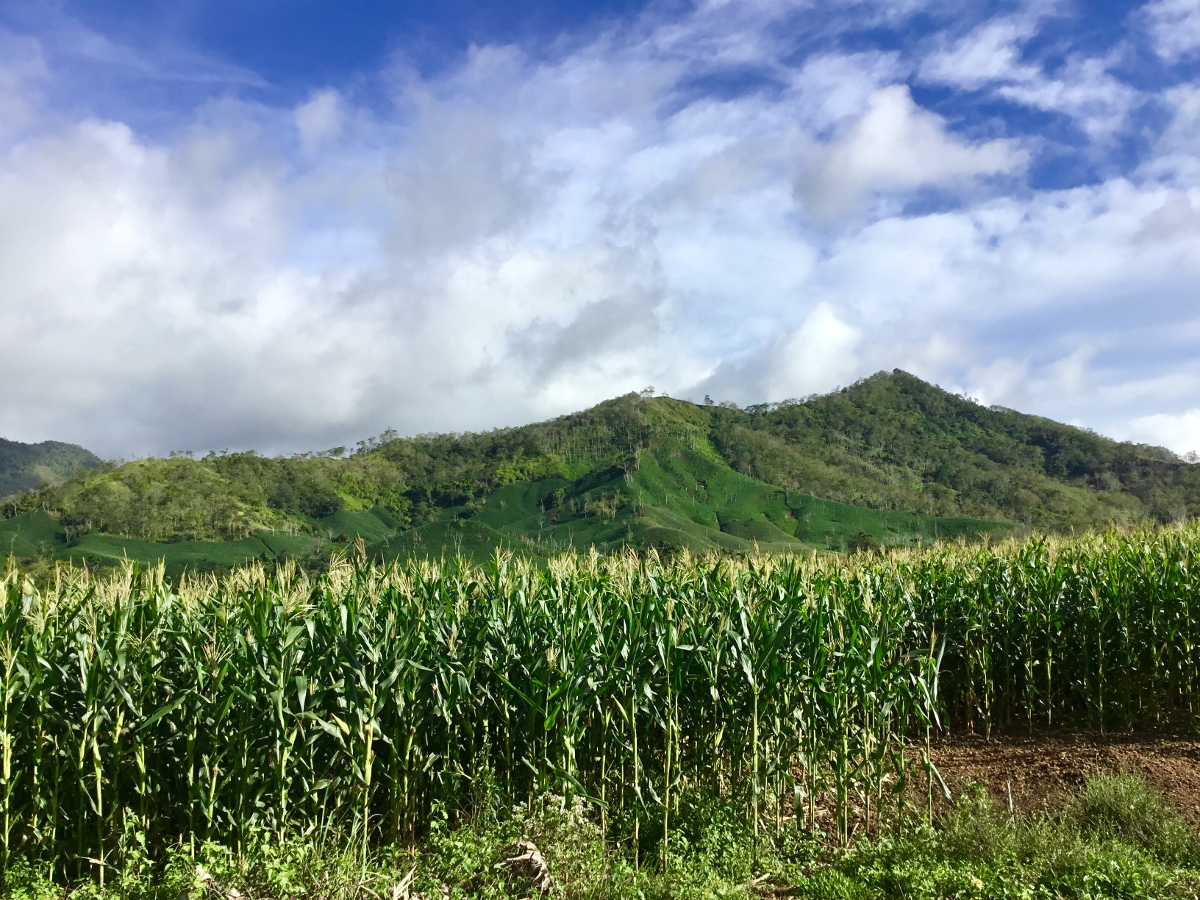
In Nalumusan, trees have been cleared to make way for a corn plantation
Walking in the forest and smelling the forest fragrance, we learned how the forest is replanted regularly with curtain trees to help stabilise the temperature needed for the growth of the plants and trees. We saw with awe and admiration a forest with cooler temperature alive with various kinds of trees, bamboos, canes, vines and plants. It is no longer a jungle, but remains instrumental in regulating temperature and rainfall necessary in keeping the moisture needed by smaller plants and trees to grow. A Well-planted and well-protected forest helps regularise rainfall. The water flows and forms a spring supplying the community with fresh water. What impressed us even more was the knowledge, wisdom and ownership of the local community, and their hopes and dreams for the forest as their common home.
We were given a tour of the school for the indigenous children. Although the students were still away on Christmas break, the school atmosphere was very homey with mostly wooden buildings surrounded by trees, farms and animals. Their curricula integrate the reality of the day to day life of the community in order to help the students find meaning and significance in their studies. The school should be able to help the students appreciate cultural and farming values rather than other things.
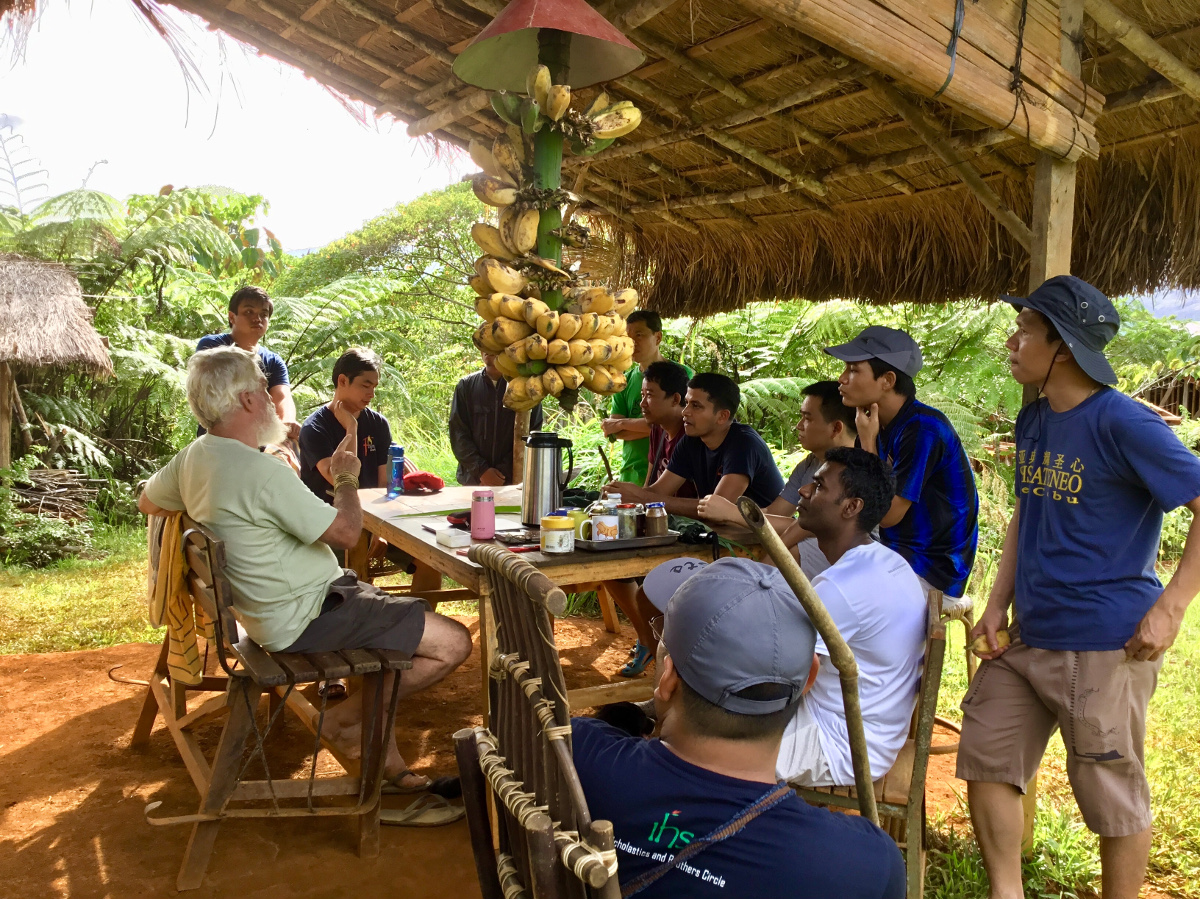 The whole experience made our break more meaningful in many perspectives. It affirmed and encouraged us Jesuits in formation on a personal and communal level to continue the learning process of simplicity and enough-ness with satisfaction, gratitude and solidarity. We were also motivated to continue appreciating and valuing the differences in cultures and rituals, different ways of living and doing according to specific contexts. It is a joyful and consoling moment to be able to spend time with our brothers in Christ to witness and celebrate this ministry together. The Society of Jesus has done a lot in collaboration with the local community and more things are in the growth process. The mission in Bendum is heroic and one that is in the peripheries, indeed.


