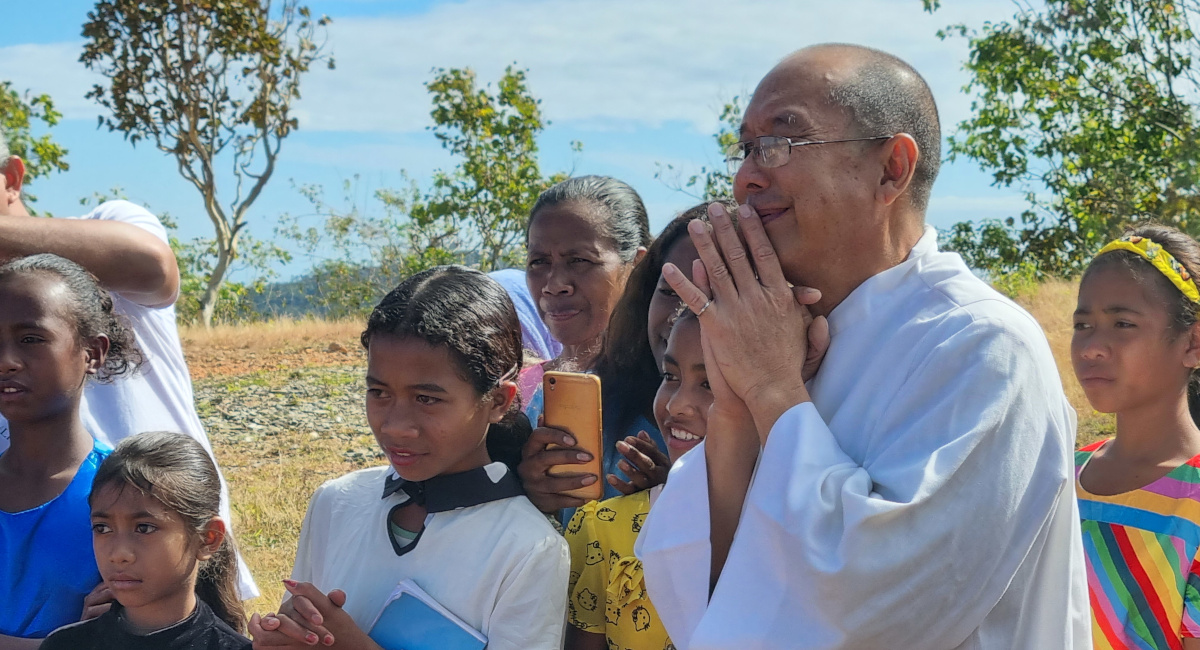
 “Welcome to East Timor! Ang inet! Kumain ka na? [It’s so hot! Have you eaten yet?]” greeted a man wearing khaki cargo shorts and a cheeky grin as I arrived at the Aeroporto Internacional Presidente Nicolau Lobato in Dili for my two-week immersion. I had met him once when I was in the novitiate, seen him on vocation promotion posters, and heard countless stories about his work in Timor-Leste.
When I first began my journey as a Jesuit, our recruiters from the vocation promotions team would recount stories of Filipino Jesuit missionaries to inspire us to “go where there is greater need”. Fr Martin Antonio “Bong” Abad Santos’ story was one of them. A medical doctor and the grandson of the Filipino World War II hero Jose Abad Santos, Fr Bong was missioned to Timor-Leste 20 years ago, when the country was still emerging from its decades-long struggle for independence.
Fr Bong arrived in Timor in 2002, along with a fellow Filipino Jesuit, Fr Samiel “Sammy” Dizon SJ. The locals remember their arrival with a sense of urgency, as if there was no time to spare. They went directly from the airport to their mission area in Railaco, about 27 kilometres from Dili, with a vibrant and thriving Catholic community in dire need of a priest. Fr Bong immediately started his medical and feeding mission to assist the community in the far-flung mountain villages in Ermera, while Fr Sammy wasted no time establishing the parochial school adjacent to the parish church. Both served as pastors for the mission chapel.
Fr Sammy is now 90 years old and back in the Philippines, where he prays for the Church and the Society while Fr Bong is still in Railaco, running his mobile clinic and feeding programme.
 Throughout his years in Timor, Fr Bong has tirelessly driven around the mountains, making his way through zigzagging roads to bring spiritual and physical healing to people in very remote villages. I accompanied him one such afternoon. As I hopped into one of his trucks, I noticed that the other vehicle was laden with boxes, and a Timorese lady was diligently inspecting the contents. Apparently, every time Fr Bong goes on a medical trip, he brings with him a rolling pharmacy, and the young lady was a volunteer pharmacist.
As we passed through isolated villages, I noticed how the people knew the sound of Fr Bong’s truck. Children would run and wait for his truck to pass by, flash their smiles and wave to the car, shouting, “Bom dia, amu!” which means “Good morning, father” in Tetum. One child even shouted, “I love you, amu!” Fr Bong laughed. He is used to all this affection. After all, he has been doing medical missions since long before those children or even their parents were born. In fact, his involvement goes back to his days as a novice in the Philippines, when he offered medical help and consultation in Sapang Palay. “I also did this when I was in Zamboanguita in Bukidnon as a young parish priest. I’ve been doing this for a long time now,” he said.
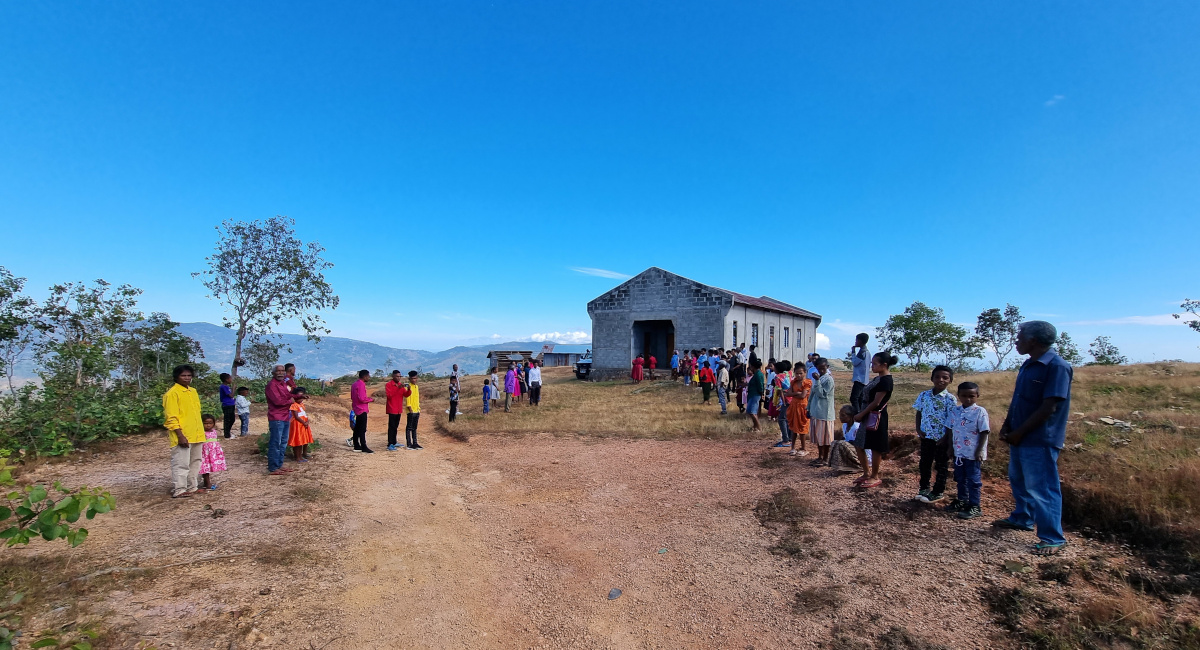
After a little headbanging and very sharp turns, not to mention the death-defying feat of crossing a newly constructed bridge built by the locals from wood and mud, we finally arrived at a small chapel perched on top of a lonely hill. From a distance, we could see Mount Ramelau, Timor-Leste’s highest peak. Around us were coffee plants, the locals’ primary source of income. As I got off the truck, I saw the kids running towards Fr Bong. From the horizon, more people were walking towards the brow of the hill where the chapel was located. The other truck opened, and I realised it was a complete pharmacy! For a moment, I remembered my frustrated desire to be a medical doctor.
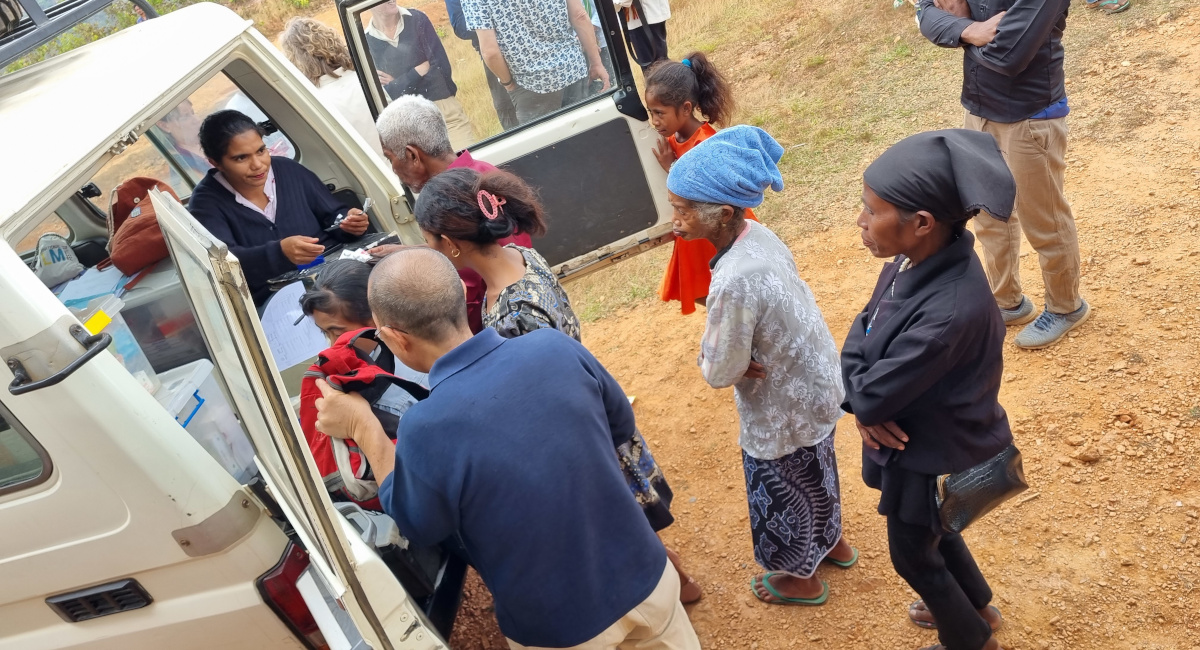 I asked Fr Bong about the process of providing free medical consultation and medicine. He smiled. “Confession first. Then Mass. Medicine later,” he said with a wink, donning his alb and purple stole while walking away. “Then, lunch after!” he called out, laughing as he entered the chapel. Around 20 penitents were already waiting for him. The rest of the congregation, around 70 of them, sat on the pew or on the floor. Ellie, a French nurse whom I had met at the airport, saw me and seemed to notice my thoughts. “This is what we do every day,” she said. “A holistic kind of healing. First the soul, then spiritual nourishment, before we heal the body. He’s a priest first before a medical doctor. A healthy lunch comes after everything.”
After the confession and the Eucharist (accompanied by beautiful singing), the chapel seamlessly transformed into a functioning clinic. Someone handled the registration while two nurses recorded the patients’ vital signs. Fr Bong had his own station, with Monobloc chairs stacked together and adapted as a table, where he wrote his prescriptions and reports. Outside the chapel, the pharmacy was ready to extend its services to those in need. The mobile clinic lasted for about two hours. Families, children, and the elderly queued to consult with either Fr Bong or Dr Maria Ha, an Australian volunteer doctor. Many of the patients left without a prescription, but those who needed medicines could easily get them from the mobile pharmacy.
At times, I would go closer to observe Fr Bong’s approach. Speaking in Tetum, he would ask how or what the person was feeling–typical for a medical doctor. But on one occasion, instead of writing a prescription, he started drawing symbols, which to me resembled a sun and two circles. Apparently, the old lady could not read, and Fr Bong had an inventive way of making her remember the correct timing and dosage of her medication.
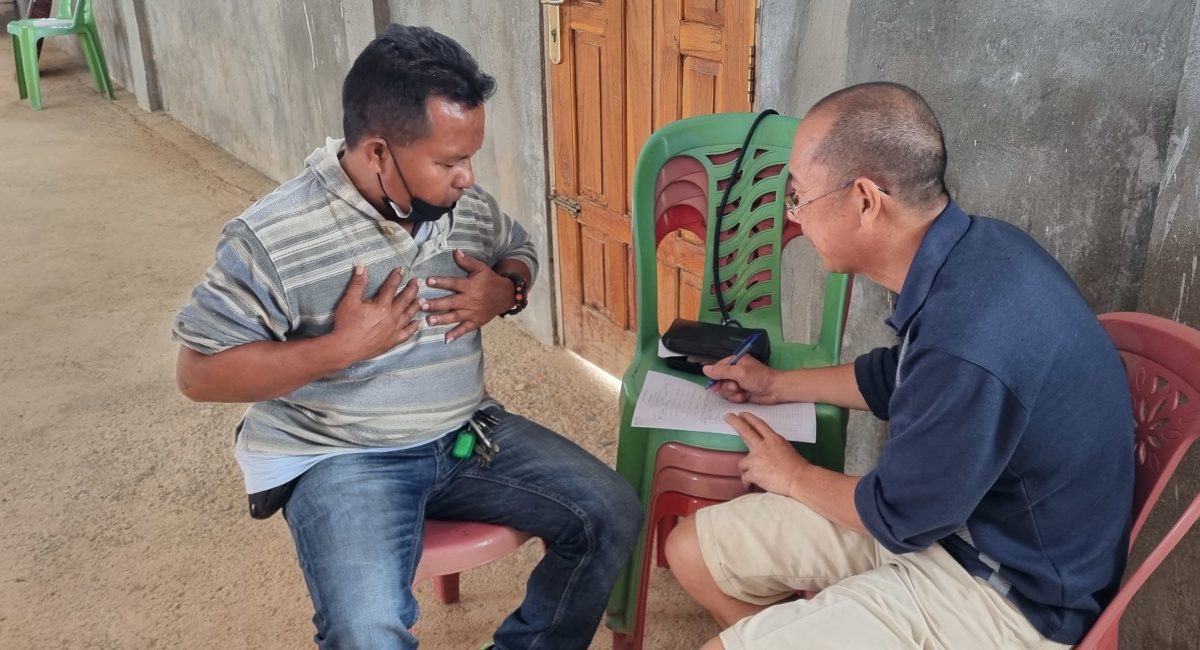 When the last patient had left the chapel, I approached Fr Bong, intrigued by the common illnesses in the community. He replied, “Often they have respiratory infections, heart ailments, ear and eye infections… but nothing too serious. We often give them maintenance medicine or something to prevent the worsening of their illnesses, but many of them do not have illnesses. Maybe they just want an assurance that everything is alright.”
His last line struck me: “Maybe they just want an assurance that everything is alright.”
Here is a Jesuit missionary, along with his team, miles away from home, embarking daily in his well-worn truck, offering medical assistance to those in the remote mountainous villages, but only after celebrating the wholeness and reconciliation that Christ offers; only after he has celebrated the Eucharist alongside the very patients he would later attend to. These people live miles away from the nearest hospital and farther still from the nearest health centre, but twice a month, a convoy of trucks would visit their chapel and offer an assurance that everything is alright because God has not forgotten them. They may live in isolated areas far from the reach of government healthcare, but they are close to the heart and arms of Holy Mother Church.