

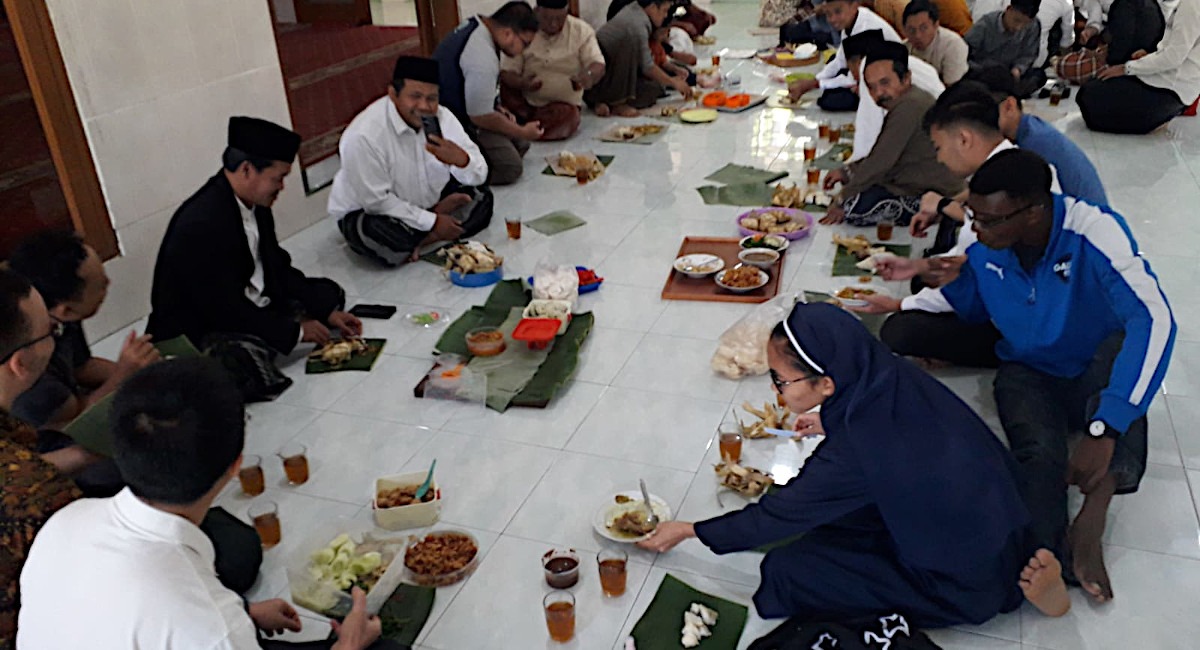
APTEP participants share breakfast with their Muslim hosts in celebration of Eid al-Adha
The second week of the Asia Pacific Theological Encounter Program (APTEP) involved immersions in two different Muslim communities in Salatiga, Central Java, Indonesia. One group went to the Komunitas Belajar Qaryah Thayyibah Learning Community (KBQTLC) in Kalibening Village, while the other stayed at the Pondok Pesantren Edi Mancoro.
KBQTLC was founded by Ahmad Bahrudin, also known as Pak Din, in 2003 as a community where young people can pursue non-formal education. He observed that Indonesia’s public education system overemphasises achieving good grades at the expense of developing young people’s multiple intelligences. Despite initial opposition, Pak Din, a respected Muslim leader with a background in Islamic studies, championed non-formal education. Today, graduates from the learning community even receive certificates from the Ministry of Education.
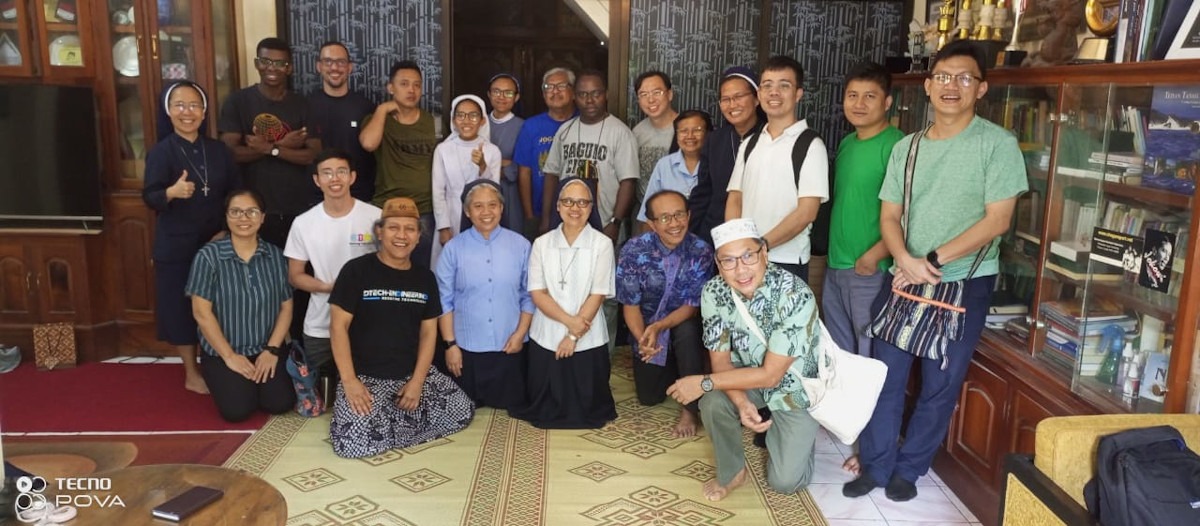
Currently, KBQTLC facilitates non-formal and independent learning sessions for around 30 young Muslims, catering to their particular talents and interests. During our stay, we were fortunate to encounter additional groups, such as young Protestants studying philosophy and theology in Jakarta and Yogyakarta and young Catholics participating in a social immersion programme. Living alongside them provided us with a unique opportunity to engage in a dialogue of daily life and action through close observation and interaction.
 We were introduced to the community by Zia and Kayla, who explained that in KBQTLC there are no leaders or teachers but only fellow companions. We observed participants in three mixed-gender groups discussing progress on their individual projects. I was particularly touched by the exceptional care and sensitivity that the Muslim members of one group displayed towards two of their members who seemed hesitant to share openly. They became the “voice for the voiceless,” introducing us to their peers and highlighting their talents, such as composing poetry or creating daily life videos. This demonstration of fraternal inclusivity and love reflected their respect and appreciation for others, exemplifying the Islamic values they had clearly internalised.
The other group stayed in Edi Mancoro Islamic Boarding House, living with more than 200 students attending a nearby Islamic university. Richard Niyukuri, a Xaverian seminarian from Burundi, shared their immersion experience:
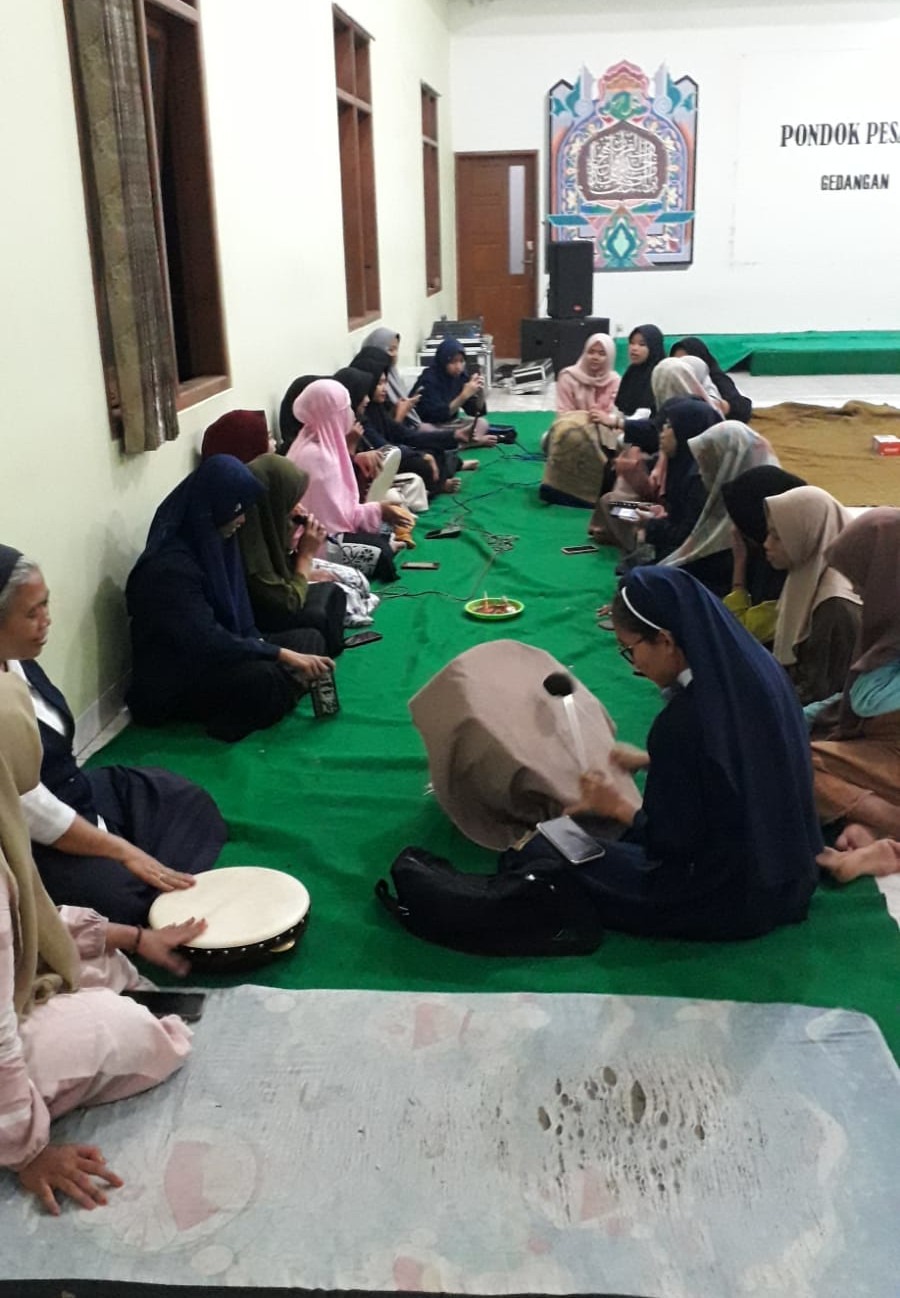
“We were warmly welcomed by Gus Hanif (Muhammad Hanif), the head of the boarding house. According to him, ‘Edi Mancoro’ means ‘good light’. He introduced us to his family and then to our student guides. The following day, we toured the village with our guides, who showcased the different buildings and services of the institute, including the mosque. We were invited to participate in their morning prayer, followed by the reading of the Quran. The students often invited us to attend their rituals. For example, we paid respects at the grave of KH Mahfud Ridwan, the institute’s founder and Gus Hanif’s father, and participated in Thursday worship. It was a memorable experience for us to join the Santriwan (male students) and Santriwati (female students) as they beautifully chanted the sholawat prayer (praises to Prophet Muhammad) accompanied by Rebana instruments.
“Our experience was also enriched by interacting with the villagers, who showed us humour and respect. Thanks to their openness, we learned much about the wisdom of Muslims. Students in sarongs and hijabs were surprised to see Christians among them, yet they sincerely answered our questions. Their hospitality, invitations to attend their prayers and activities, and their smiles reinforced the truth that we are all brothers and sisters. Despite our differences, we come from one God and return to the same God.”
While in Salatiga, APTEP participants also visited the Jesuit-run agricultural education centre, Kursus Pertanian Taman Tani (KPTT). Situated on nine hectares of land, the farm grows a variety of fruits, including grapes, vegetables, and spices, with cloves being the most popular. The produce is sold to the community and patrons, and supplied to the Jesuit houses around the Salatiga area.
Dr Roy Mendoza, a history lecturer at the Ateneo de Manila University, was surprised to find the Muslim staff tending the pig farm. “What caught our fancy is the piggery with around 700 heads. Not only were we impressed with the sustainable technology, but KPTT employees who are Muslims are the ones taking care of the swine. They are the ones who bring them to the market. Other Muslims do not mind them. What’s more, KPTT produces some of the most sought-after smoked pork in Java!! What could be a better illustration of tolerance and Islamic moderation?”
 The last day of the immersion programme coincided with the celebration of Eid al-Adha, or the Feast of the Sacrifice, which commemorates the willingness of the Prophet Ibrahim, known as Abraham in Christianity and Judaism, to sacrifice his son, Ismail, as ordered by Allah.
Adi Bangkit, an Indonesian theology student in Manila, reflected on the experience: “As we participated in the prayers, we were struck by three takeaways from Prophet Ibrahim and Ismael: their struggle, sacrifice, and obedience. As Gus Hanif preached, the animal sacrifices reenact what they performed and signify three things. First, they represent diminishing the animalistic or bad character within us. Second, they are acts of generosity, expressing our gratitude to our neighbours by sharing the meat. Third, they remind us of our societal responsibility—that part of our property rightfully belongs to the poor.
For Dr Mendoza, it was his first time spending Eid al-Adha in Indonesia. He shared: “I must say it is really something! This joyous occasion simply cannot be missed. Since last night, there have been chants in the masjids around KPTT. It was a nightlong prayer that, for the uninitiated, could cause a sleepless night. One might be reminded of boisterous karaoke singing all night long. But this is a clear demonstration of the religiosity and devotion of Muslims around the world!
“Unfortunately, Filipino Christians do not have an equivalent to the experience of Eid al-Adha. A Filipino might be reminded of a practice done during Holy Week called Pabasa (basa is ‘to read’). In this case, they sing the Passion of the Christ, which is composed of 1,660 stanzas written in old colloquial Tagalog. Reading (or singing) it is excruciating. But it is going through this ritual that we learn about sacrifice and understand in detail the Passion of the Christ.”
Related story: A journey of interfaith dialogue and discovery in Indonesia