

 Second of two parts
Synodality is something almost alien among people formed in hierarchical structures.
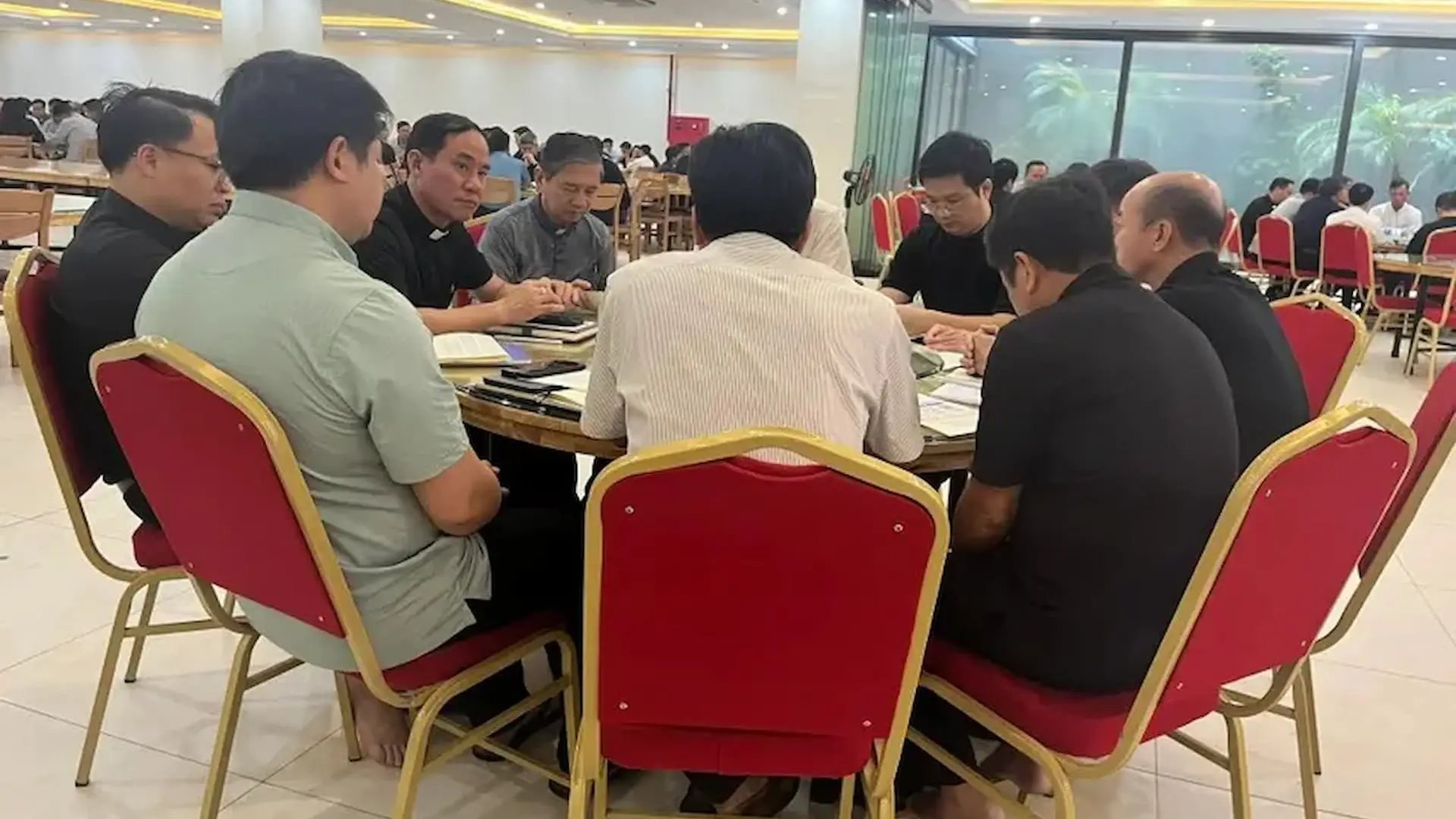
At round table discussions in Ho Chi Minh City, Hanoi, and Thanh Hoa, during the conferences on “Synodality and Evangelisation Within the Vietnamese Church” organised by the Vietnamese Center for Ignatian Spirituality, priests and bishops encountered a simple but infrequent demand: recognising one another as equals in the conversation. This is not easy. Vietnamese ecclesiology maintains deep reverence for authority, for proper respect, for understanding that the bishop teaches and leads: the priest serves diligently, and the laity obey. At a synodal table, a priest may speak first. A bishop genuinely considers changing his mind based on what he hears. And a laywoman with three children shares what it is like to be an exhausted single mother. Synodality is different.
At the three conferences, things worked differently. There was openness and truth. There was trust and humour. Priests were heard. Bishops were heard. All listened. Listened with a willingness to understand rather than to judge.
Synodality also surfaces resistance. Some priests expressed scepticism. What could lay voices contribute? Sociologists tell us that fear of losing status and authority runs deep in hierarchical institutions.
Bishop Joseph Nguyen Duc Cuong of Thanh Hoa directly addressed this anxiety:
“Synodality calls for a renewal in our pastoral approach: priests and laypeople must learn to pray together, listen to the Holy Spirit, and work together to build up the parish and the diocese in a spirit of communion and participation.”
He offered a view of a future when the bishop, priests, and laypersons are partners and co-workers in the local Church.
Coaches at each table kept space for silence—those pauses are where genuine discernment happens, and listening for the Spirit’s movement can emerge.
Culture and conversion
What emerged from these conferences was the beginning of a longer journey. The bishops and interested priests left with a clear commitment: to learn how to lead with synodality. They are eager to initiate synodal dialogue at the deanery level, then in their parish councils. It will demand diligent practice to accomplish these.
Implementation will depend on the bishops themselves, as Cardinal Grech told them in Rome. Will they model what they learned? Will they sit at tables with their priests and laity as equals? This is the real test. Synodality is not something an institution can impose from the outside. It develops through the freedom, trust, and practice felt by all.
Vietnamese Catholicism has inherited a style of Church governance shaped by both tradition and centuries of living as a minority community. Authority concentrated in the bishop was how the Church survived. Moving toward a listening Church means taking risks.
Yet this is precisely what Pope Leo XIV and Cardinal Grech are asking the world Church to do. Synodality is not an optional experiment. It is the direction the Church is moving under the persistent guidance of the Holy Spirit.
Where synodality takes root
The next chapter will unfold in deaneries and parishes. It will be slow, messier, and local. Some will resist. But the seed is planted. Fr Peter Trần Quang Diệu, a professor at Hanoi Major Seminary, captured this vision:
“The programme helped me gain a systematic understanding of synodality and put it into practice in the true spirit of the Synod. CIS’s professional organisation, together with the active collaboration of the laity, opened up a new perspective on how we can build a Synodal Church together. Bravo!”
That “Bravo!” speaks volumes. It is the sound of a respected priest who understands that synodality is not a threat to clerical leadership but a deeper expression of it—leadership as listening, thinking and discerning.
At the completion of the third conference, Fr Hanh told the assembled participants:
“My first impression is that synodality is gradually moving from a topic to be studied toward a concrete ecclesial responsibility. The challenge is no longer simply to understand the language of communion, participation, and mission. It’s to translate it into actual ways of listening, discerning, making decisions and carrying out mission.”
CIS/VN, working in the spirit of Ignatian discernment and Jesuit mission, has done the work the Society of Jesus has always been asked: to open doors for the local Church to encounter the Risen Christ more deeply and to make decisions about its future under the guidance of the Holy Spirit. All at the invitation of local bishops.
This October, the Diocese of Ban Me Thuot is inviting CIS/VN to facilitate a synodality-focused ongoing formation programme for more than 200 priests. A similar programme is also planned for mid-2027 in the Diocese of Phu Cuong, bringing together nearly 200 priests.
Read the first part, “Listening into being: Synodality comes to the Vietnamese Church”.