

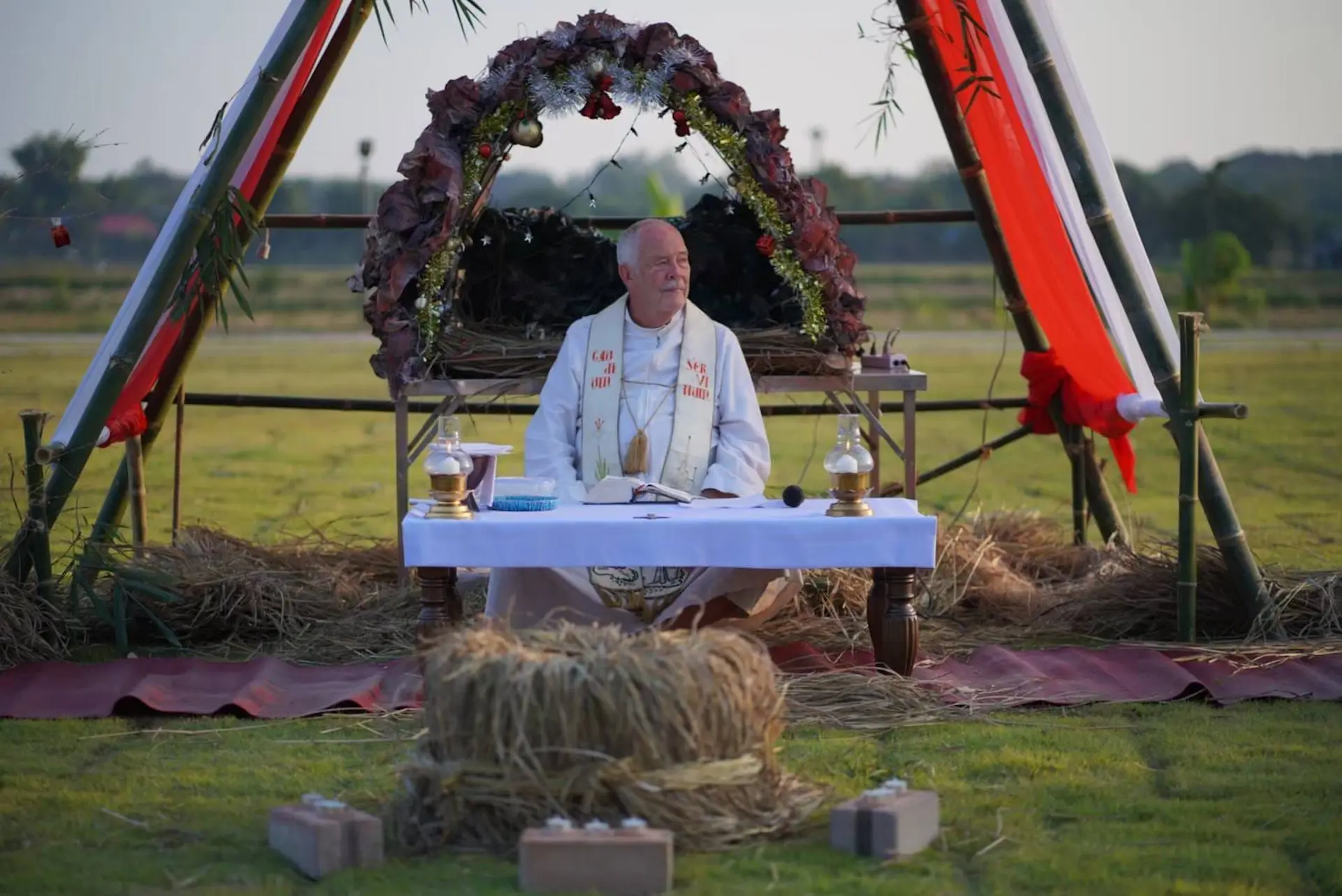
 Around midnight on 24 November, in Chiang Rai, Thailand, Fr Thomas “Tom” Michel SJ, a missionary of the US Jesuits and a leading voice in Muslim-Christian dialogue, peacefully returned to the Lord. He was 84 years old. His passing marked the fulfilment of a remarkable life spent building bridges of faith, understanding, and compassion—especially among the most marginalised. Until his final day, Fr Michel was faithfully teaching at Xavier Learning Community in northern Thailand, forming the next generation of young people from ethnic minority communities.
Thomas Michel was born on 5 February 1941 in Normandy (St Louis), Missouri, the third of four children. His father worked for the US Postal Service, while his mother tended to the home and was deeply involved in parish life. Their parish, Ascension Church, would become a spiritual anchor for Tom: he was baptised, confirmed, and later ordained there.
Tom attended St Louis University High School (SLUH), hitchhiking daily to and from classes. It was at SLUH that he joined a group called Interfaith Youth—an early precursor to what he would later recognise as the vocation of his life: interreligious dialogue. Listening to Jewish and Humanist peers as a teenager, he recalled thinking: “These are good people, and they have a lot of things worth saying.” The Jesuit faculty who encouraged his involvement helped shape a worldview grounded in openness, curiosity, and respect.
Fr Michel was ordained a priest of the Archdiocese of St Louis in 1967 but soon after was sent to Indonesia, where he fell in love with the people and cultures of Southeast Asia. Following the death of Joseph Cardinal Ritter, he was called back to the US but faced a choice: return to diocesan work or join a religious order that would allow him to continue his mission abroad.
“All the Catholics I knew there were Jesuits,” he later joked—so in 1969, he entered the Society of Jesus in Yogyakarta, taking vows in Indonesia. There, at the suggestion of his Muslim students, he began studying Islam more seriously. Their encouragement set him on a path that would define the next five decades of his ministry.
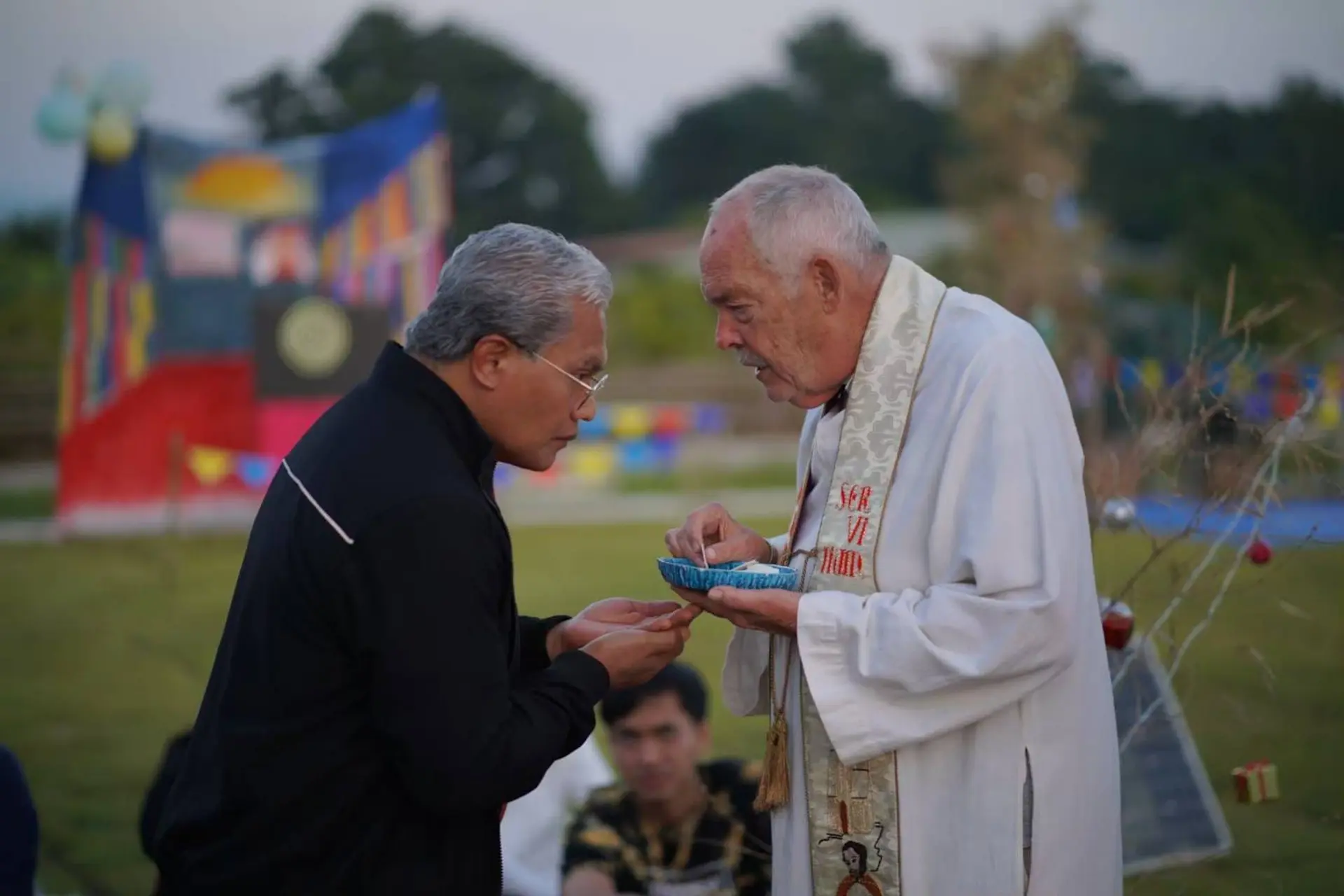
Fr Tom Michel SJ with former Thailand Regional Superior Fr Sugiyo Pitoyo SJ
Fr Michel pursued advanced studies in the Middle East, learning Arabic in Lebanon and Egypt, and completed a PhD in Islamic Thought at the University of Chicago in 1978 under the guidance of the renowned scholar Fazlur Rahman. His dissertation examined Ibn Taymiyya’s Al-Jawab al-Sahih, exploring Muslim critiques of Christianity with intellectual rigour and empathy.
In 1981, Pope John Paul II appointed him Head of the Office for Muslim Relations at the Vatican’s Pontifical Council for Interreligious Dialogue. From 1981 to 1994, he served as a global emissary, visiting Muslim-majority countries, meeting scholars, and fostering paths of understanding.
One of the most significant achievements of this period was an educational exchange between the Gregorian University in Rome and theology faculties across Turkey. For 14 years, Fr Michel travelled regularly to Ankara, Konya, and Izmir, teaching Christian theology to Muslim students—often being the only Christian many of them had ever met.
His students affectionately called him “The Monk”. They brought him meals, helped him with his laundry, and welcomed him into their homes. He remembered late-night conversations over tea and sunflower seeds with students and colleagues as among the most transformative moments of his life.
After leaving the Vatican in 1994, Fr Michel continued his work across Asia, the Middle East, Europe, and North America. He served as Executive Secretary for Interreligious and Ecumenical Affairs for the Federation of Asian Bishops’ Conferences (Bangkok), Secretary for Interreligious Dialogue for the Jesuits (Rome), Senior Fellow at Georgetown University’s Woodstock Theological Center, and Visiting Fellow and educator in Indonesia, Malaysia, the Philippines, Qatar, Turkey, and the United States. He became one of the world’s most respected interpreters of Muslim thought, publishing extensively on modern Islamic thinkers, including Said Nursi and Fethullah Gülen.
Fr Michel received numerous awards for his peace-making efforts, including the International Tschelebi Peace Prize (2008) and the Ali Shir Navai Award (2009). In 2010, he was awarded a Doctor of Theology by the Catholic Theological Union. Yet he remained humble, often saying: “Helping people of both faiths understand each other better is worth doing. It’s worth spending a life on.”
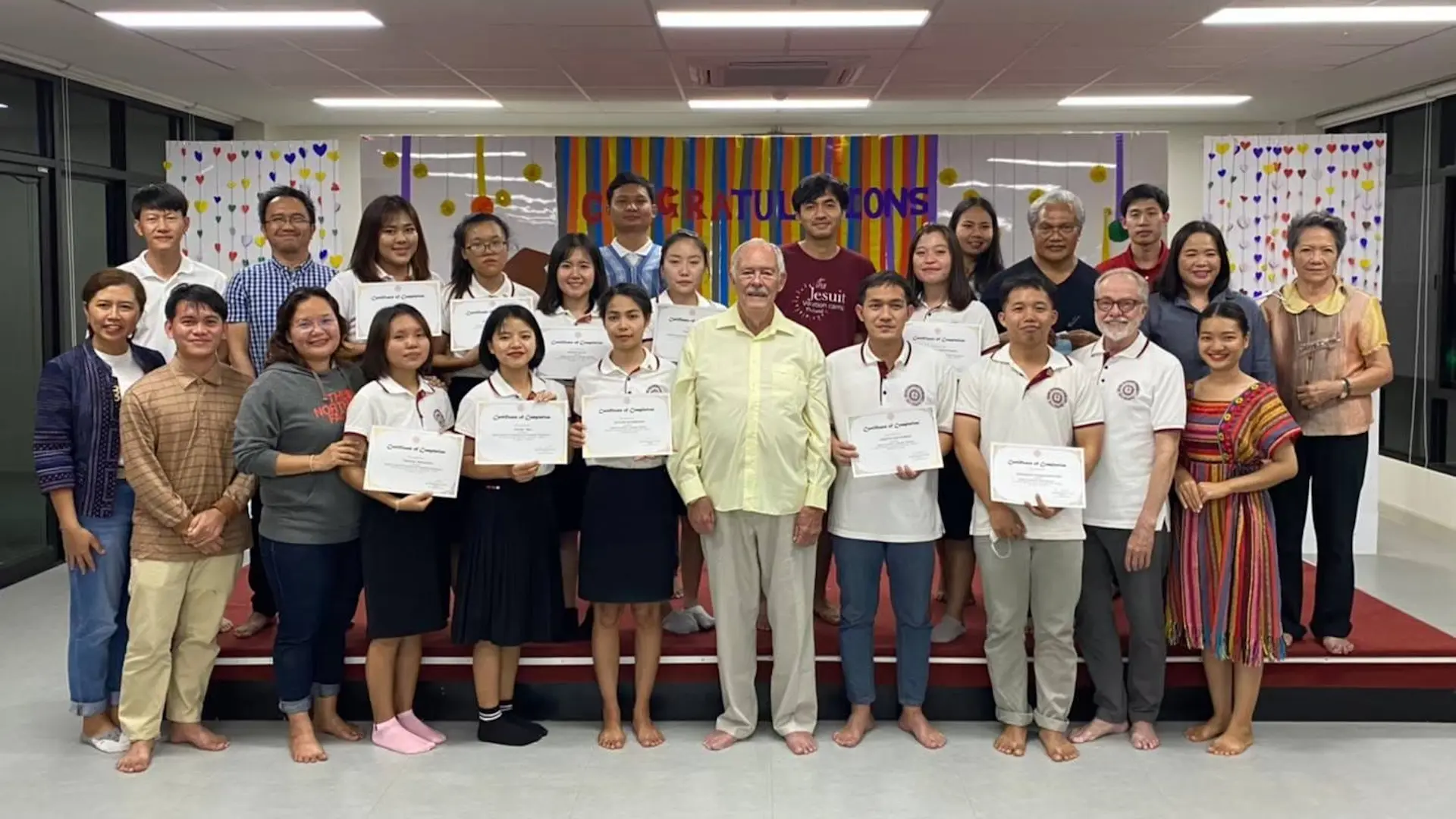
Fr Tom Michel with students at Xavier Learning Community
In 2017, at the age of 76, he accepted a new mission in northern Thailand, where the Society of Jesus had opened Xavier Learning Community. Located near the Golden Triangle where Thailand meets Laos and Myanmar, the school serves ethnic minorities—including the Karen, Akha, Lahu, and Lanna—often marginalised in Thai society. Fr Michel believed education could open doors to employment, nurture dignity, build interethnic harmony, and strengthen rural communities. He accompanied students from Thailand, Myanmar, and Laos and taught them English, world religions, and regional studies. He was a non-native Jesuit in the community but deeply loved by students who saw him as a grandfatherly presence.
As academic director, he developed the Xavier Immersion Programme, a 10-month English-medium formation course for Thai seminarians and religious. Growing from seven students in 2018 to 25 in the last years, the programme included courses in English Language Mastery, Thai and Southeast Asian Studies, World Religions and Scripture, Liturgical Formation in English, and Cross-cultural Immersion. Through it, Fr Michel helped raise a new generation of pastoral leaders capable of serving a global Church.
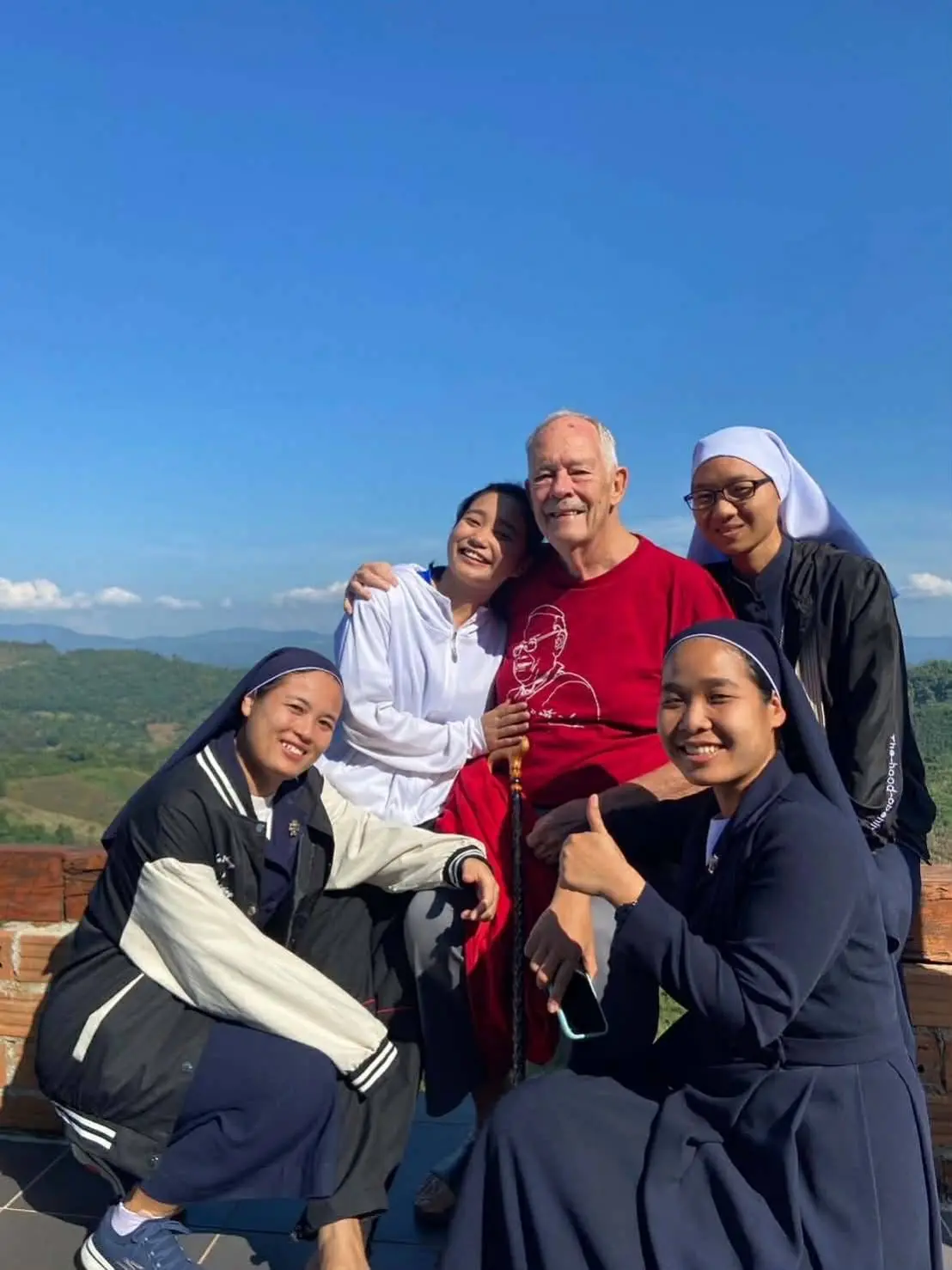 Throughout his life, Fr Michel lived with exceptional simplicity and warmth. His friendships spanned continents and faiths. Many Muslims considered him a trusted mentor; many Christians saw him as a model of compassionate dialogue.
In 2023, a Muslim man spoke up during a lecture in Singapore, saying: “Fr Michel changed my life. I used to think Christians couldn’t be saved. After I got to know him, I realised how much we share.”
Such encounters captured the essence of Fr Michel’s mission: to show that faith need not divide; it can illuminate paths of shared humanity.
Among Fr Michel’s many gifts, education became his most lasting legacy. He taught long after his peers had retired. Even in his 80s, he prepared lessons, mentored students, and joined classroom activities with the same enthusiasm he had shown decades earlier. His classroom was not merely a place of instruction—it was a place of encounter, solidarity, and peacebuilding.
Fr Thomas “Tom” Michel SJ lived a life marked by courage, intellectual brilliance, and deep human warmth. Whether serving in Indonesia, Rome, Turkey, Qatar, or Thailand, he embodied the Jesuit mission of reconciliation and the call of Nostra Aetate to genuine dialogue between peoples of faith. In his final mission at Xavier Learning Community, he poured himself into educating the underprivileged, forming seminarians, and accompanying students from ethnic minority communities.
Fr Tom Michel spent his life building bridges—and in doing so, became one himself. May he rest in peace, and may those whose lives he shaped continue the work he loved so dearly.