

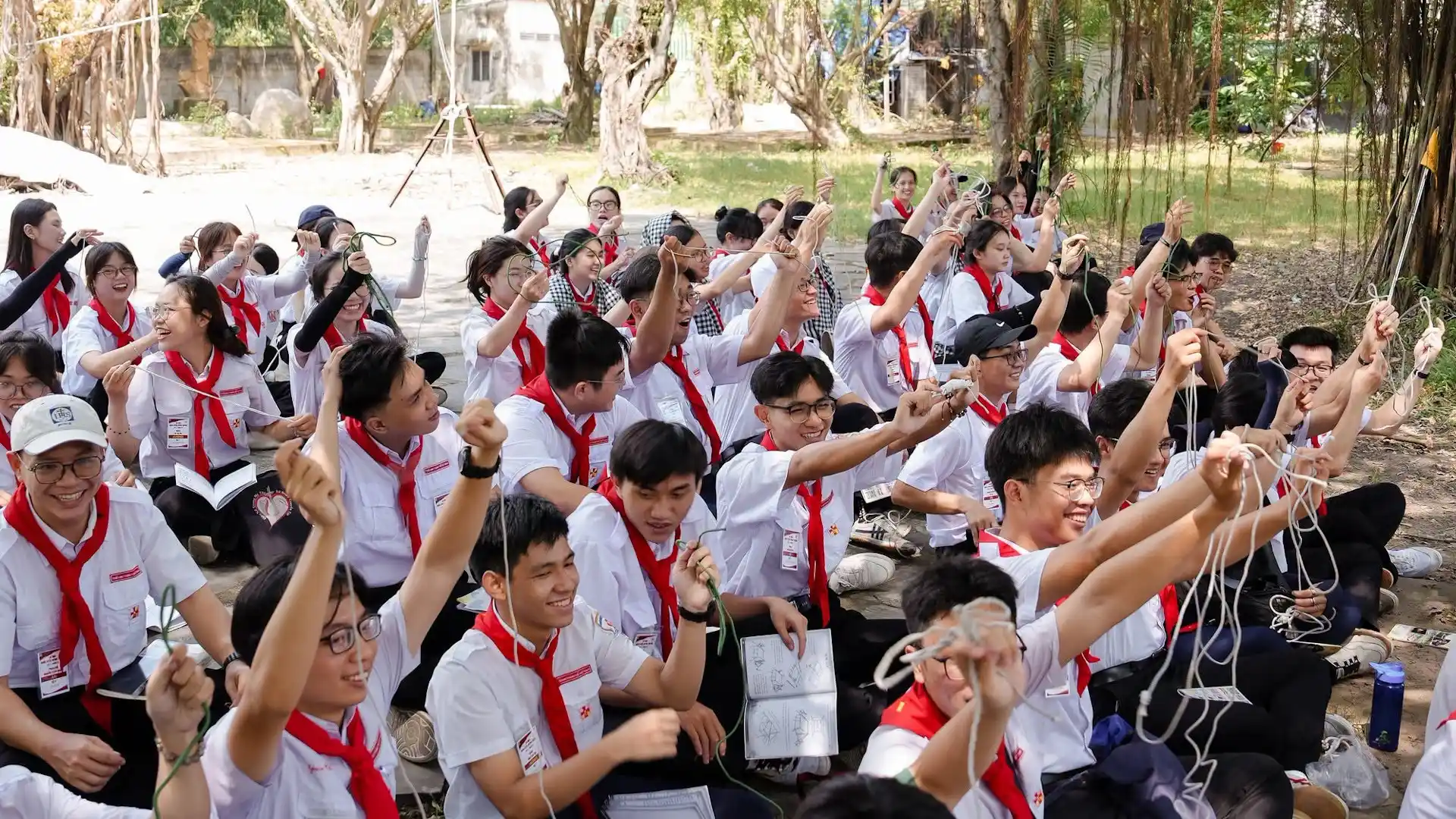
 Accompanying young people is a central mission of the Society of Jesus. For that reason, several young Jesuits participated in the Horeb 117 and Tabor 39 bootcamps at Dat Hua (“Promised Land”) Youth Center in Cu-Chi, Ho-Chi-Minh City, organised by the Vietnamese Eucharistic Youth Movement. We were there not only to learn leadership skills but also to live among our brothers and sisters, allowing God to form us through the people and events we encountered.
We brought our own fiery hearts as Jesuit scholastics into this unfamiliar environment. Yet we were filled with joy and ablaze with the spirit of love during those three days, from 14 to 16 August. It was as if we were going through the same eye-opening experience as Paul: being struck blind to learn how to be led and, ultimately, being transformed for mission.
At first, we prepared for a straightforward leadership development course. As the days unfolded, however, we realised it was a true school of humility. Our existing knowledge proved insufficient. Tasks were completely different from what we had anticipated. Like Saul on the road to Damascus, we needed to humbly learn how to be led by others.
Our physical eyes were wide open, yet we needed to become spiritually “blind”, relying less on our own abilities and becoming more willing to be guided by others. What seemed to be a weakness became an opportunity to grow. Only by acknowledging our limitations could we open ourselves to formation and recognise the treasures already present in our brothers and sisters in the camp.
The enthusiasm of the trainers and participants kindled a fresh fire within us. Despite a demanding workload and physical weariness, they kept pushing forward, taking on task after task. Moreover, after completing their own assignments, the participants reached out to help others. No one sought to keep the fire for themselves. Instead, they passed it from person to person, quietly yet persistently.
 Recognising the Holy Spirit
At Damascus, Saul’s eyes were opened to see Christ. In this bootcamp, we witnessed no dramatic miracle, yet our eyes were gradually opened to recognise the subtle footprints of God.
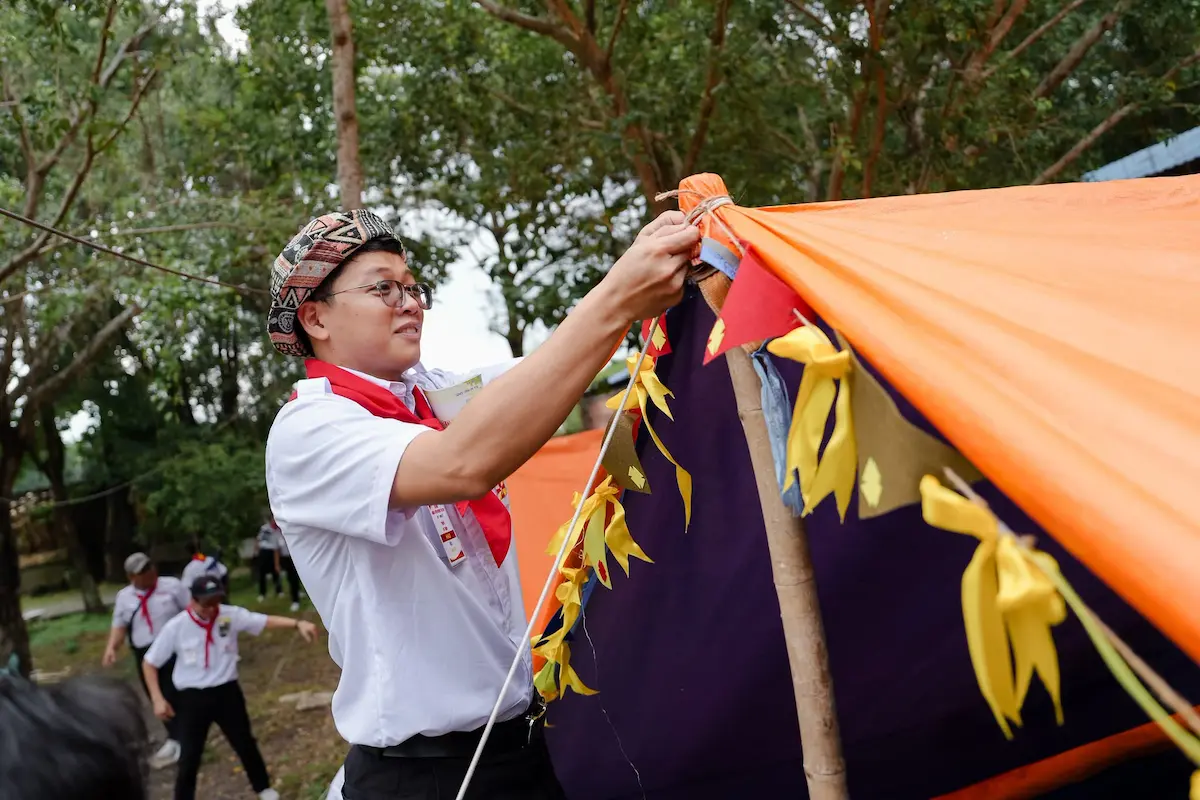
Small gestures linger vividly in our memory: a helping hand extended to someone exhausted, a word of concern, or a person quietly staying behind to help another complete a task. Fraternity was not expressed through grand speeches; it was written in small acts of genuine love.
We were especially moved by the sight of young people forming two long lines to receive the Sacrament of Reconciliation. A light rain had begun to fall, yet the lines stretched silently onwards. Amid the chill of the afternoon, it was breathtaking to see young people joyfully choosing, of their own free will, to return to God, renewing their hearts before encountering Jesus in the Eucharist.
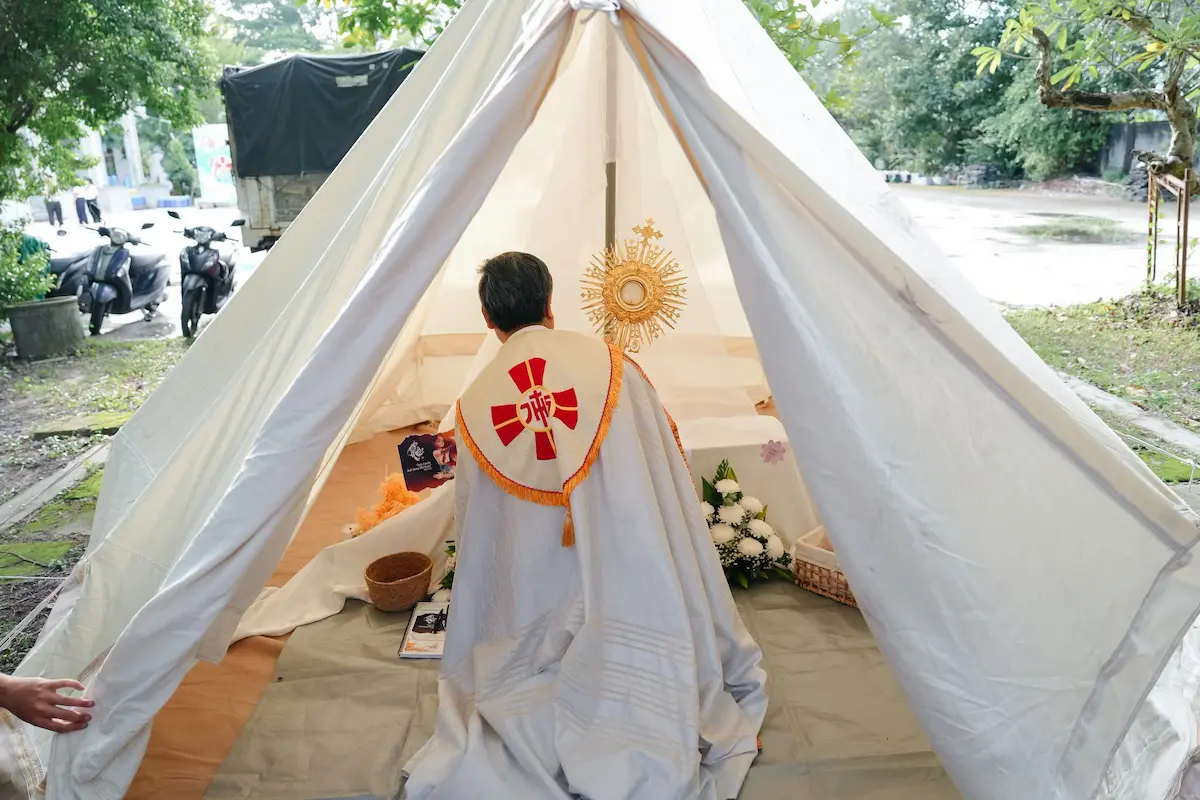
After hours of energetic activities, small groups gathered in silence before the Blessed Sacrament at the centre of the camp. Truly, God continues to guide us quietly, like the pillar of cloud in the desert of old. He does not necessarily make the road easy, but He ensures that we do not lose our way.
Being Transformed in Christ
We did not encounter Christ only in formal lessons but in the ordinary details of camp life: an unfamiliar sleeping place, a simple meal, and a packed schedule that demanded putting others first. There we realised that the camp does not primarily train us for skills; it trains our hearts.
We learned self-emptying: setting aside our opinions to listen to leaders and team members; giving up comfort to adapt to the schedule; and letting go of theoretical ideals to become genuinely available to others. In these simple ways, we learned to step back so others could step forward.
We also learned commitment. Watching young people generously offer their time, energy, and service, we asked ourselves: If these young people can give so much, then what are we, Jesuits who have received so many gifts, giving back to God and to His people? It felt not like a burden of responsibility but an invitation of love.
 If someone were to ask what we brought to the camp, we would not have much to list. We brought moments of sharing God’s Word with sincerity and devotion. We prayed, shared, and listened alongside the participants to what the Holy Spirit was stirring in each of us.
Yet the deeper we entered the course, the more we realised that although we thought we had come to give, we were actually the ones receiving.
We came to share God’s Word, but it was God’s Word that enlightened us. We came to give fire, but it was young people who rekindled the fire within us. We came to accompany others, but it was our brothers and sisters who guided us. We came to serve, but we were the ones served. When we open our hands to give, God places something new into those very hands.
The bootcamp eventually came to an end. The tents were taken down, but the journey of exodus never truly stops. Each of us returned to the familiar rhythms of daily life, carrying with us the flame kindled at the camp.
Now, in the ordinary moments of each day, through prayer, Holy Communion, self-giving and apostolic service, we gradually learn to find and encounter God in all things.


