

 Ever since the invention of the electric light bulb, humanity has witnessed the gradual and inexorable encroachment of light into our homes, churches, streets, hospitals, and schools. As a Grade III student, I learned from our school textbook about Thomas Edison’s invention of the electric light bulb. However, we did not rejoice in its fruits even then, and, unfortunately, we still do not seem to be reaping its harvest to this day.
Tonight, if we look at a satellite image of Asia, we can see country after country illuminated, glowing like constellations. Yet there is one country, 16 times larger than Switzerland and home to over 55 million people, where the light of peace and hope remains difficult to see. Myanmar continues to journey through profound darkness.
This is not the first time our people have experienced such darkness. Colonial rule, military government, decades of dictatorship, and ongoing conflicts have left deep scars on the country. The effects of these experiences have touched many aspects of life in Myanmar, leaving communities to live in uncertainty, suffering, and loss. Darkness can make it difficult for us to see – but what, in the midst of darkness, might we fail to notice?
There are things we can fail to see even when our eyes are perfectly healthy: injustice, suffering, poverty, and ecological destruction. Yet Myanmar is also home to many people whose experience of the world is not primarily visual. According to the 2024 Census, 4.1 per cent of people aged five and over are visually impaired, while a nationwide eye health assessment found that 0.58 per cent of the population are blind.
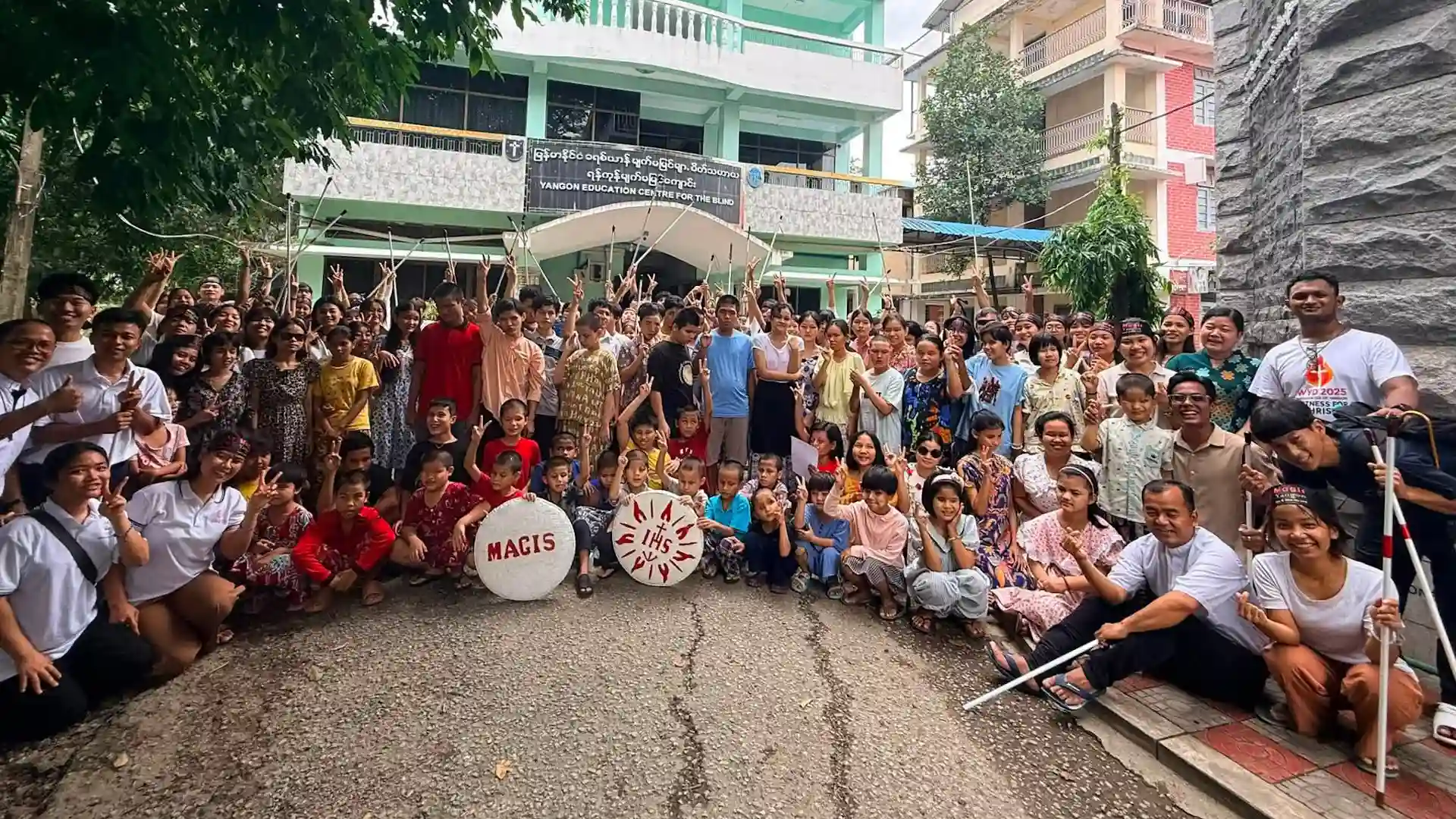 At the Yangon Education Centre for the Blind (YECB), more than 60 Magis youth from Yangon, together with Jesuit priests and scholastics, were invited to discover another way of seeing, one that does not depend on physical sight alone.
The YECB is run by the Myanmar Christian Fellowship of the Blind (MCFB). Established in 1975, the MCFB initially served only 14 persons with disabilities. Today, the MCFB provides education, formation, evangelisation, and community service to 1,000 visually impaired people in Yangon and Myitkyina. About 120 young people with visual impairments study and live at the centre. For them, this place is a home away from home.
The Magis youth were blindfolded and learned the Braille alphabet from people who are visually impaired. Without sight, even the most common things become challenging. Everything becomes unfamiliar and uncertain, and one has to rely on other people’s help.
While learning the history of the Braille script, the youth also stumbled upon an old Jesuit connection. In 1670, an Italian Jesuit priest, Fransisco Lana de Terzi SJ, wrote a treatise entitled “Prodromo”, in which he described a special writing system for people with visual impairments. Later, in 1824, Louis Braille presented his own version of a six-point system.
Reflecting on his experience, Dominic Pyae Phyo Aung said, “I regret the times when I did not want to write down notes at school. Now I…” Left unfinished, this sentence may give us food for thought. When we lack something, when it is absent from our lives, we often realise how much we need it.
The Magis youth had a golden opportunity to experience, however briefly, some of the challenges of navigating the world without sight and, more importantly, to listen to those who do so every day.
Nant Margaret Htar Htet Myat said, “As sighted persons, we may not know exactly what their needs are. We can see them but rarely think about what they go through or what they need. By visiting this wonderful place, I had a great opportunity to discover how these kids spend their time and live their lives. It was eye-opening for me.”
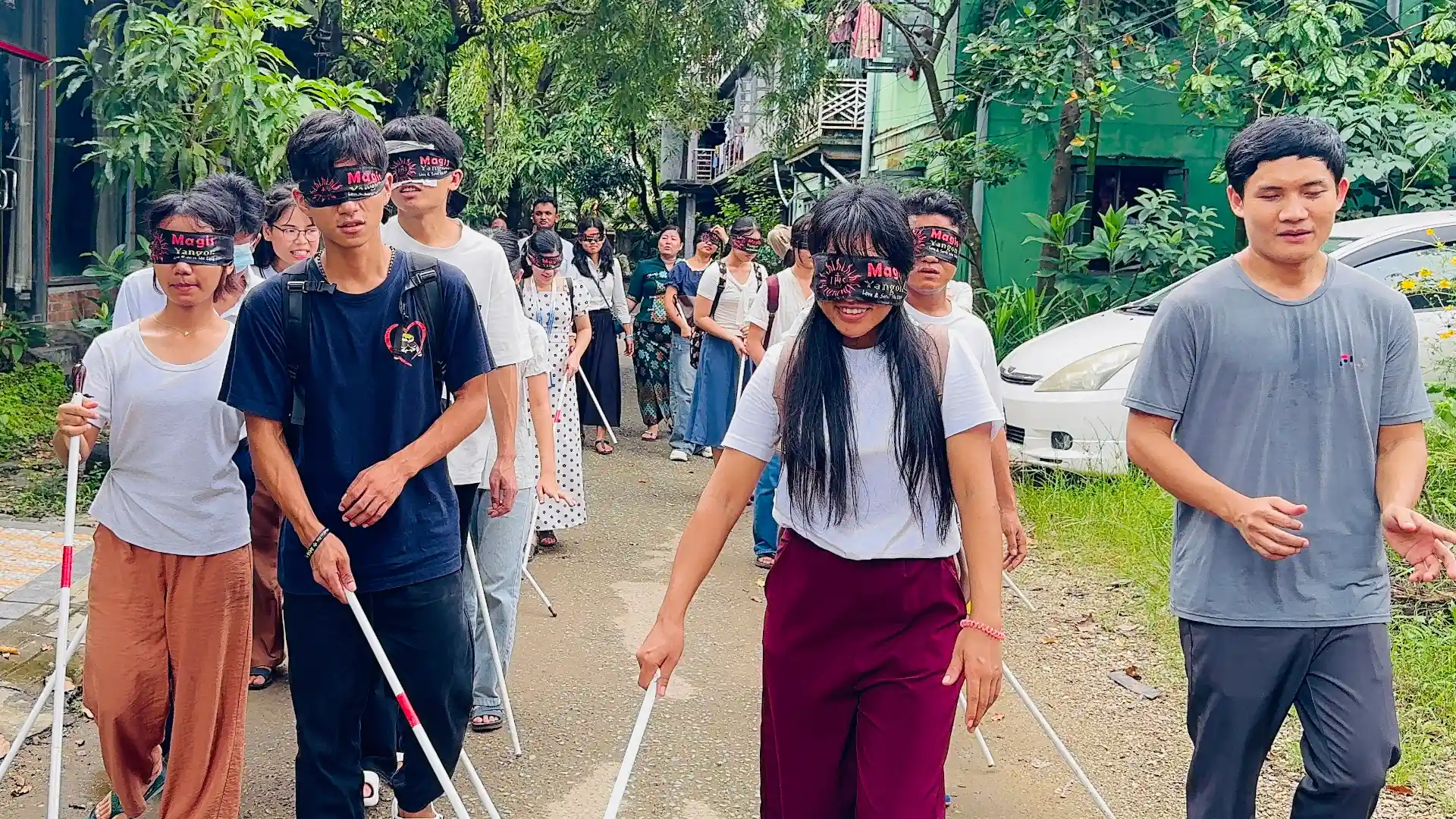
After listening to their stories, the Magis youth kept their eyes blindfolded as they shared lunch, allowing themselves to experience the uncertainty and dependence that can accompany life without sight. Then, they set out on a Magis Blind Walk.
 Agatha Vung Mun Lun recalled the walk with the children: “While walking with them with our eyes blindfolded, I felt that everything in the universe had disappeared. I was absolutely in the dark! I was scared, too. They took me by the hand and led me. I doubted whether I could take another step in my life.”
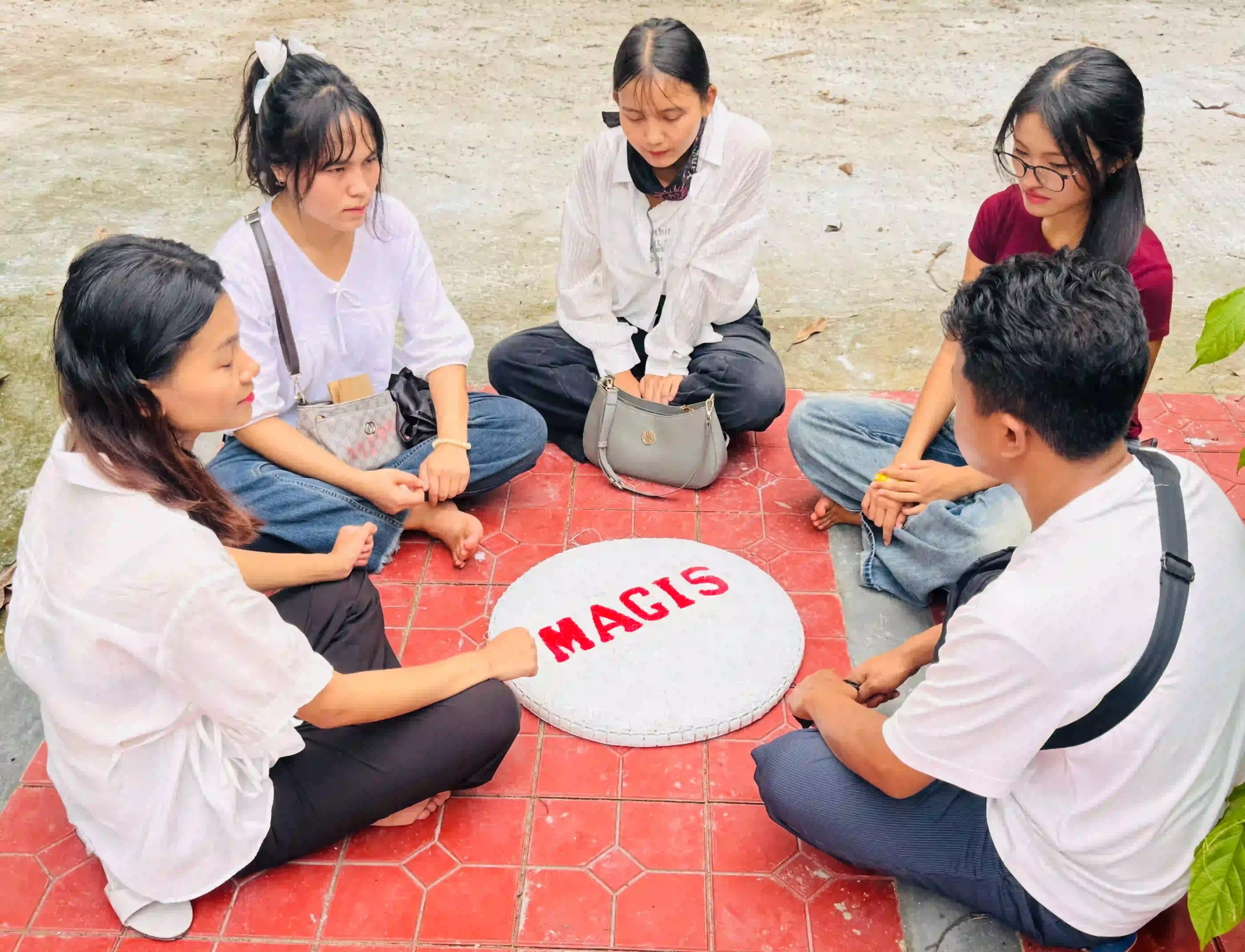
After the walk, the participants congregated in the church. The children filled the space with their angelic voices, while others accompanied them with the gentle melodies of guitars and violins. In the stillness that followed, the young people entered into the Ignatian Examen, attentively discerning the consolations and graces that had filled the day. They then shared these moments in smaller groups during the Magis Circle, allowing the experience to deepen through reflection, conversation, and mutual listening.
Mary Ah Pan said, “Being with them opened my eyes and made me realise how blessed I am. Of course, life is not easy for them… I want to devote my life to serving them.”
The Magis Blind Walk will not remain a one-day event. This experience will stay with us, inviting us to conversion – to recognise the ways we sometimes fail to see one another. Lack of compassion, prejudice, fear, uncertainty, or even the feeling that another person’s pain is not our business – all these can prevent us from seeing the humanity and dignity in every person.
Accompaniment, however, is not a one-way street. We may come to serve others, but in reality, we are the ones who need to be served. The youth who participated in the Magis Blind Walk had their eyes covered when they entered the centre, but when they left, they looked at the world with new eyes.


