

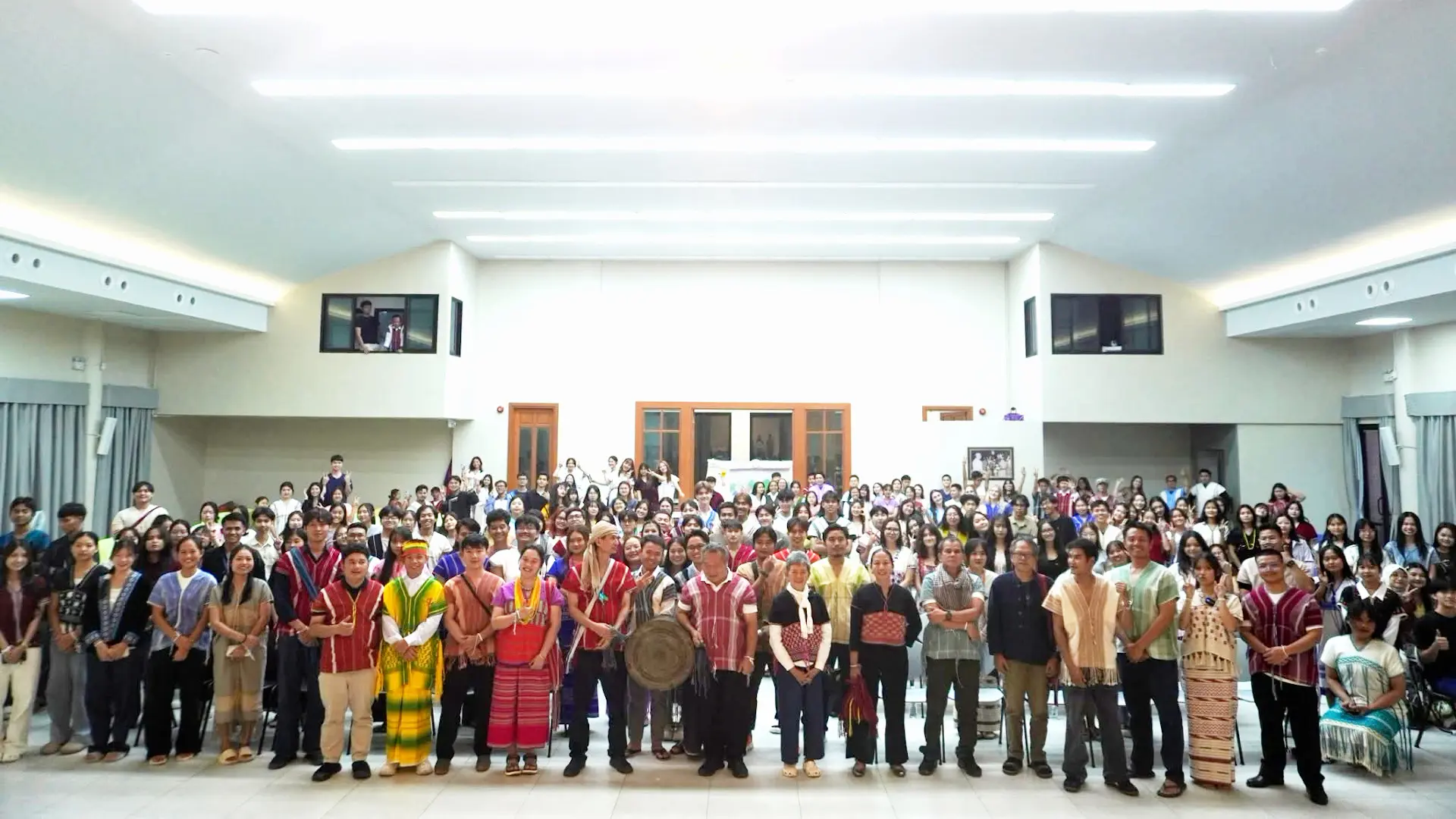
 Xavier Learning Community (XLC) in Chiang Rai, Thailand hosted a Karen traditional wrist-tying ceremony on 5 September. Organised in collaboration with the Karen Student Club and the Research Unit for Indigenous and Ethno-Ecological Wisdom for Sustainable Development of Mae Fah Luang University, the event drew students and participants from XLC, Mae Fah Luang University, and Chiang Mai Rajabhat University.
For the Karen people, the annual wrist-tying ceremony is a meaningful occasion that brings people together after the planting season. It is a time to renew relationships, offer blessings, and strengthen the bonds that hold individuals, families, and communities together.
At the heart of the ceremony is the tying of traditional white strings around the wrist, symbolising the binding of the spirit and the body, the soul and the corporeal self. The thread also represents friendship and unity, as well as opportunities for forgiveness, reconciliation, and renewed relationships. What may appear to be a simple thread thus carries a much deeper message: people are connected to one another, and these relationships should be cared for, restored, and strengthened.
During the ceremony, the priest and elders offered prayers and blessings to God before tying the white strings around the wrists of the students and participants, accompanied by well wishes for their well-being and future. Through this practice, the wisdom and values of the community are shared not only through words but also through active participation in a living cultural tradition.
The celebration also featured traditional Karen music and cultural performances, allowing participants to experience and appreciate the richness of Karen heritage. The gathering concluded with everyone singing together the Karen ethnic anthem, expressing a shared sense of identity, belonging, and unity.
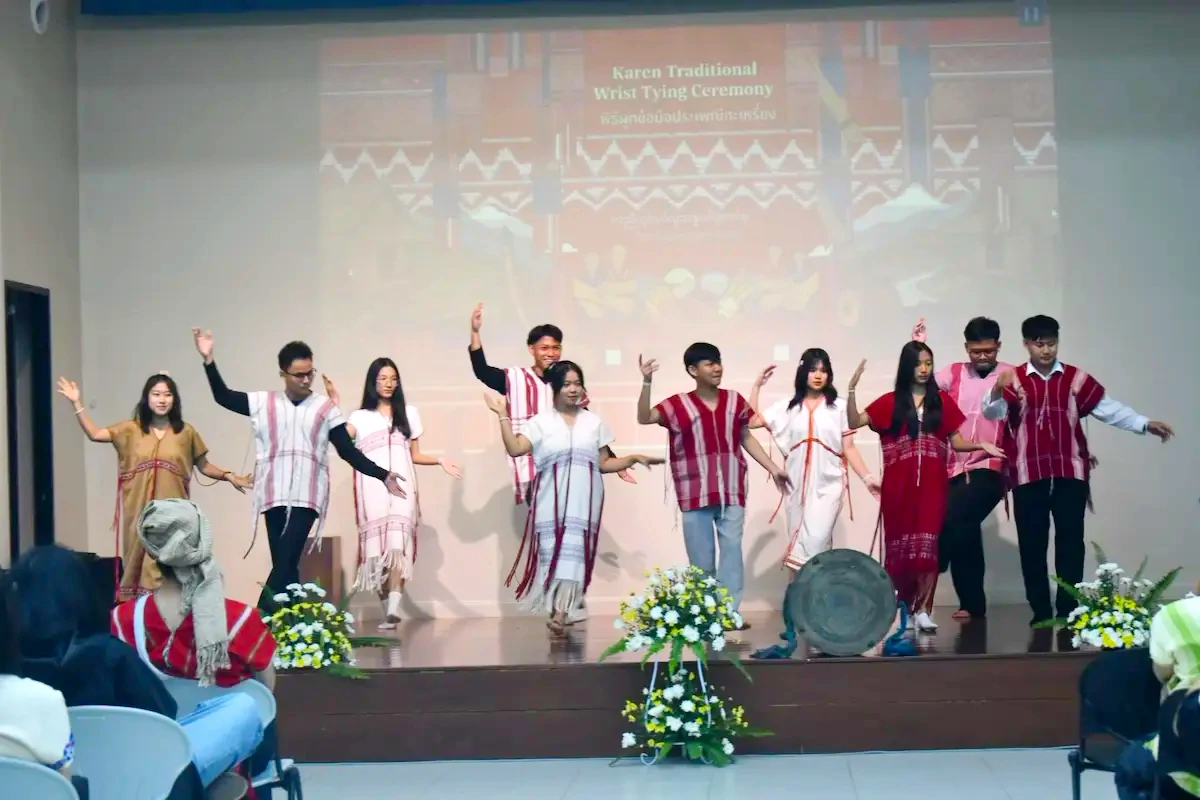 More than the continuation of a traditional ritual, the Karen traditional wrist-tying ceremony provided a space for cultural learning and intergenerational exchange. Young people were invited not simply to observe but to learn, participate, take on responsibilities, and contribute to the transmission of their cultural heritage. Through direct encounters with elders and other members of the community, they reconnect with their cultural ways of life, traditional knowledge, and the meanings embodied in the wrist-tying tradition.
Such participation is important for the continuity of cultural heritage. Preserving a culture is not simply about asking younger generations to remember where they come from. It also means giving them opportunities to understand how their cultural roots can guide them into the future. When young people are trusted to develop ideas, plan and coordinate activities, organise events, and welcome others into their culture, they become active contributors to its future rather than merely recipients of cultural knowledge.
At the same time, the ceremony demonstrates that cultural heritage cannot be sustained by one group alone. Collaboration among educational institutions, research and development organisations, cultural groups, and youth networks creates broader opportunities for cultural learning, exchange, and collective action. The partnership among the participating institutions and organisations provides a shared space where people from different backgrounds can encounter Karen culture, learn from one another, and build relationships based on mutual respect and understanding.
Ultimately, the Karen traditional wrist-tying ceremony demonstrates how cultural heritage can become a foundation for intergenerational learning, youth empowerment, reconciliation, community building, and collaboration. The white threads tied around the wrists are small, but the bonds they represent are much greater. They connect the present with the past, elders with younger generations, individuals with their communities, and people of different cultural backgrounds with one another.
As each thread is tied, it carries a blessing and a reminder: to remain connected, to forgive and reconcile, to care for one another, and to walk forward together in unity. Culture does not live only in memory. It remains alive through practice, learning, participation, and transmission from one generation to the next.