
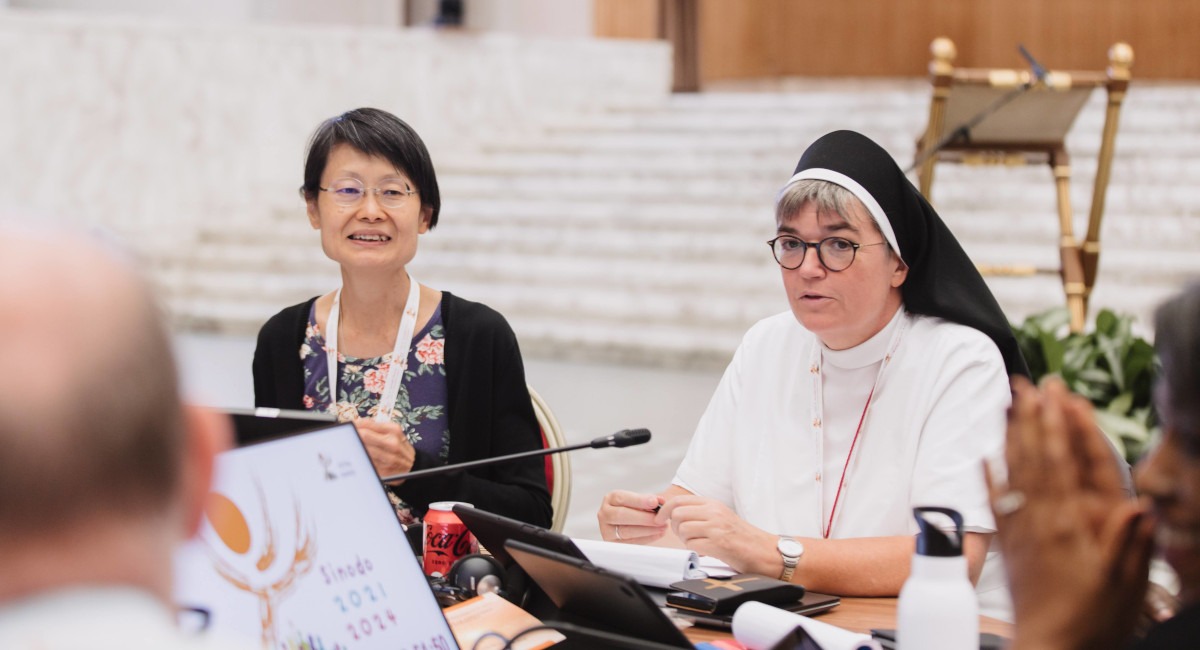
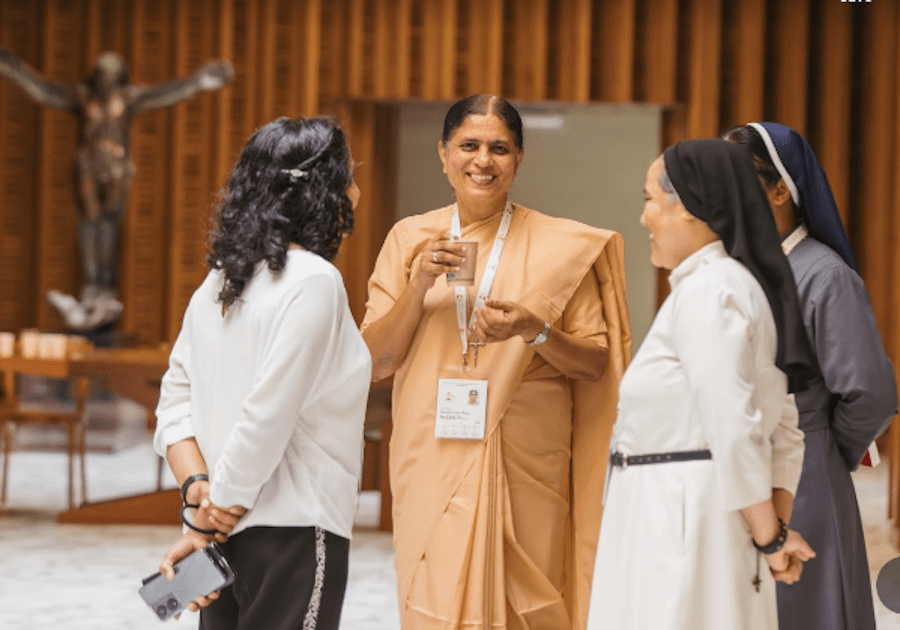
 In previous articles and presentations I’ve done about the Synod, I’ve often said that “the method is the message”. This phrase rang even more vividly at the October synod assembly. More than 400 people, including voting members, special guests, experts, and staff, were gathered in Rome for four intensive weeks. Many things about the assembly were novel – from the presence of non-bishop voting members (including more than 50 women) to small group conversations and roundtable seating at which persons from diverse ecclesial ranks, cultures, and traditions interacted with each other.
Perhaps the most novel thing of all is that this assembly began not with a draft text of pre-determined conclusions but with a bold list of open-ended questions, for which the Holy Spirit’s guidance is to be discerned communally. I thought to myself: Finally, we are seeking and making room for the Lord to speak! In line with this objective, the programme included a retreat as well as times of prayer and communal liturgies, Scriptural and theological reflections, moments of silence, sharing, and a lot of listening to each other. Thus, the aula of the synod hall was transformed into a sacred space of encounter, listening, learning, and maybe even conversion.
Moreover, since the process was relatively new, some steps were left open for adaptation as we went along. At times, even the process and schedule were changed in response to feedback. Indeed, we frequently said the “ship” was being designed and built even as it set sail! To me, this is a sign of willingness to remain flexible to the context and try new things so as to better meet the assembly objectives. One of the greatest fruits of the meeting was that over four weeks of hard work through many conversations and cappuccinos, people who were hitherto known to one another only as faceless statistics in the ecclesial landscape became not just fellow assembly members but friends in the Lord.
 As one of the facilitators of the Conversations in the Spirit, I was very enriched by the sharing and reflections of each person in my small groups. What was even more edifying was seeing how the participants truly endeavoured to listen deeply to each other, trying their best to understand and welcome, especially those points of view that were different. I was especially inspired by those participants who went out of their way to get to know persons who had different perspectives from them. Of course, not all participants had the same extent of engagement, and opposing perspectives emerged more sharply as the discussions progressed in detail and honesty. Nevertheless, there was an overall willingness and openness to engage authentically in the process and to seek the way forward together. I could see that God was working something new, helping us to see each other as a brother or sister in the Lord, especially the ones who seem so different in their contexts or points of view.
Many participants said that the method of Conversations in the Spirit made a big difference in this synod assembly. Indeed, it provided a structure in which everyone’s perspective can be heard and all the sharing can be reflected upon collectively in order to identify the resonances, divergences, questions, and possible ways forward. Moreover, the conversations occurred in an atmosphere of prayerfulness, with inner attention to what the Holy Spirit might be leading the group to see. The preparation of each participant in terms of praying and reflecting on the topic was crucial. Just as important was the cultivation of a disposition of hospitality, compassion, openness, honesty, patience, fidelity to the love and truth of Christ, and trust in the Lord who leads.
What I count as another major fruit of the meeting is the conviction expressed by not a few participants that the way of proceeding at the assembly is certainly something to foster back home in their local church and society. More than just the exterior processes, I think they refer especially to the interior dispositions that are cultivated because these are the very ones that make us a pilgrim community of Christ’s disciples. Whatever the conflicts or questions we have to face, these are the dispositions that will help us walk the right way. Hence, although the post-assembly synthesis report contains many principles and ideas for moving forward, it is the lived experience of the assembly maturing over the four weeks together that will bear fruit around the world. Here again, I can say that the method we have lived is the message we wish to share.
Dr Christina Kheng has written a detailed account of Spiritual Conversation in the synod process in The People of God have Spoken – Continental Ecclesial Assemblies within the Synod on Synodality.