

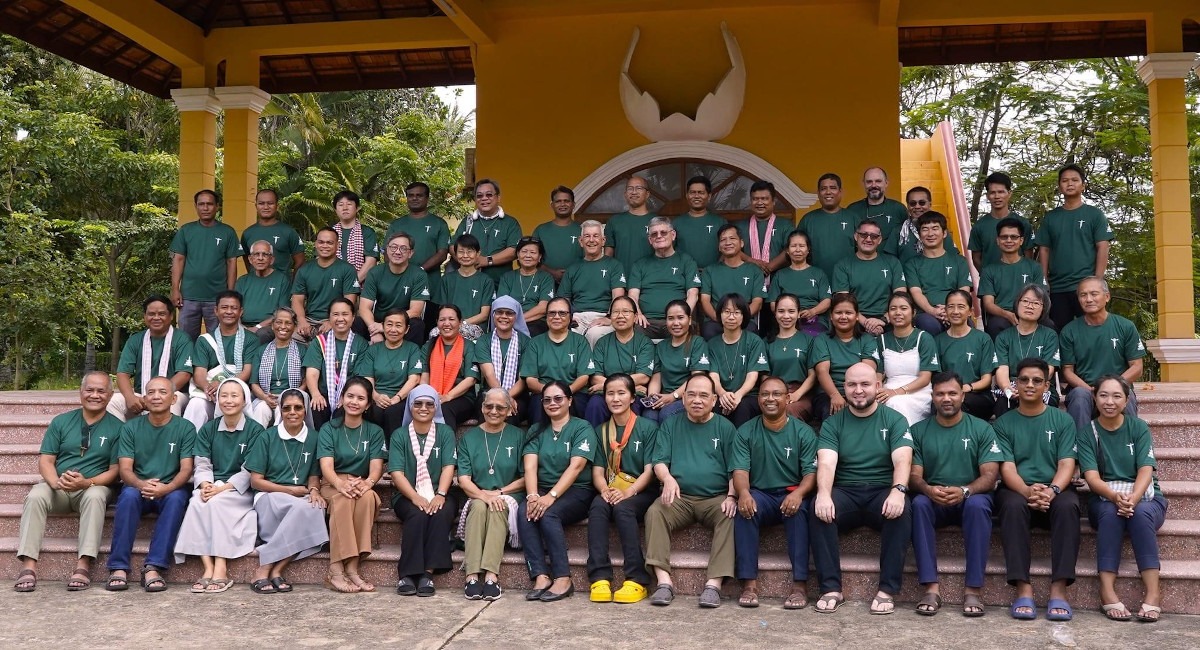
 The Catholic community in Battambang, Cambodia is taking steps towards nurturing a more synodal Church, one that listens to all her members. A recent workshop on synodal leadership was facilitated by a team from the East Asian Pastoral Institute (EAPI) in response to the invitation of Bishop Enrique Figaredo SJ of the Apostolic Prefecture of Battambang.
A total of 70 participants attended the workshop on Synodality: The Way of Being Church from 7 to 9 November. Dr Christina Kheng, a facilitator at the recently concluded Synod on Synodality in Rome, led the workshop, alongside EAPI Extension Program head Fr Johnny Go SJ, and Fr Michael Smith SJ from the Australian Province.
Dr Kheng felt an immediate shared sense of synodality, which made it easy for the participants to learn and engage in spiritual conversations. “Being with the participants at the workshop, I felt as if I had entered a sacred space. Besides their warm hospitality and welcome, there is also something special about the way the pastoral workers relate with one another, whether clergy, religious, or lay, and whether local or foreign,” she shared.
Synodality is a spiritual practice encouraged by Pope Francis that invites all the baptised to participate in an act of discerning by listening to the community. For the Church to promote synodality, several paradigm shifts are needed in the way the faithful think of the Church: from a hierarchical Church to the People of God and from a teaching Church to a listening Church.
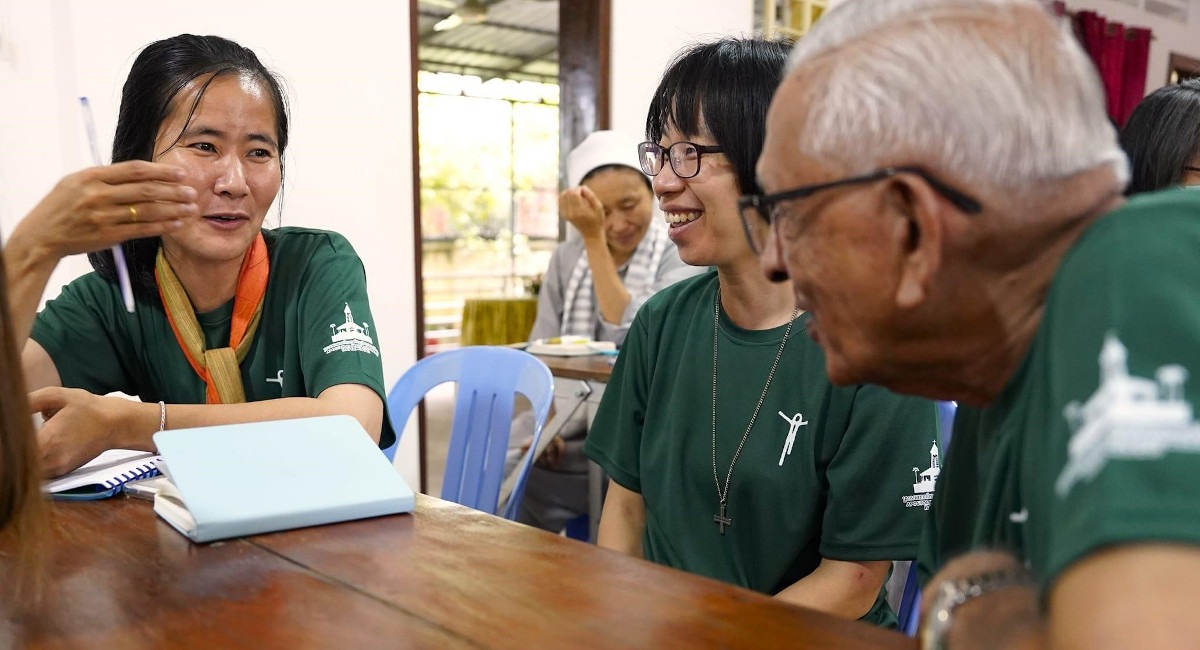 The workshop began with an introduction on synodality, followed by a sharing from Bishop Figaredo and Dr Kheng of their first-hand experiences of the Synod on Synodality in Rome. Afterwards, Fr Smith guided the participants in designing prayer experiences and going through them.
Fr Go, in his presentation, focused on the spirituality that synodality entails. The participants were provoked into reflecting on the Church teaching on the sensus fidei—that every single baptised Christian has been endowed with a sense for the faith, a creative facility to interpret revelation, as well as a critical one for evaluating these interpretations. It is a challenging teaching because, by virtue of the sensus fidei, we have to be willing to listen not only to bishops, priests, or religious, but to all lay people—and not just to practicing Catholics, but also to non-Catholic Christians and non-practicing Catholics. Fr Go also spoke of the essential practice that the sensus fidei makes possible: spiritual discernment.
One of the participants remarked on the value of listening and God’s invitation to accept others “without evaluation or misunderstanding”. Another expressed the desire to conduct more regular family visits and community meetings. “I should listen more to people I work with and am entrusted to care for,” the participant shared.
Still another marvelled at the refreshing inclusiveness that the Church is promoting: “The synodal Church has opened new ways to welcome the laity to be more involved in decision-making, unlike in the former structure where only the cardinals and bishops made decisions for the rest of the Church. Now in the synodal Church, everyone’s ideas and thoughts are welcome. It includes everybody in the process of decision making.”
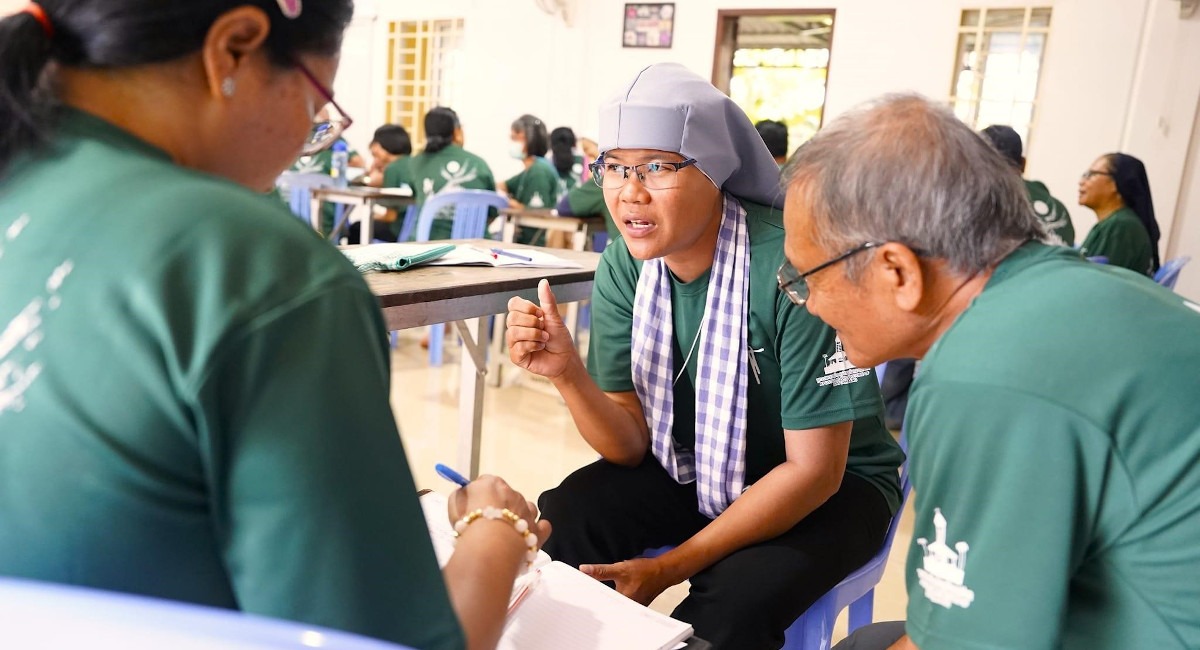 Fr Totet Banaynal SJ, a Filipino Jesuit missionary who coordinated the workshop, expressed his gratitude for what he learned about synodality, “from its rootedness in the Gospel about the missioning of the apostles to walking together in a mission guided by the personal and church’s sense of faith. It is so encouraging for me, who is in a foreign mission, to see that our journey to God is like crossing together an unfinished bridge that we continue to build as we move forward.”
He also acknowledged the difficulties ahead: “I see challenges coming from Cambodian culture and from our commitment towards conversion. I will try to apply the ideas I learned in small steps. I will start by calling a parish council meeting, sharing the elements of synodality with them, and showing them the three-round sharing. I will be there to participate and to listen.”
The three-round sharing refers to the structure that was used to manage all the conversations conducted at the Synod on Synodality. It optimises the opportunities for listening and prayerful reflection, making it an ideal way of listening and discerning together.
Asked about possible next steps, the participants were not lacking in very concrete suggestions for the Church in Battambang. But perhaps one of them captured everyone’s sentiment when she said, “To create a listening space for all the parishes for the collaboration of our pastoral plan for the prefecture.”
This workshop in Battambang was a resumption of EAPI’s on-site extension programme activities since the Covid-19 pandemic. With the current emphasis on synodality in the Church, EAPI hopes that more of such programmes will be done around Asia-Pacific. Those who are interested in similar workshops can contact EAPI at [email protected].
Photos courtesy of the Apostolic Prefecture of Battambang


