
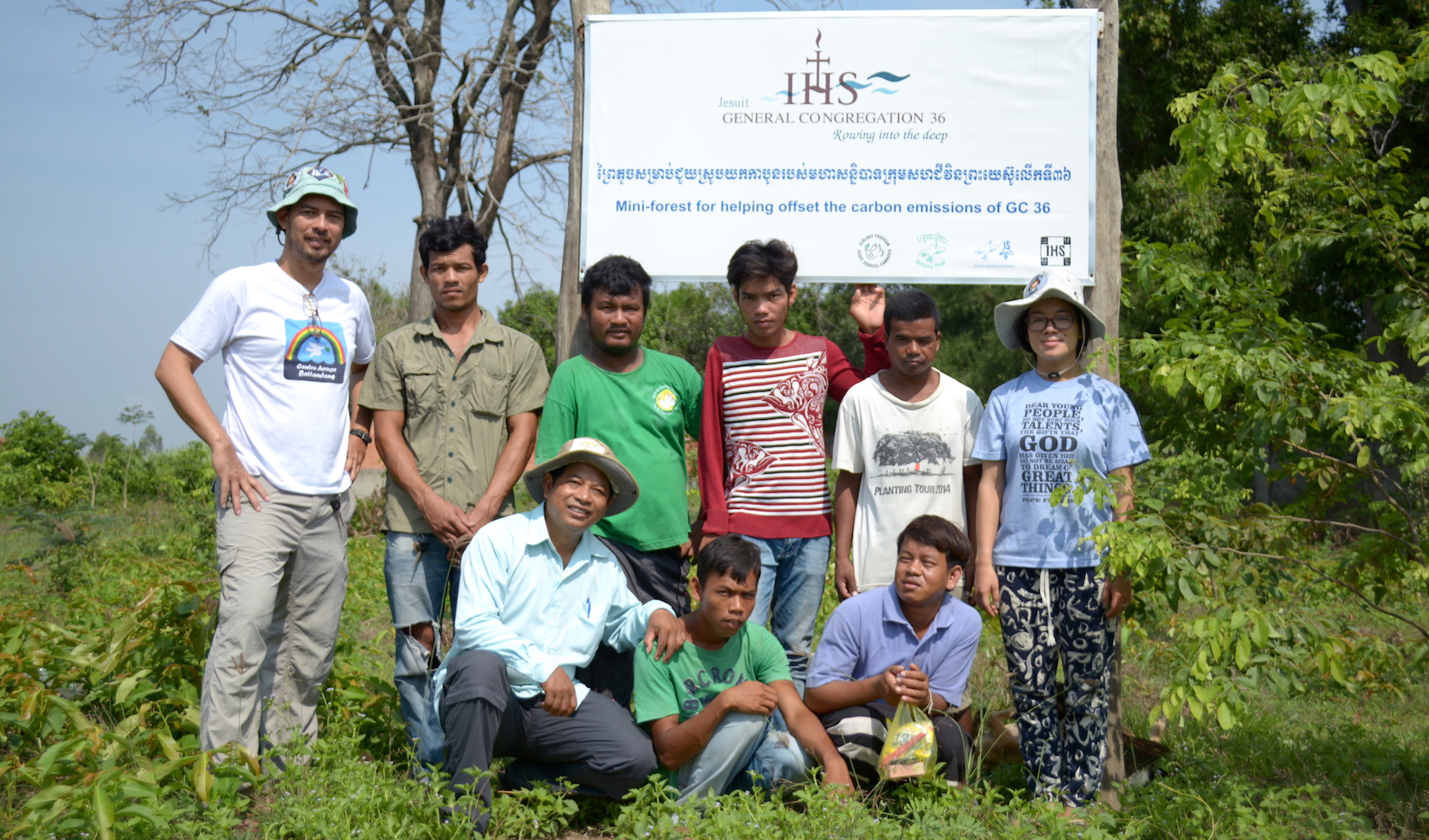
 Across the world from Rome, a mini-forest is growing to help offset the carbon footprint of the 36th General Congregation (GC 36). As the 215 delegates from 62 countries met in the aula of GC 36 last October, members of Jesuit Service Cambodia and Banteay Prieb, a Jesuit vocational school for persons with disabilities, planted 400 seedlings of native hardwood trees, including several locally endangered species, on one-hectare of land owned by the Jesuits near the school. The seedlings are growing well and there are plans to plant more on the site when the wet season arrives in a month or so.
“As we watched the proceedings of GC 36 from afar, we felt we could contribute by helping the Society offset the carbon footprint of this meeting,” said Fr Gabriel Lamug-Nañawa SJ, who coordinates Jesuit Service Cambodia’s Ecology Programme. “The flights of the delegates, the electricity used during the meeting, the extra food and drinks, transportation and other additional services meant that because of GC 36, more carbon was expelled into the atmosphere, contributing to the global pool of greenhouses gases, and hence, albeit incrementally, to climate change.
“The congregation did not have to be a positive carbon producer,” said Fr Lamug-Nañawa, noting that the aula and logistics had been organised with care for the environment in mind. One example is the use of electronic tablets by the delegates, practically eliminating the need for printed documents.
The initiative for the mini-forest was announced during the closing moments of GC 36, and the delegates were invited to support it with a donation of €10 each. More than a third of the delegates responded, giving a total of €780 for a forest to grow halfway across the world.
T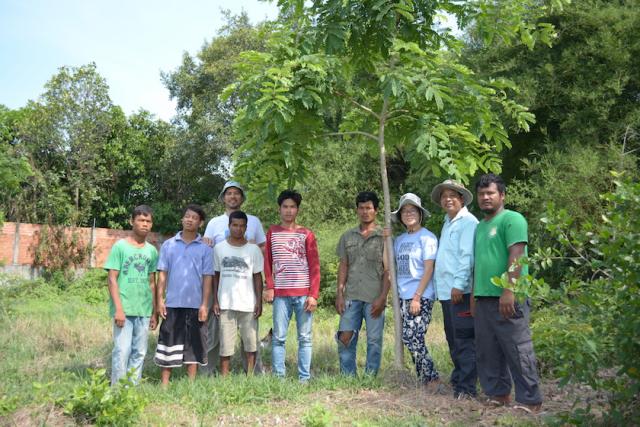 he mini-forest in Cambodia will allow endangered native trees, such as Dalbergia cochinchinensis, Afzelia xylocarpa and Pterocarpus pedatus, to sequester carbon as they grow. It will also improve the quality of the soil, which is the second largest carbon sink on the planet next to the oceans. In growing the mini-forest, the members of Banteay Prieb were able to participate in their own unique way in GC 36.
“There is an urgency that surrounds climate change, and we can all do much more in our response,” said Fr Lamug-Nañawa.
According to the United Kingdom’s Meteorological Office, National Aeronautics and Space Administration (NASA), and the National Oceanic and Atmospheric Administration (NOAA) in the United States, the year of GC 36, 2016, was the hottest year since formal measurement and recording began in 1880. The last time the earth’s surface temperature was the same as it is now was 115,000 years ago. Last year was also the first time that year-round levels of CO2 in the earth’s atmosphere perched above 400 parts per million, which is what scientists call the “carbon threshold”, a tipping point that would mean greater changes in climate lasting thousands of years. And of course, it is the poor who will suffer the first and the worst of these consequences.
“We can all do more in our own communities and institutions in how we organise our meetings, how we use energy and transportation, how we conduct our own personal lifestyles and other activities that generate more carbon,” said Fr Lamug-Nañawa.
“It sounds like a herculean task, but … as Fr General Arturo Sosa SJ said during GC 36, we are called to labour with the audacity that comes from God, not only for the improbable, but also for the impossible.”