
 Farming not only connects people to God but also shapes them to be environmentally conscious. This fundamental principle is what guides the Jesuit-run Kursus Pertanian Taman Tani (KPTT) Agricultural Center in Central Java, Indonesia.
“The ultimate goal of farming is not merely the growth of crops but the cultivation and perfection of human beings,” said Masanobu Fukuoka, a Japanese farmer and advocate of “natural agriculture”. Farming is a skill that can be learned and put into practice. However, if one does not have the right mindset and commitment to becoming “a cultivated and perfected human being”, the outcome and consequences of farming can be detrimental to others.
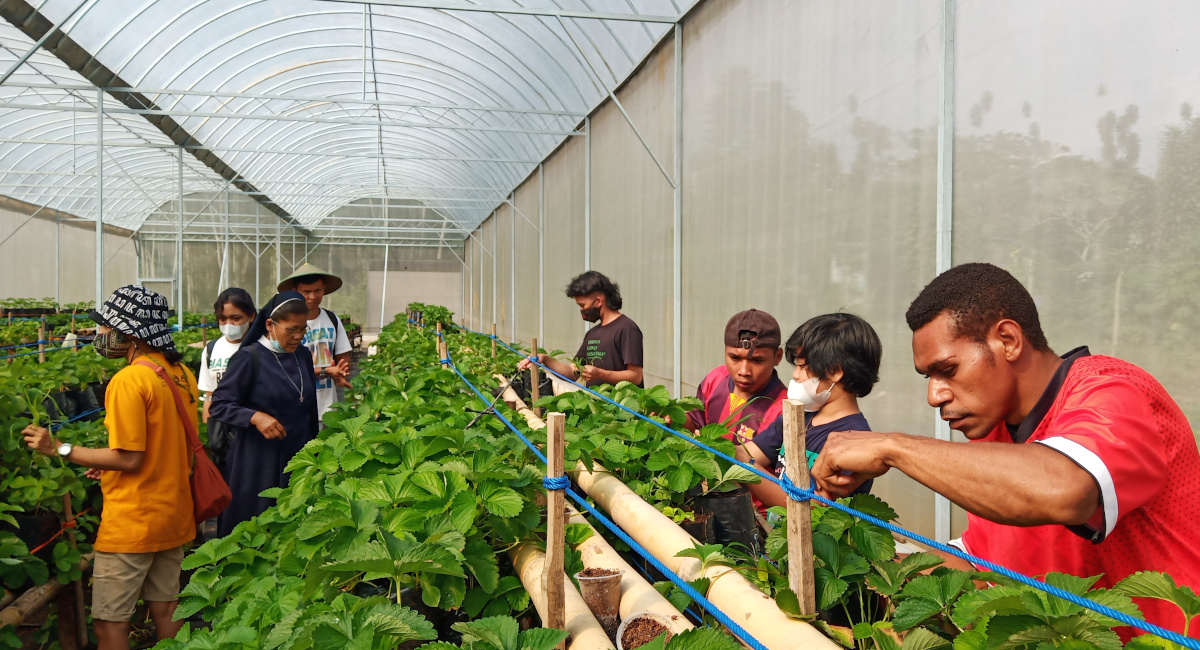
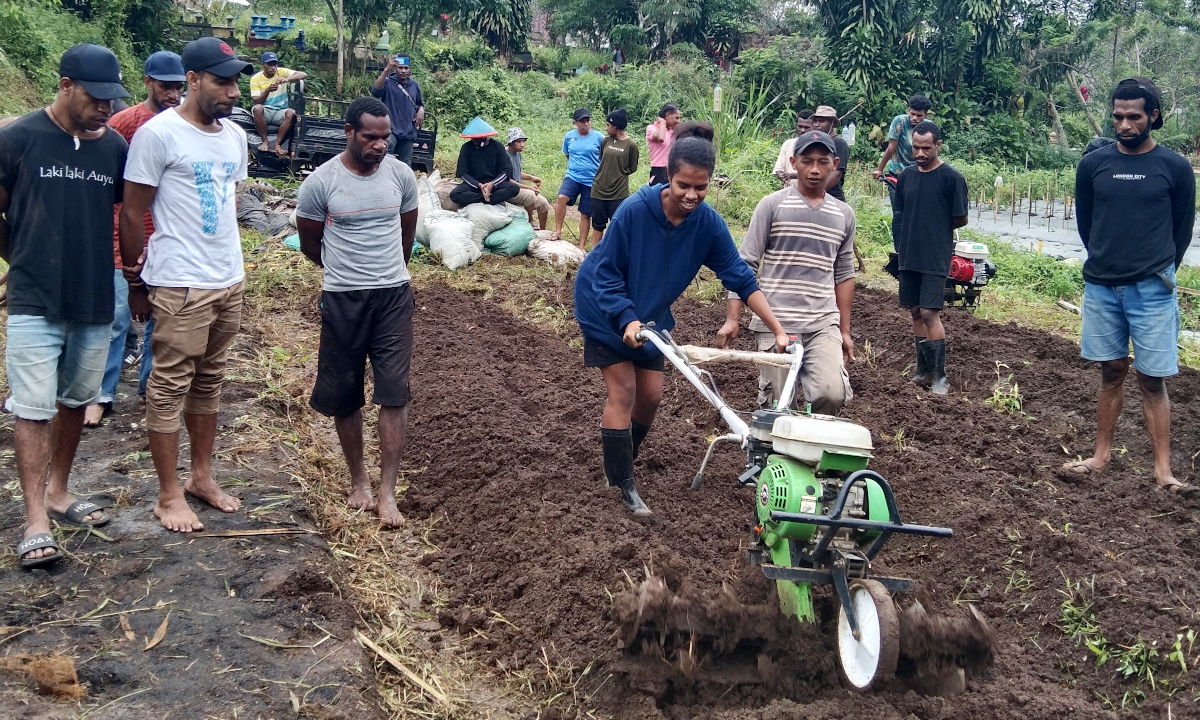
In the 59 years that KPTT Agricultural Center has been operating as a boarding and day school that teaches organic farming, we have learned that agriculture leads us to an experience that is deeply spiritual, ecological, and eminently formative. When we ask our students, the participants in our sessions, or our visitors about how they feel after participating in our course, internship, or simply after a short trip to KPTT, the most frequent response is that of joy—the joy of discovering and directly engaging with creation and taking part in our agricultural formation programme. This is an immense source of consolation for us.
 Another sentiment that is noteworthy is the feeling of affirmation of the importance of agriculture, coupled with a greater appreciation for and inspiration to pursue it. The participants in our sessions are delighted to witness and be directly involved in the growth of the various crops they have planted—from seed to germination, growth stage, flowering stage, and fruiting stage. It is an awe-inspiring process to witness a small seed grow into a large plant, bearing stems, leaves, seeds, and fruits. What is more captivating for them is realising that all the parts of the plant provide sustenance and can be made into different useful products.
KPTT believes that farming is not just an act of cultivation but a profound connection to God, who continues to work in us, evoking joy and wonder, and serving as motivation for our daily lives. Theologians have said that spirituality is something that connects us to God. For us, farming is a spiritual encounter that connects us to God. We like to call it, “finding God in farming”.
Agriculture can be one way to share the Good News, especially among young people. The youth of today are acutely aware that our world is facing a food and energy crisis. This is an opportunity for us to promote ecological awareness by concretely involving them in planting agricultural crops and nurturing them.
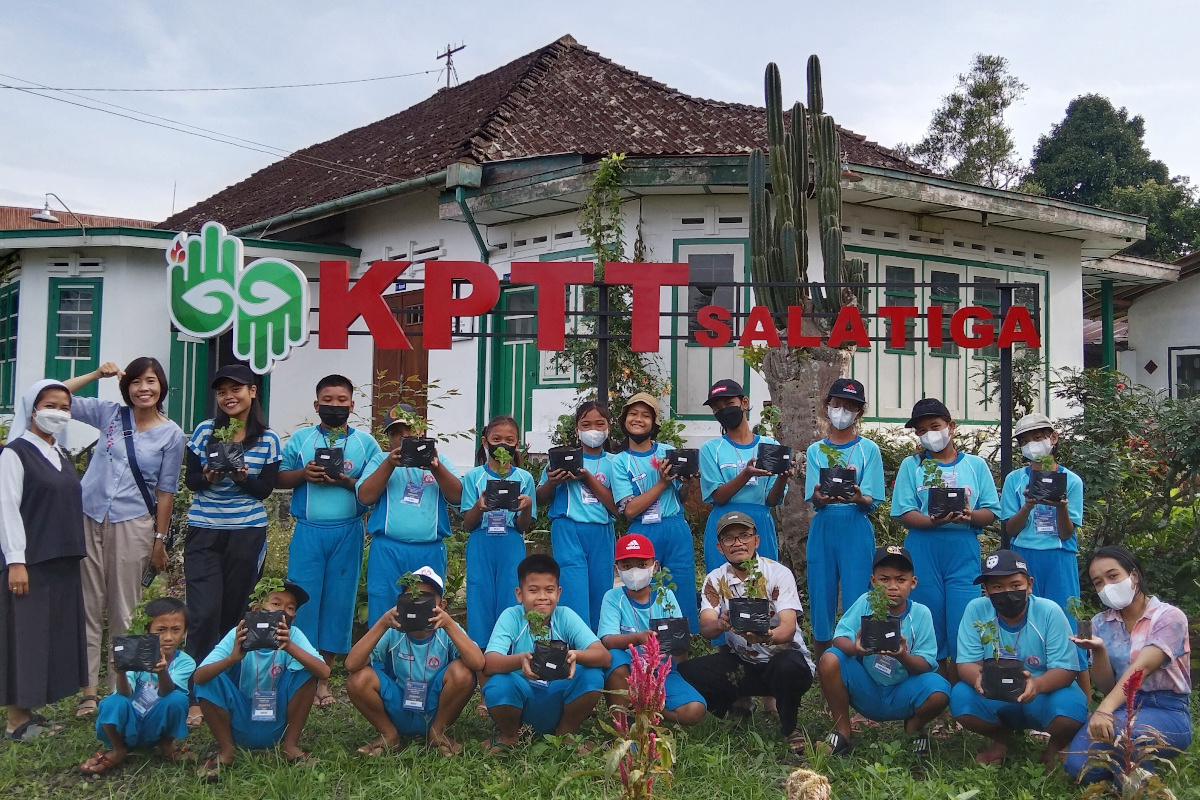 We are grateful that agricultural projects can be a platform for Jesuits to walk together with the youth. Last year, over 1,600 young people came to KPTT for agricultural courses, internships, and visits. Some of them directly expressed their newfound interest in agriculture and decided to study and work in the field as a way to build their future. Since June of this year, 1,050 people have come to us to learn about farming. This is our role as Jesuit educators: to accompany, educate, and orient people’s lives in a positive direction. At the same time, through evaluation and reflection, we also have the opportunity to direct them towards finding their divine path to God.
The ecological movement within our Jesuit province finds expression in our different communities and apostolates, each adopting distinct forms of action. For two years now, several colleges have taken proactive measures. For instance, students from de Britto College cleaned the river around their campus as part of their school programme, and undertook planting activities in their natural laboratory. Sanata Dharma University sent 70 students to KPTT to learn about ecology and farming. In February, we ran a similar farming course for 55 students of a minor seminary run by the Jesuits. In April, Canisius College organised an excursion for 180 students to strengthen their environmental awareness.
The Indonesian province has been forming a team to further promote the Universal Apostolic Preferences. In a recent meeting with our provincial, KPTT conveyed our intention to transition into an ecological pastoral centre instead of simply offering agriculture courses. We aspire to be an apostolate committed to promoting ecological awareness and agro-ecological practices, both within the province and the wider community.