
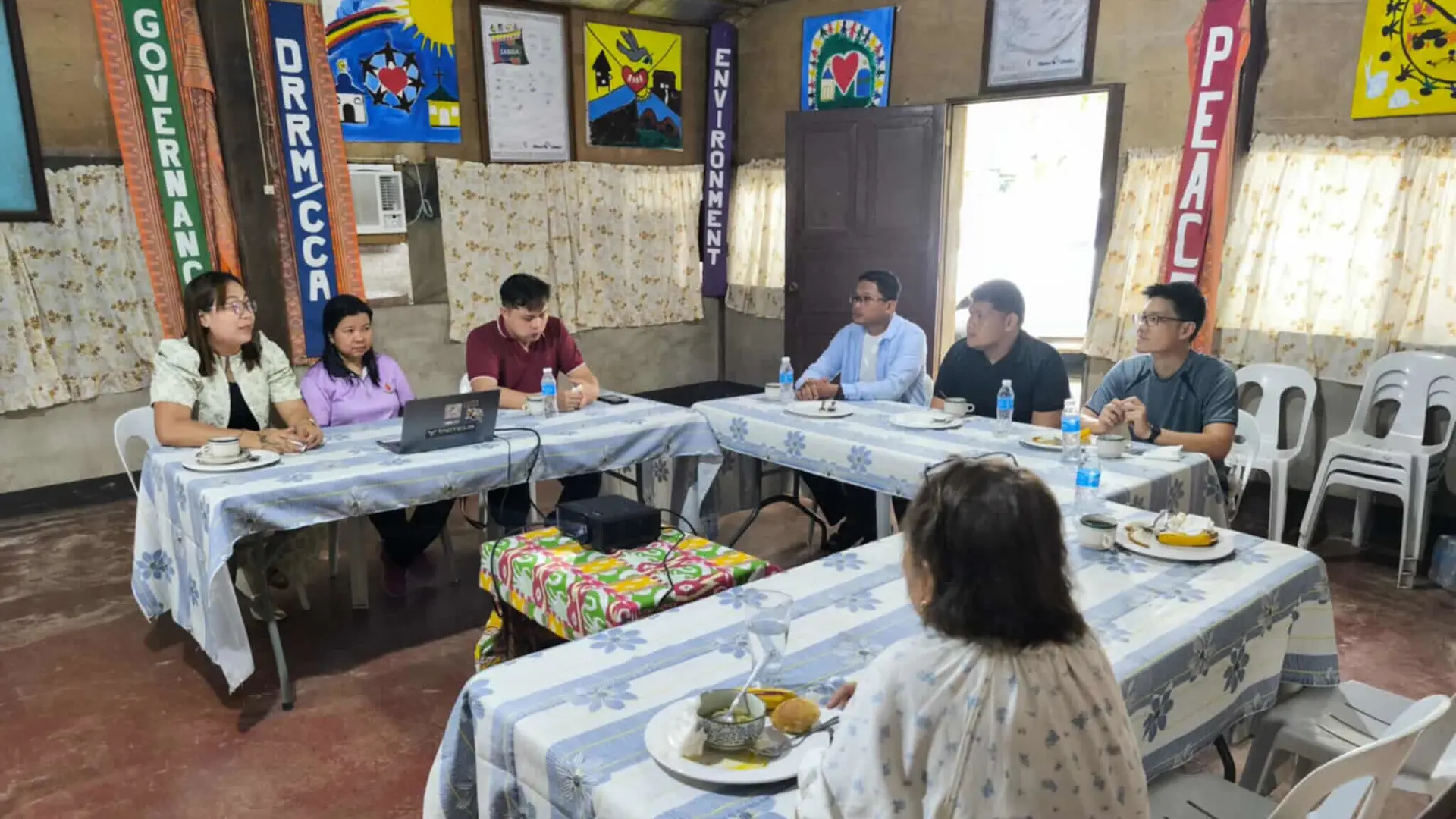
The author, in grey, discusses interreligious dialogue with Nagdilaab Foundation Inc
Nagdilaab is a Cebuano word that translates to “on fire,” “flaming,” or “blazing”. Fire is both life-giving and destructive. Harnessed well, it keeps us warm, gives us light, and allows us to cook our food, but left unchecked, it has the power to devastate and destroy.
My month-long summer intersession apostolate brought me to Zamboanga City, Basilan, and Dipolog to learn about interreligious dialogue. Southwestern Philippines, particularly the islands in the Sulu archipelago, are infamous for their history of bloodshed with the Moro rebellion and Abu Sayyaf. The years 2000 to 2019 were rife with reports of sieges, bombings, kidnappings, and killings. Even today, many still avoid southwestern Philippines because of its lingering security stigma.
Why, then, you may ask, did I choose to come to this place? Isn’t it foolhardy? While it may seem opposed to reason, visiting lands previously ravaged by war and conflict (with proper precautions, of course) can be a powerful alternative to conventional vacations. By stepping outside my comfort zone and confronting the cry of war-torn communities, I stood to regain a piece of our shared humanity.
What I found in the places I visited was hope forged over decades of strife and unrest. This is not a superficial hope that is glibly spoken but rarely lived, but an indomitable hope tested by the destructive fires of oppression. It is gritty, purified, passionate, and life-giving.
Several non-government organisations (NGOs), religious groups, and grassroots movements have stepped up to rebuild communities and harness this life-giving fire through interreligious dialogue (IRD). One such organisation is The Silsilah Dialogue Movement. Meaning “chain” or “link” in Arabic, Silsilah, which is based in Zamboanga City, promotes IRD and peace through various formation activities focused on solidarity, the common good, and people’s needs, all grounded in a “life-in-dialogue” approach. Another group, Nagdilaab Foundation Inc, works on child protection, education, peacebuilding, and sustainable development in Basilan. It famously mooted a “Recycling War Trash for Peace” project that collects and transforms discarded military materials into items promoting peace and development.
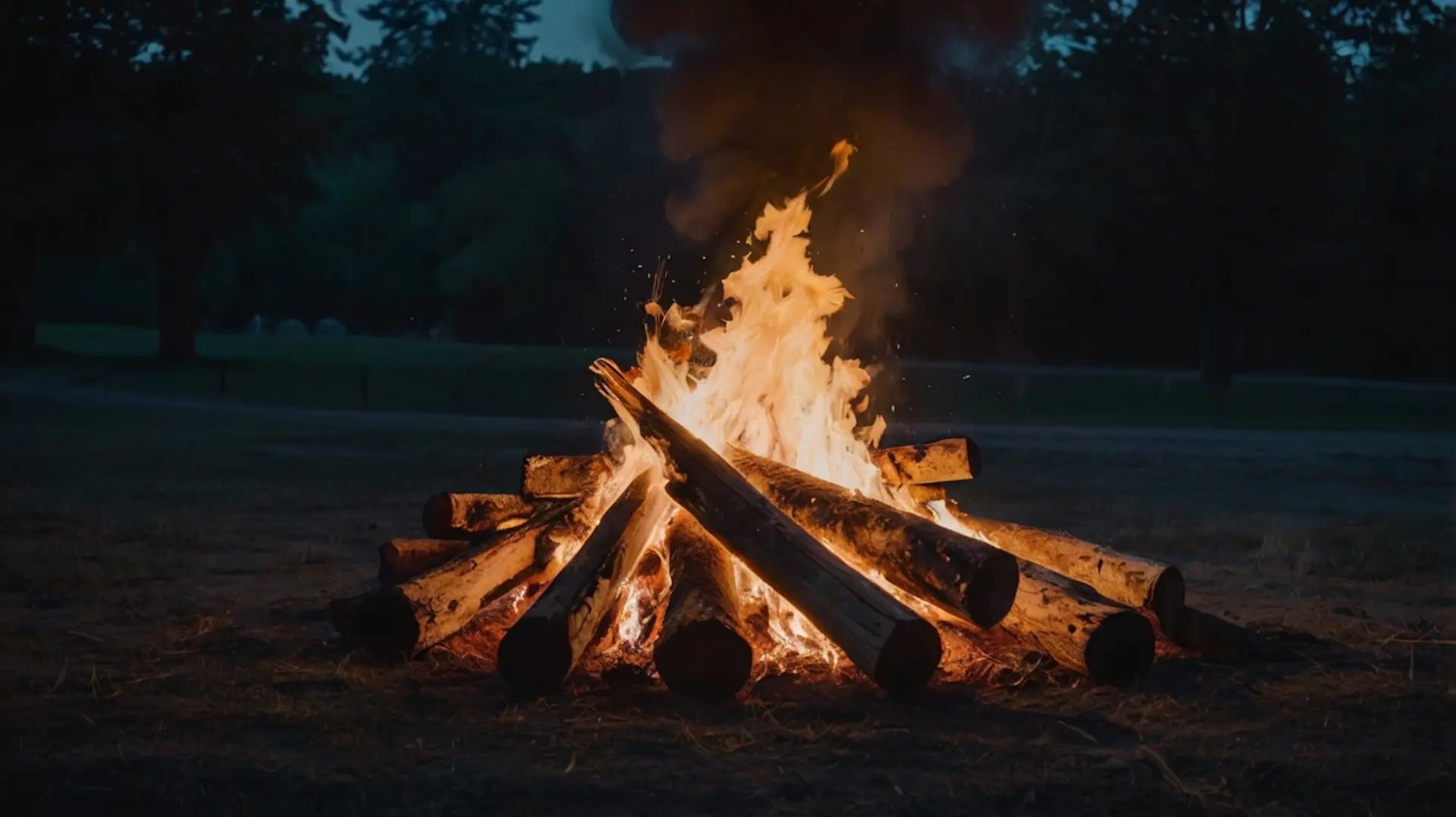
Hope tested and strengthened by fire
The peace these organisations work towards is never guaranteed and remains volatile at best. The persistence of local conflicts and security risks, weak governance, service delivery gaps, fragmented and (sometimes) politicised stakeholder landscapes, along with slow behavioural change, cultural sensitivities, and misunderstandings contribute to the complexity of the situation. It is a risky, lifelong struggle that requires a synodal, multifaceted, and multipronged approach. Make no mistake about it—hope is a costly affair, not just in monetary terms but in effort, time, and resources. Yet, those who dare to risk are often the freest and the most hopeful.
Here, hope springs from the fertile ground of history—from painful lessons learnt and a collective desire to be better, to learn to coexist, and to avoid escalating differences into conflict, labels, and tribal and familial feuds.
Although they are aware of their differences, the organisations and people I encountered choose to focus on the best parts of themselves. What they practise is not a superficial tolerance (which often masks prejudice) but an authentic IRD, with an eye always on the ultimate prize—a genuine appreciation for people who are different, without seeking to change them. There is space for everyone: a space large enough to not simply tolerate differences but to fully (or at least possess a desire to) embrace them. To stretch our hearts to be able to love and see others as brethren. When we realise that win-win is possible, that peace does not have to come at the expense of another, that is when the real work of dialogue begins.
Thanks to these organisations and individuals, the social needs of local communities are finally being addressed. People now have access to housing, education, scholarships, agriculture, and livelihood programmes. Although much work is still left to be done, the peace of recent years is an encouraging sign that current efforts are paying off. A case in point is the road connecting the Basilan towns of Maluso and Tairan. According to locals, travellers once avoided this route, opting to detour by sea for fear of being ambushed or killed. Today, they say, the road is safe to travel at any time of day.
I am grateful that in my brief stay, I witnessed how various groups engage in the process of healing and restoration, support education, and further the work of IRD, thereby combating fear and dispelling stigma. Connecting with people, immersing myself in their way of life, and showing solidarity in learning their culture made me look forward with hope. I realised from their experience that revisiting the wounds of the past as brethren helps us reclaim our humanity and teaches us how to live in solidarity with others. After all, it is through our wounds that grace flows.
There is an African proverb: “However long the night, the dawn will break.” I’ve read it put this way: “No matter how difficult or dark a situation may seem, it will eventually pass.” Just as every night gives way to dawn, challenges and hardships lead to new beginnings.
But how does one know that dawn is breaking and the night has passed? Interacting with individuals who had endured the devastation of a siege has altered my perception from that of a fearful, foreign visitor to a citizen and companion of hope. I can never guarantee peace, but I know that peace requires an authentic struggle from all of us. It is through people’s stories, efforts, and impassioned pleas for peace that I am reassured that hope is never lost. This is how I know that peace is never a lost cause.
Related story:
Relishing God’s gift of diversity