

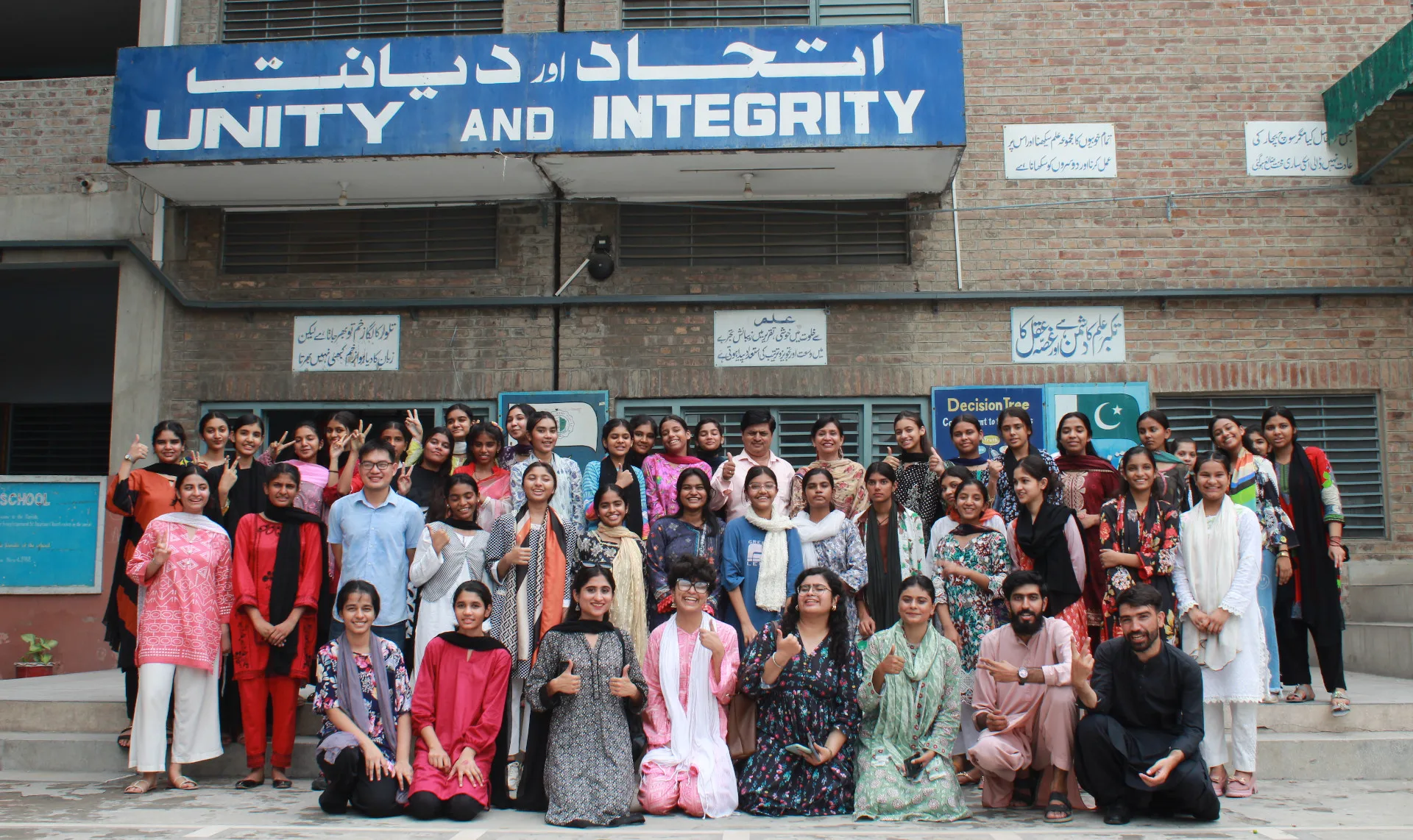
 The Jesuit mission in Pakistan is engaged in education and formation programmes for religious and laypeople. Roma Shamshad who works at the Loyola Research Hall in Lahore shares her experience talking with students from St Mary’s High School about climate change and their impact on women and girls.
On 27 June, I found myself standing in front of a room full of young girls at St Mary’s Jesuit High School in Lahore, their eyes filled with curiosity and hope. I had come not just as a speaker or professional but as someone who deeply believes in the power of education, awareness, and action, especially when it comes to issues that touch the lives of women in often unseen ways.
This session on “Women and Climate Change” was more than just an event; it was the culmination of weeks of observation, planning, prayer, and a strong desire to meaningfully coordinate with the Jesuit mission in Pakistan and contribute to the lives of these students. As a social activist and a professional administrative assistant at the Jesuit’s Apostolic Institute, Loyola Hall Research and Spirituality Center, I am constantly called to do magis, to strive for more, for the greater good, and the greater glory of God.
My journey into this mission began with a question that sparked deeply within me: How can young girls protect themselves and their communities from climate change when they don’t even know they’re at risk? Time and again, I had observed a painful gap, an absence of awareness among young women about how climate change impacts their lives, bodies, and futures. Despite being among the most vulnerable, especially in rural and low-income settings, women and girls are rarely included in climate conversations. They face longer waits for aid, a higher risk of gender-based violence during climate disasters, and serious challenges around hygiene and dignity, especially during emergencies. And yet, they remain some of the most resilient and grounded agents of change. This session was my way of helping them see that truth and of planting the seeds for them to rise as informed, empowered leaders.
As I contemplated how to take this awareness into action, I asked myself: “Can Jesuits coordinate with this matter?” I wasn’t sure. But after learning about the Universal Apostolic Preferences (UAPs) of the Society of Jesus, I discovered something deeply encouraging: “Caring for our Common Home” is at the heart of their mission. With renewed confidence, I proposed the idea of conducting an awareness session in one of the Jesuit schools, and to my joy, they welcomed the idea with open arms.
The day of the session arrived like a long-awaited sunrise. The school courtyard buzzed with energy. The students of St Mary’s Jesuit High School welcomed me not just with discipline and politeness but with genuine enthusiasm. The session began with two interactive presentations: the first introduced the basic science of climate change, while the second highlighted how and why women are more vulnerable to its effects, especially in developing countries like Pakistan.
We moved beyond words and into action. The students participated in eco-activities that included planting native trees that are beneficial for the environment of Punjab. These plants were more than just greenery; they were living metaphors for change, resilience, and future growth. One of the most moving moments of the session was when the girls signed eco-pledges, promising to play their part in reducing climate change, whether by avoiding single-use plastics, educating others, or turning off lights, fans, and water taps when not in use.
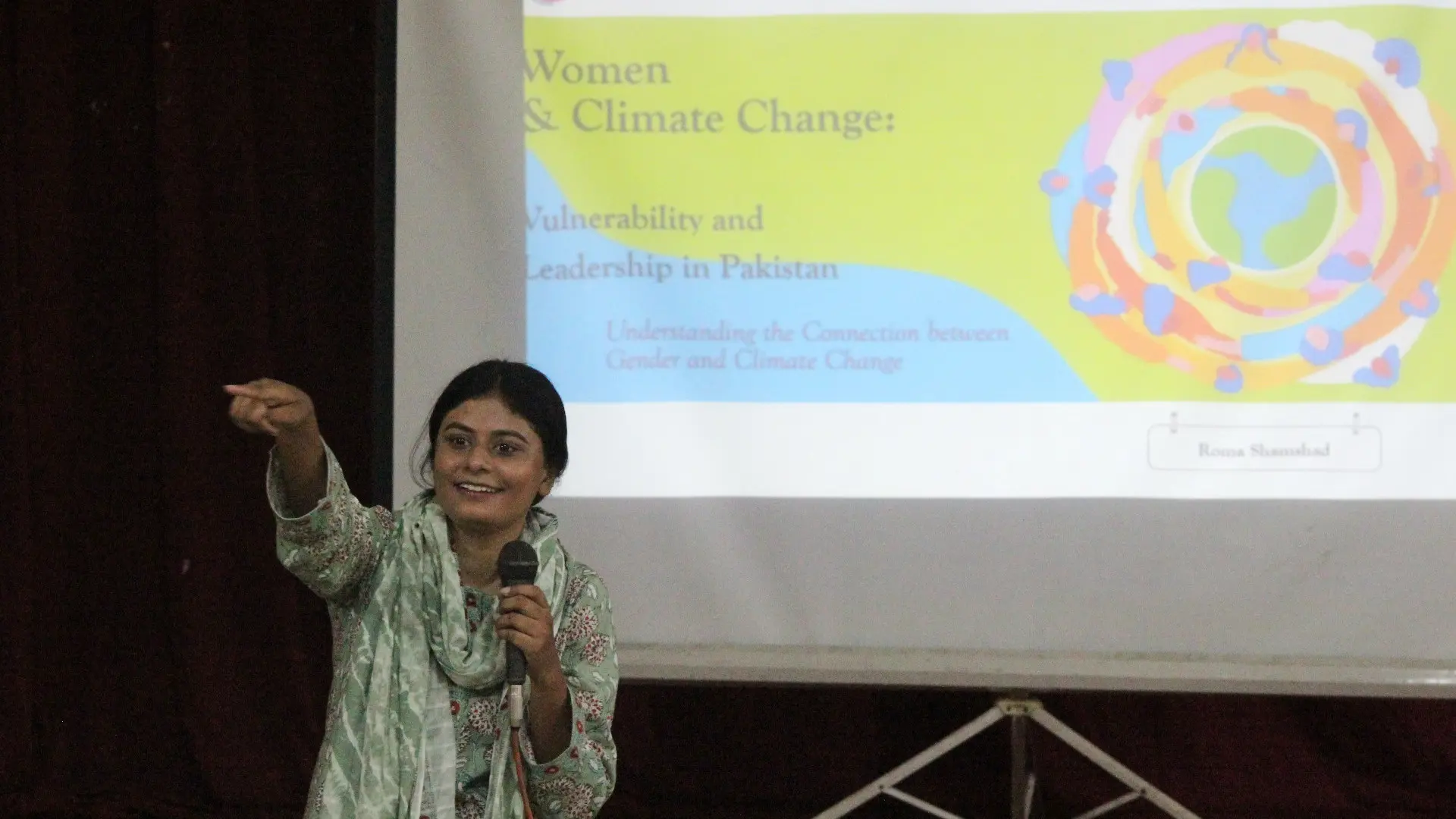 It wasn’t just their commitment that inspired me; it was their joy. The laughter during group discussions, the seriousness on their faces as they wrote their pledges, the sparkle in their eyes—these are moments carved in my heart. As I moved around the hall, speaking with them and listening to their thoughts, I realised this is where real change begins, not only in policies but also in hearts.
And just when I thought the session had reached its peak, the principal, Saiqa Aziz, made an unexpected announcement. She declared that from that day forward, the school canteen would no longer use plastic. The room burst into applause. It was a moment of collective victory. What had started as a small idea had now become a movement, describing that change is possible and necessary.
Reflecting on the experience, I feel immense gratitude for the Jesuits who trusted me and for Scholastic Peter Ngọc Long Nguyễn, who supported me throughout the process. His kindness, patience, and logistical support made everything smoother. From coordinating with the school staff to arranging the material for presentations and activities, he stood as a bridge between my mission and its execution. Most of all, I am thankful to God who continues to remind me that no effort is too small when done in faith. I realised that coordination is simply about creating paths and giving others the opportunity to shape their own lives.
As someone who works both within institutions and with marginalised communities, I often walk the fine line between the spiritual and the social. This session reminded me that the two are not separate. Serving the Earth, lifting up young girls, and awakening their potential is deeply spiritual work. It is mission work.
If even one of those girls grows up to lead a campaign, protect her community, or teach her children about sustainability, this session will have achieved something profound. And if they carry in their hearts the belief that they are not victims but agents of transformation, then the seeds planted that day, both literal and symbolic, will bear much fruit.
To be magis is to do more than what is expected, to love more, to risk more, to serve more. That day, at St Mary’s Jesuit High School, I witnessed magis come alive.