
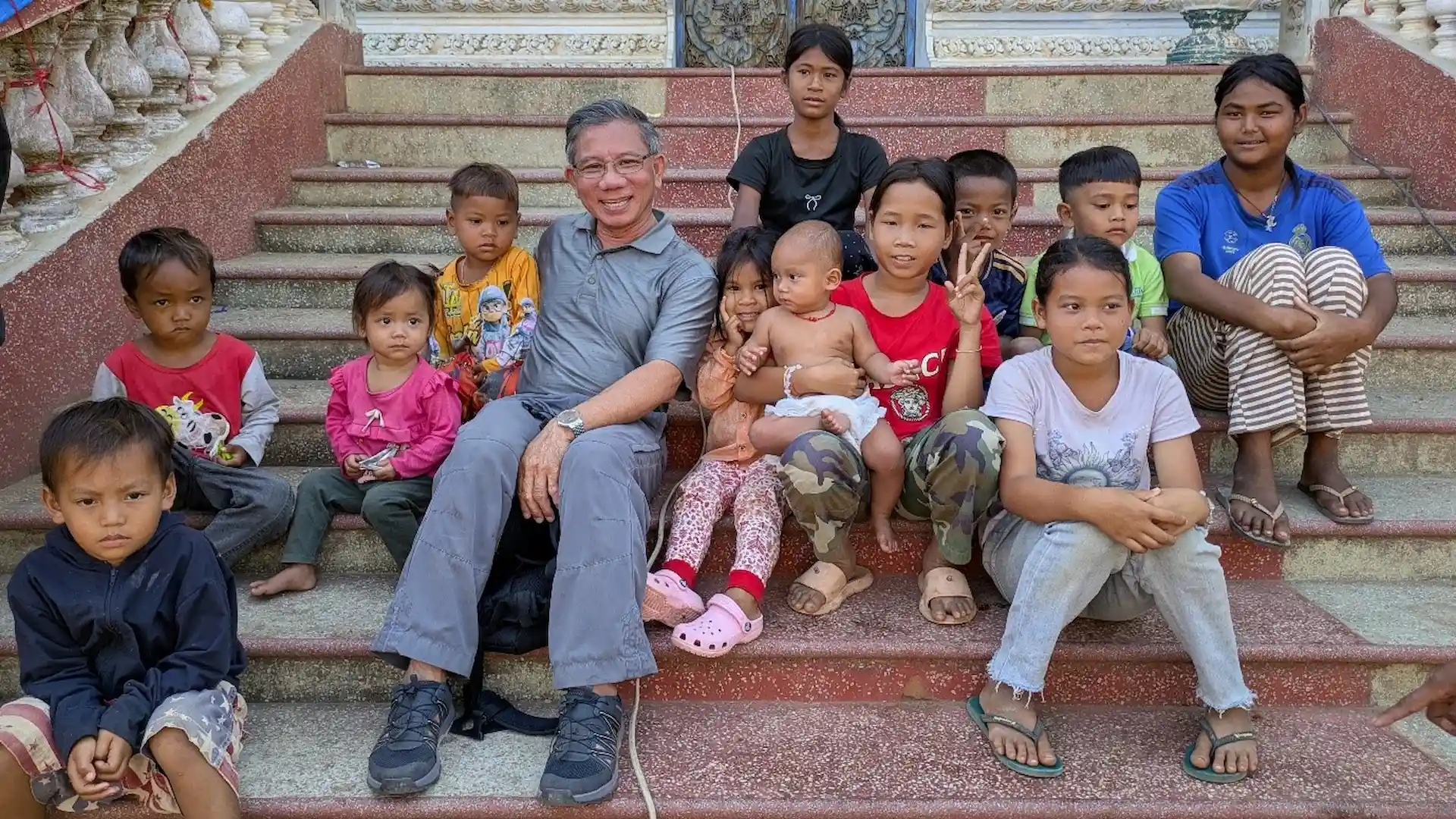
 In Cambodia, there is a population of over 70,000 ethnic Vietnamese stateless persons. They are neither Vietnamese nor Cambodian. They cannot read Vietnamese and do not know Khmer. They can’t even live on land; they live in floating hovels on the water. Poverty has become hereditary. In the autumn of 2025, Fr Tran Dinh Thuc of the Chinese Province set out for Cambodia to serve this community. He sought to discover whether one can still experience the presence of God in such circumstances.
I was once a Vietnamese refugee. That was 44 years ago, and I was young then. Today, I am in my sixties and a religious, a member of the Society of Jesus. Over these four decades, the world has progressed in many ways, helping people live more comfortably and bringing people closer together. Yet, lived experience tells a different story. For instance, while we can pick up a phone and video call with a friend 10,000 miles away, our frantic busyness often makes those living under the same roof feel worlds apart.
My decision to live among the stateless in Cambodia was born of a simple desire: to explore whether one can still find the concrete presence of God in such an environment or if it is quite the opposite. Although I read news about war, displacement, and famine every day, living in the peaceful haven of Taiwan makes my own experience as a refugee gradually fade over time.
The vast majority of stateless people in Cambodia are of Vietnamese descent, numbering approximately 77,000. They are neither Vietnamese nor Cambodian. They cannot read Vietnamese and do not know Khmer. They are denied all civil rights and live in extreme poverty. Many reside on Tonle Sap Lake, south of Siem Reap.
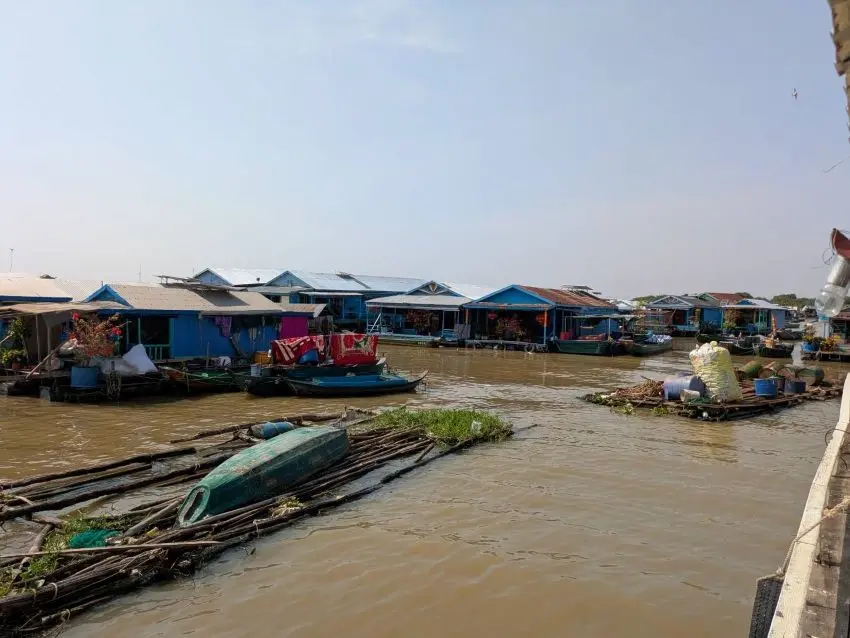
This is where the people of Tonle Sap Lake live. Fr Joseph Nguyen Minh Do SJ, who is in charge of JRS, travels here every third Sunday of the month to celebrate Mass. Currently, there are still over 3,000 households residing in this area.
In February of this year, the Office of the United Nations High Commissioner for Refugees (UNHCR) closed its office in Cambodia due to funding cuts; the nearest office is now in Thailand, making it even more difficult for stateless individuals to apply for refugee status and seek resettlement in a third country. To make matters worse, the Cambodian government recently announced that newborns of stateless parents would only receive birth registration documents rather than official birth certificates. In other words, these newborns, as well as stateless persons of Vietnamese descent in Cambodia and their descendants, will never obtain Cambodian citizenship and will continue to live in a state of limbo.
If you ask how my experience here as a Jesuit relates to our Universal Apostolic Preferences (UAPs), we must look back to 1980. Fr Pedro Arrupe, the Superior General then, founded the Jesuit Refugee Service (JRS) to respond to the plight of Vietnamese refugees fleeing their war-torn homeland. Today, the scope of JRS’s mission is perhaps even broader than it was 46 years ago.
Our JRS office in Cambodia works in collaboration with other NGOs, church groups, and religious sisters. Our focus remains on education and short-term vocational training, such as six-month courses in pastry making, beauty therapy, or motorcycle repair, and providing micro-grants for small businesses, like selling snacks from bicycles or motorcycles. We also assist with emergency needs, including medical expenses and local residency fees.
As I mentioned earlier, I came to Cambodia to discover whether the face of God is more visible among those who suffer. To this end, upon my arrival, I told the priest in charge of refugee service that I did not wish to manage a specific project. I would prefer to assist him from the sidelines. Given my short stay, it would benefit no one if I left with the task unfinished. It may sound contradictory, but it is the reality. After all, accompaniment requires time.
For over 30 years, the JRS office in Cambodia was led by an Australian sister. In the past, with more abundant resources, JRS could do a lot of projects, for instance, renovating houses and providing extensive medical aid. However, due to recent budget constraints in the past one year, JRS Cambodia has had to restructure, narrowing our focus from serving refuges and the stateless nationwide to two main locations: Kampong Luong and Kampong Chhnang.
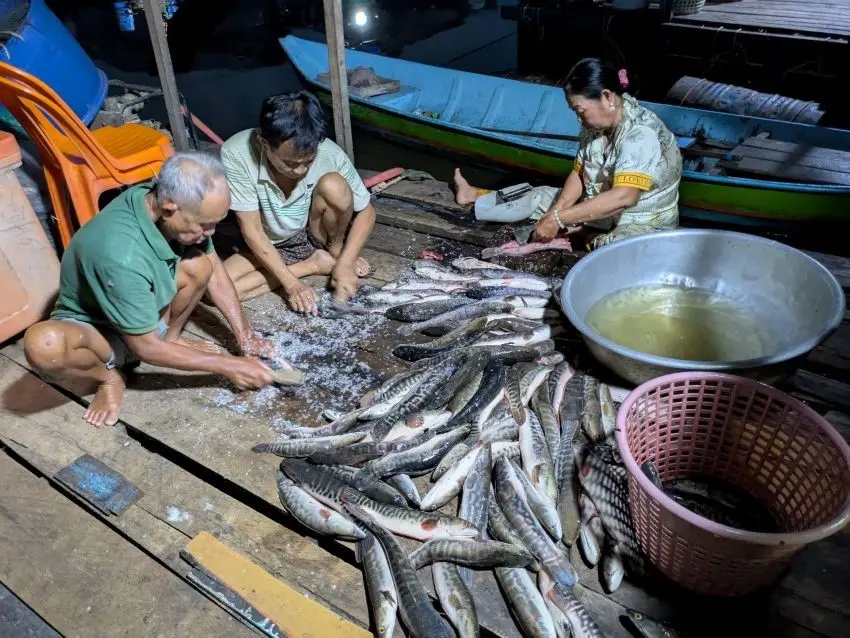
From Monday to Friday, I mainly assist with administrative work at the JRS office, which includes home visits. Going out to organise activities is quite demanding, as the areas we serve are quite far from the office. On weekends, we celebrate Mass and visit communities. The Masses we celebrate are not limited to Phnom Penh; we also travel to Battambang to reach out to the refugees and the stateless families who still live entirely on the water.
If my experience here in Cambodia were simply a matter of celebrating Mass, talking with people, and then heading home, I don’t think it would be difficult. In fact, that is how things proceed. But I feel a great weight and sorrow when I contemplate the challenges they face and their uncertain future. I know many parts of the world suffer even more (in Eastern Europe, the Middle East, or Africa), where many lives are lost every day. Nevertheless, it is heartbreaking that these innocent people must bear the burden of historical entanglements between Cambodia and Vietnam.
My sole hope is that the Cambodian government will change its policy and grant citizenship to these 77,000 stateless individuals. By so doing, these people can participate freely in society and fulfil their duties and responsibility for the country.