

“A society grows great when old men plant trees whose shade they will never sit in.” Ancient Greek Proverb
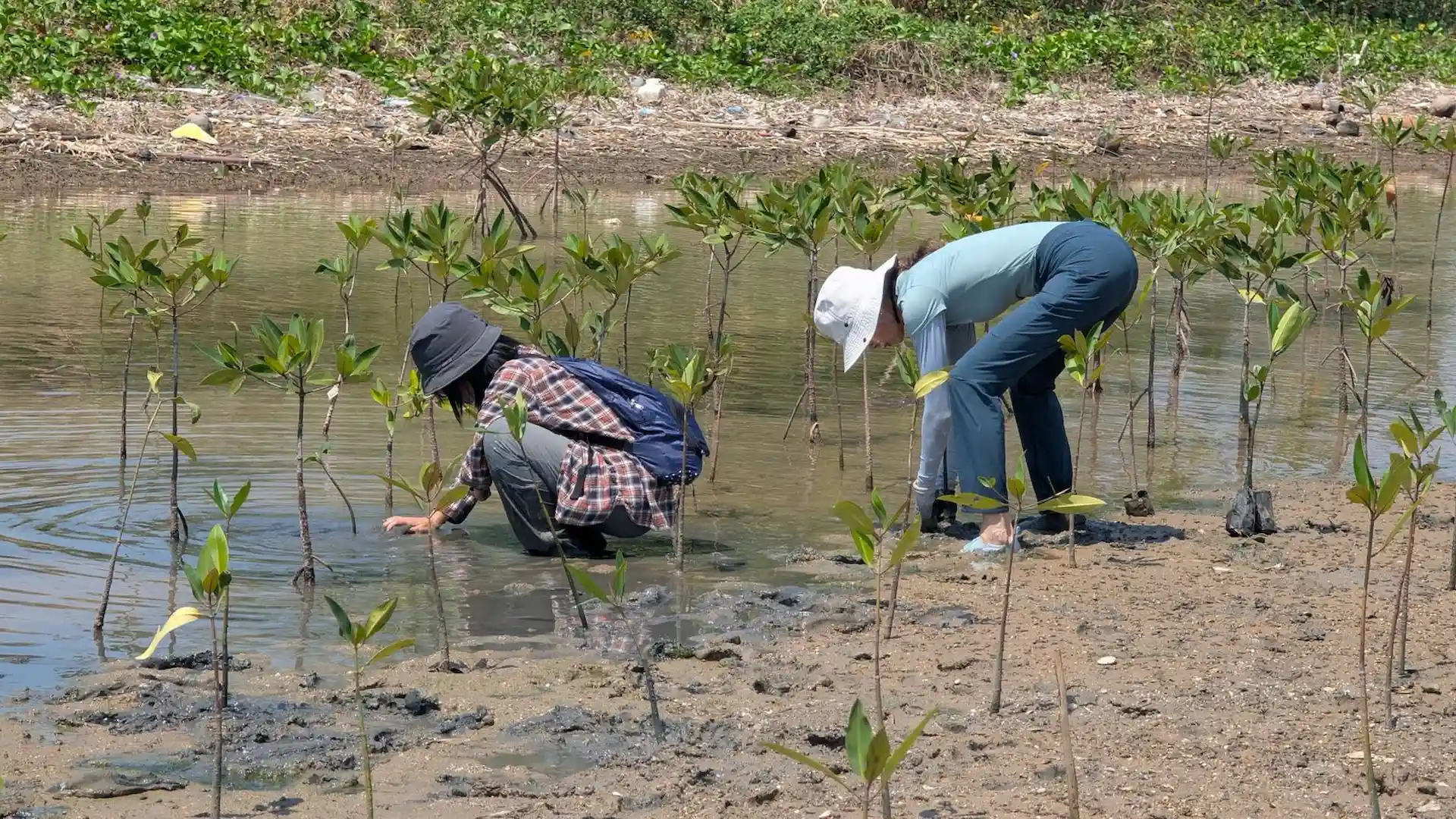
We were all in the mud.
Some knee-deep and assured, others treading a little more warily, testing each step before committing their weight. The day before, we had planted 200 mangrove saplings in Kampong Samaki. Today’s goal was 400 saplings in Prek Tnaot. We were urbanites—mostly from Singapore—with little to no background in forestry or ecology. How do we wield a changkol? How deep should we dig? How far apart should the seedlings be planted?
The village leaders fielded our neophyte questions with patience and cheerfulness that belied the harsh realities they faced as communities on the frontlines of climate change.
In recent years, rising sea levels, intensifying heat, and more frequent typhoons have displaced millions across Southeast Asia. Coastal and low-lying communities are among the most affected. Climate change is not merely an environmental crisis; it is increasingly a driver of forced displacement—one that the world has yet to fully acknowledge.
Raising awareness of this intersection between climate and displacement is a key pillar of Jesuit Refugee Service Singapore. Creating opportunities for lived encounters with affected communities is part of that mission. That is what brought 20 of us to Kampot and Kep in Cambodia.
Our journey unfolded against the backdrop of Thai-Cambodian border tensions in 2025. Despite attempted ceasefires, clashes displaced hundreds of thousands of people. Yet our mission partners at Jesuit Service Cambodia (JSC) continued their work across the country—supporting displaced communities in the north and vulnerable coastal villages in the south. Undeterred by the conflict over 200 km away, our volunteers carried over 400 kilograms of donated supplies from Singapore to support these efforts.
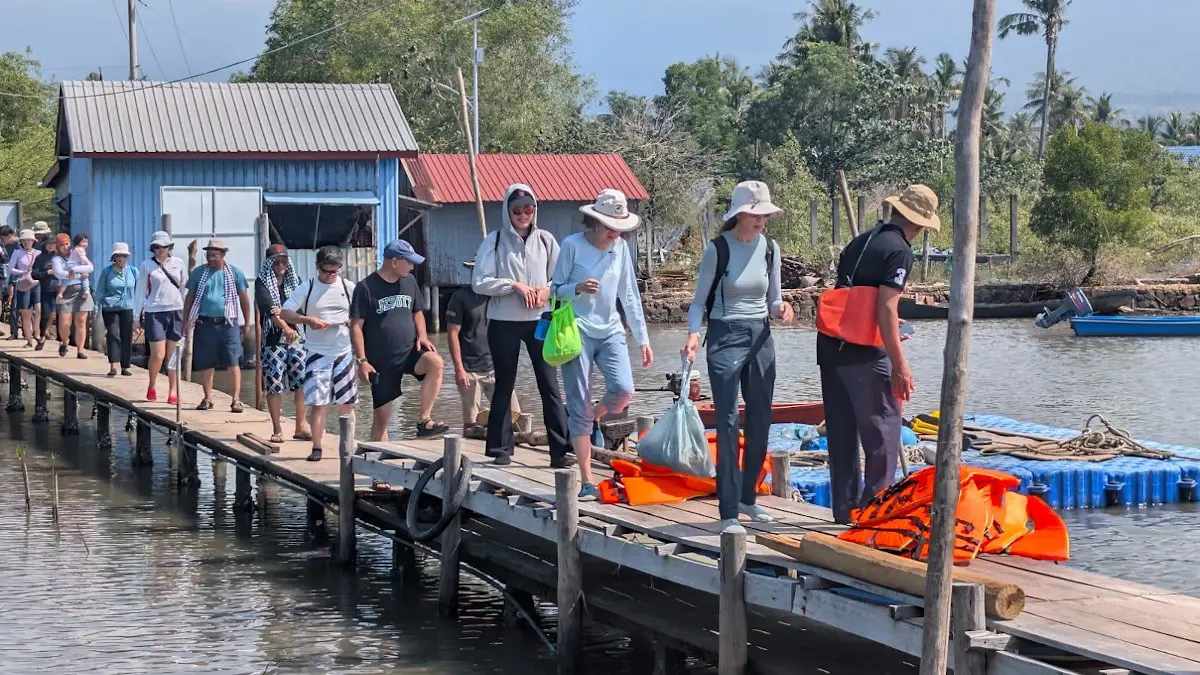 The work of JSC spans education, infrastructure, and ecology. Yet its ecological work is not simply conservation but relationships: between people, land, and future generations. It reflects the call of Laudato Sí, which reminds us that care for our common home is inseparable from care for one another, especially the most vulnerable.
Mangroves are natural coastal defenders. Their dense root systems reduce erosion, buffer storm surges, and protect inland communities from rising seas. They absorb significant amounts of carbon, filter water, and support the fisheries that sustain local livelihoods.
But beyond these ecological benefits, mangrove restoration is also about restoring agency and dignity. The decision on what to plant belongs to the community. JSC supports them by nurturing saplings in nurseries and entrusting them when ready—not imposing solutions, but enabling stewardship. Land once seen as expendable becomes something known and protected, because those who plant it take responsibility for it. This is especially vital in places facing both climate pressure and the threat of land grabs and unjust development.
The physical act of planting became a lesson for us. With limited skills and a single changkol shared among many, we dug into the mud with our hands and heels—simple, unpolished, but grounding. Each sapling felt fragile and alive.
During a time of reflection, we were offered an image from nature: photosynthesis. A process so ordinary it is often overlooked, yet essential to life. Plants take in carbon dioxide—a gas harmful to us—and transform it into oxygen that sustains life.
It raised a quiet question: how might we participate in such a transformation in our own lives? How might we take what is wounded, fractured, or even toxic, and through care and love, turn it into something life-giving for others? We left without answers—only the question in our minds and mud still on our boots.
An ancient Greek proverb reminds us that societies flourish not through immediate gain, but through acts of generosity extended into the future and beyond oneself.
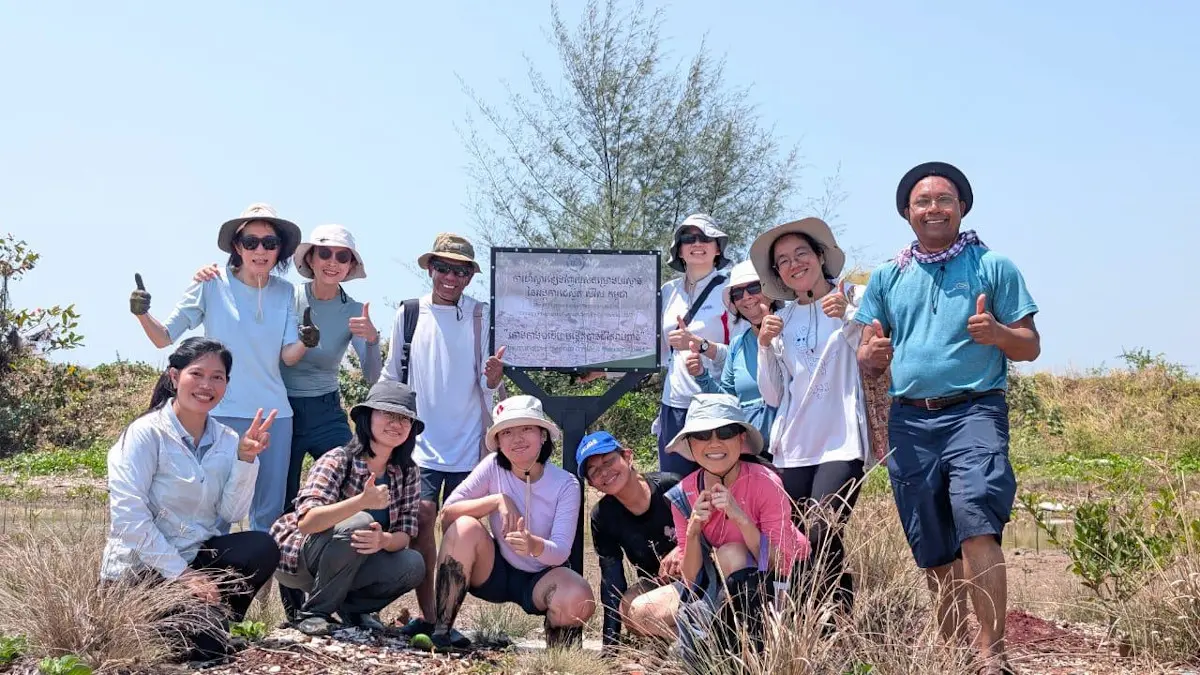 In November 2026, we will return to Kampot to continue this journey alongside the communities who first welcomed us. The saplings we planted will still be finding their footing, their roots slowly taking hold beneath the surface—shaped by forces both seen and unseen. So too will the bonds formed in these days deepen, quietly and beyond measure.
We thank our fellow sojourners and companions in mission: Fr Ekka Manoj SJ, Chanda Panh , Louie Bacomo, Gordon Pinto, and Crisleen de Guzman.
We invite others to join us — not as experts but as fellow learners willing to step into the mud and to take part in this shared journey.
As Pope Francis writes in Laudato Si’ (§13), “Humanity still has the ability to work together in building our common home.” In Kampot and Kep, we witnessed that hope becoming action—in stewardship, shared agency, and the quiet courage of communities tending land they have claimed as their own. We are called to do the same: to plant trees whose shade we may never sit in and leave roots that will endure.
Regina Vanda, JRS Singapore volunteer, collaborated on this story.