

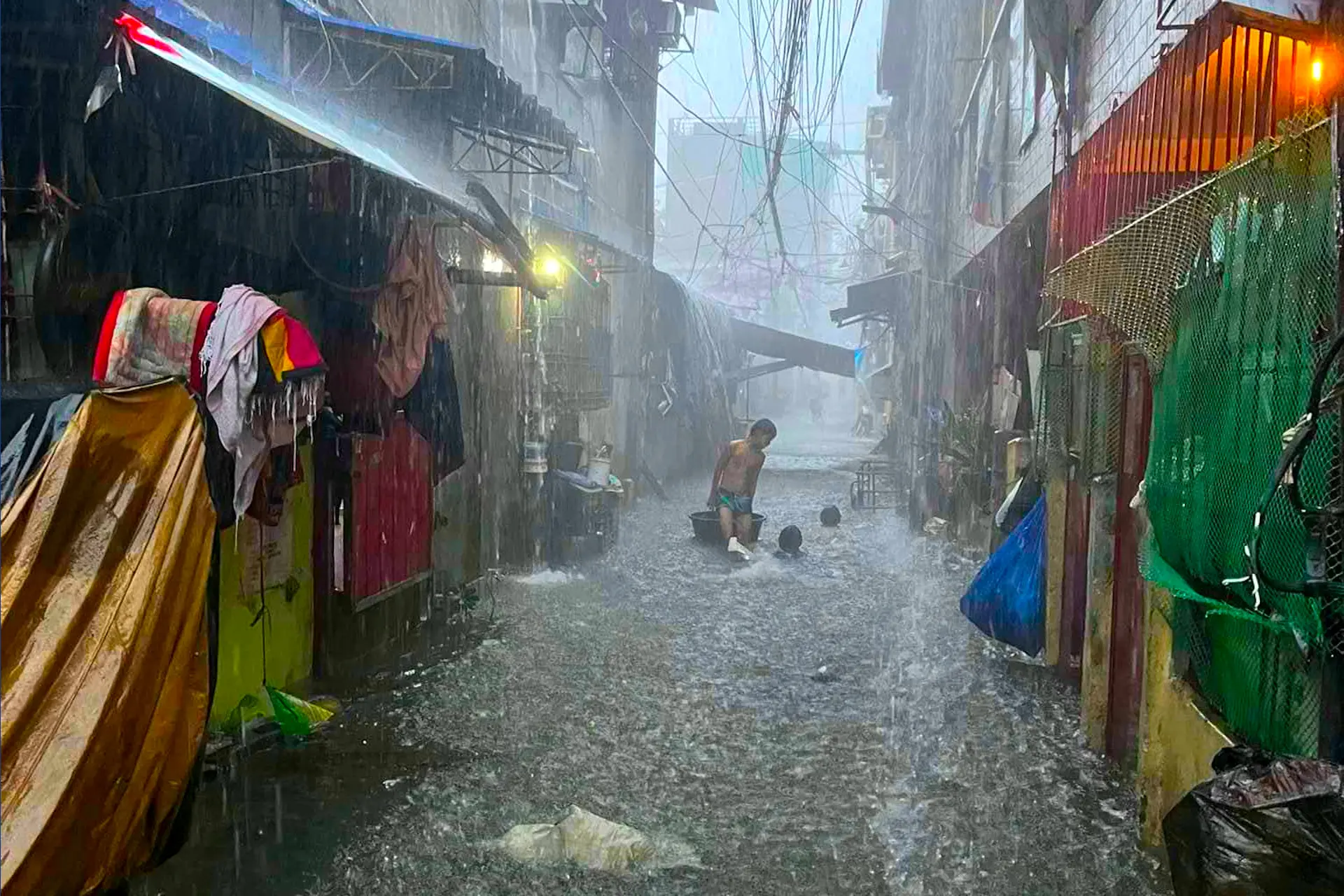
Heavy rains rains triggered severe flooding across several areas in Caloocan City, Metro Manila | Image from Fr Willy Samson SJ (Jesuit Mission Station)
In a statement released on 6 September, the Philippine Jesuits’ Commission on the Social Apostolate condemned the widespread and systemic corruption ravaging the country and called for urgent and comprehensive reforms.
The statement comes in the wake of the discovery of anomalous flood control projects awarded to allegedly favoured private contractors, with reported links to elected officials. In recent months, a series of typhoons, compounded with the onset of the monsoon season, triggered catastrophic flooding across parts of the Philippines, affecting millions, displacing hundreds of thousands, and causing widespread damage to infrastructure and agriculture.
Citing figures from the World Bank, the Asian Development Bank, and the International Monetary Fund (IMF), the Philippine Jesuits point out that corruption drains nearly 20 per cent of the national budget—equivalent to around ₱2 trillion lost each year.
They further highlighted a senator’s revelation that half of the ₱2 trillion allocated for flood control over the past decade was diverted to private companies linked to government officials and politicians, resulting in vital infrastructure projects remaining substandard or non-existent and placing vulnerable communities at serious risk.
“Corruption kills,” the Jesuits said, quoting from a 2023 IMF report on the link between corruption and disasters. They also underlined Pope Francis’s warning that “corruption is paid by the poor”.
The Jesuit commission emphasised the urgent need for good governance, outlining three key actions:
1. A thorough investigation of all questionable government infrastructure projects by an independent commission, given conflicts of interest in Congress, which cannot self-police fairly. The Jesuits called this “an opportune time to clean up government” and urged that the probe should go beyond flood control to include other government offices with poor track records, such as the Bureau of Customs and Department of Education. They also called for scrutiny of Confidential Funds.
2. Legislative reforms to address systemic loopholes, including the passage of the anti-political dynasty provision in the Constitution and revisions to the party-list law to prevent billionaires with vested interests from misrepresenting marginalised sectors.
3. Enactment of transparency measures, such as the Freedom of Information Act, a Whistleblowers Act, mandatory and public submission of officials’ Statements of Assets, Liabilities, and Net Worth (SALN), and public access to the deliberations of the bicameral committee responsible for budget insertions, with civil society participation.
The Philippine Jesuits declared their commitment “to closely and relentlessly monitor this corruption issue”. They urged all Filipinos to demand accountability from their congressional representatives and local officials. “Let us subject them to the highest moral standard of public service, checking on their lifestyles and that of their families,” the commission said.
They also appealed to the church, schools, and families to reaffirm, especially among young people, the core values of humility, honesty, integrity, hard work, genuine service, and authentic love of country.


