

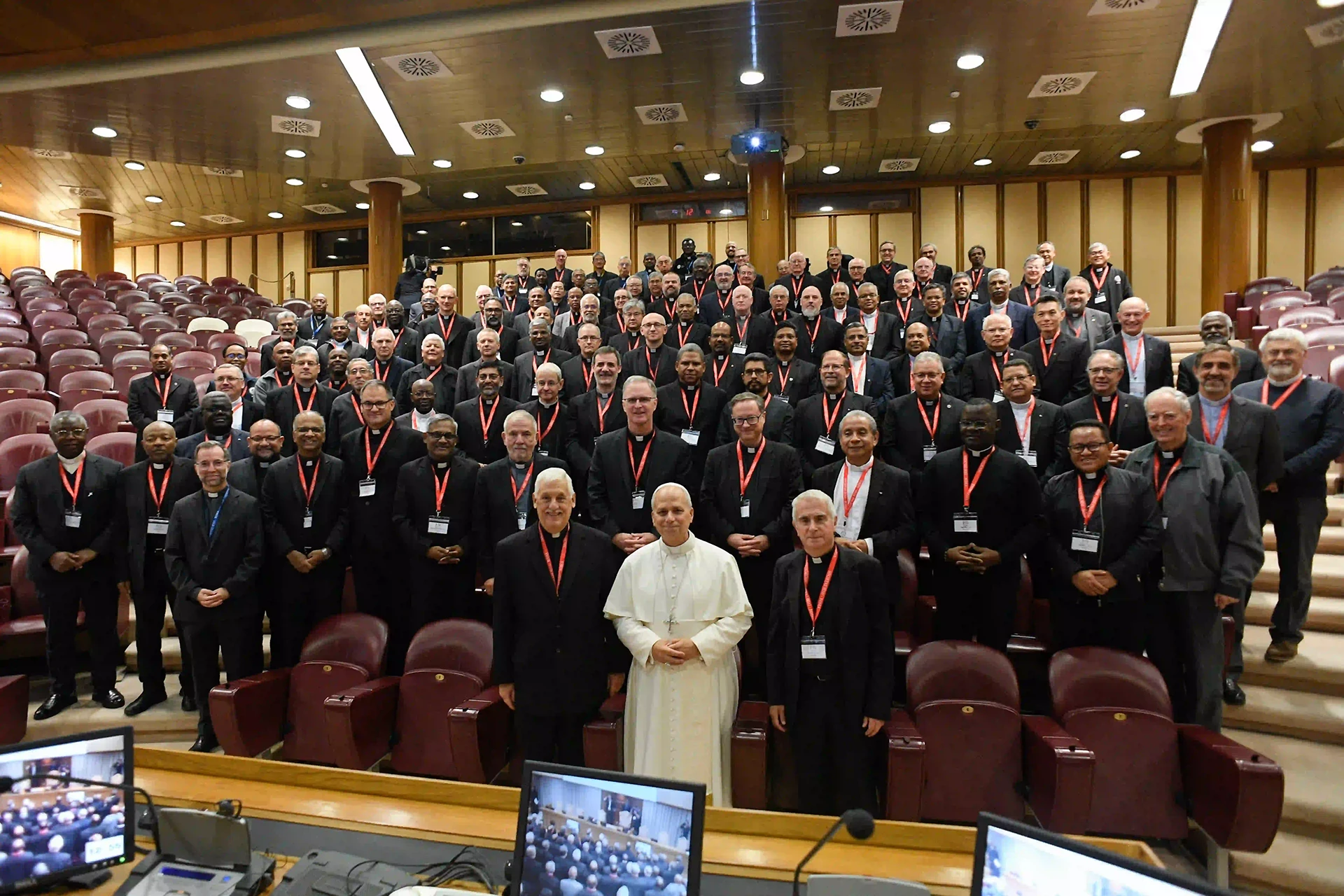
 The Jesuit Conference of Asia Pacific 2026 Annual Report is now live on a dedicated website. This year’s report highlights the humble work of Jesuits and collaborators amid intensifying conflicts, migration, forced displacement, and social challenges across the region.
“Without any doubt, the context of our mission is a world marked by widespread uncertainty, epochal changes, polarisation, ecological crisis, disruption due to violence and wars, and an utter disregard for human dignity,” writes JCAP President Fr Jun Viray. “Amidst all these, our humble efforts to work and walk together with those we serve show that our hopes have not been dimmed.”
Among the stories featured is the Myanmar Region’s apostolic planning review, conducted amid the ongoing civil war in the country. JP Villanueva, who led the process, describes it as “an eye-opening and deeply spiritual journey” in his article, “Yet We Still Dare to Hope”.
Two feature stories mark significant anniversaries of Jesuit apostolates. The East Asian Pastoral Institute in Manila turns the page on six decades of pastoral renewal and leadership programmes, while Yiutsari Jesuit Center for Migrant Workers in Gimpo celebrates 20 years. Fr Juchan Albert Kim SJ reflects on how the name Yiutsari, meaning “being neighbours,” has shaped the centre’s mission to accompany the most marginalised “not as clients but as neighbours and friends”.
New beginnings and second chances brew in the Philippine Jesuit Prison Service’s programme for Persons Restored of Liberty. Inspired by Fr Greg Boyle’s accompaniment of former gang members, “Ex-Preso: Your Fresh Start” shows how coffee can become not only a source of livelihood but also a pathway for support and healing as former detainees rebuild their lives as productive members of society.
Environmental stewardship and community resilience take front and centre in the C3P3 Project, which ties into JCAP’s priorities of reconciliation with creation, youth leadership, and resilience against climate threats across Asia Pacific. In his contribution, Louie Bacomo emphasises that planting a tree is “an act of rebuilding trust, stability, and hope,” underscoring the connection between environmental restoration and social cohesion.
In Cambodia, the international movement Fe y Alegría is expanding its reach with the support of Jesuits and collaborators committed to transforming education systems for the marginalised. Just days after their first assembly, the FyA Cambodia team faced a sudden crisis when the Thai-Cambodia border conflict escalated. The team quickly adapted to provide emergency education operations and humanitarian assistance to displaced students.
Continuing the focus on education, Scholastic Nguyễn Ngọc Peter Long recounts the beginnings of the Novel Club, where some of Lahore’s brightest young minds gather to read, discuss, and reflect in the Ignatian tradition.
Rounding out this year’s report is a set of recommended readings from JCAP’s own bookshelf. Former JCAP President Fr Tony Moreno’s memoir, Imperfect Leadership, invites readers to reflect on leadership rooted in discernment and collaboration. The Jesuits Among Muslims in Asia’s ebook, Catholic–Muslim Spiritual Conversation in Search of God’s Will Together: An Indonesian Perspective, offers a meaningful contribution to interfaith dialogue and practice within diverse socio-cultural environments. Finally, The Beijing Center’s Exploring Jesuit Heritage in Beijing: Traces of East-West Cultural Encounters, guides readers through historically significant sites associated with Jesuit activity during the Ming and Qing dynasties and reveals how missionaries, emperors, and Chinese scholars engaged one another in sustained dialogue across languages, worldviews, and civilisations.
The Jesuits in Asia Pacific 2026 can be accessed here.


