

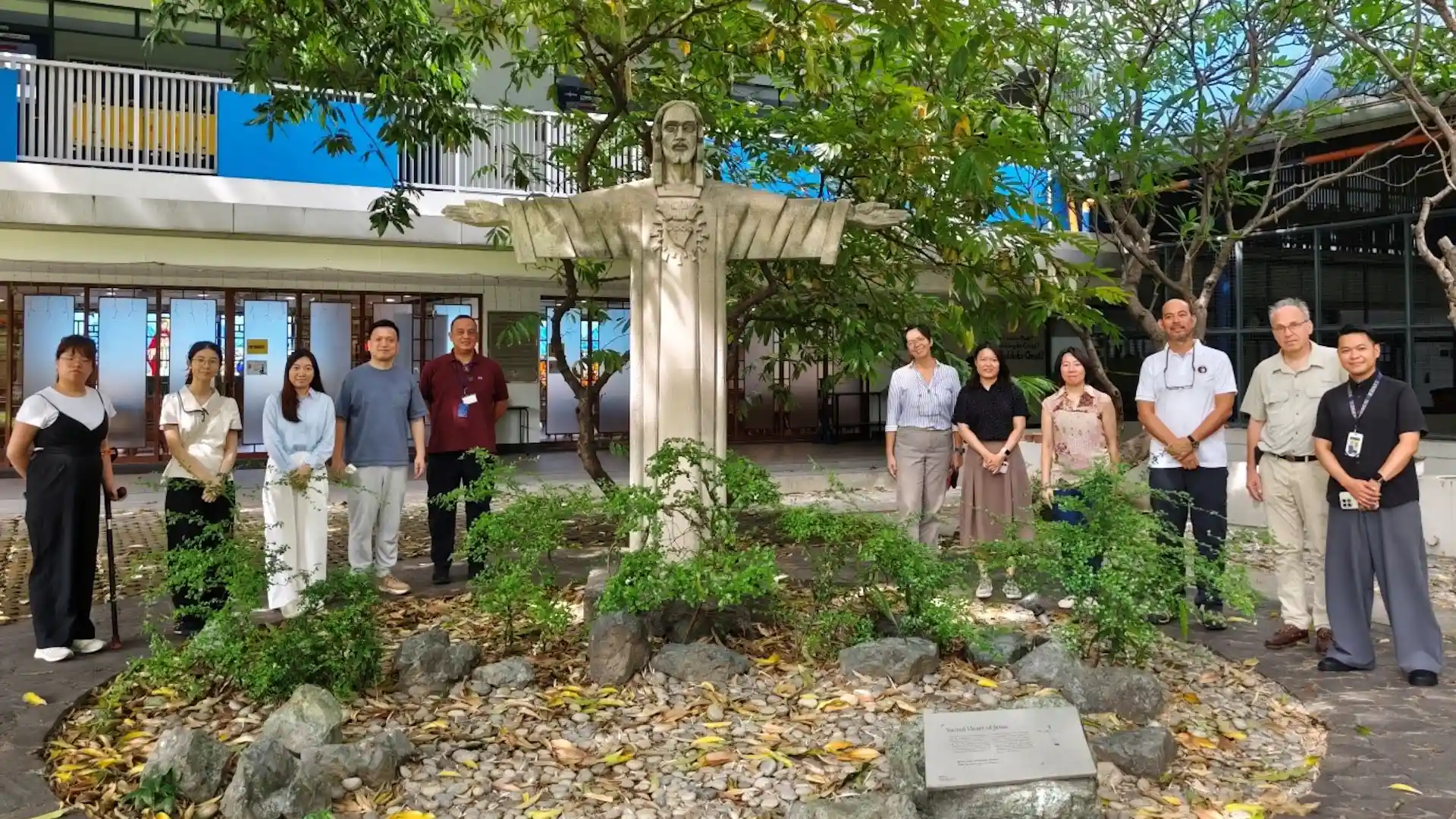
The delegates at Xavier School San Juan, Philippines
From 20 to 26 June, a ten-member delegation from Jesuit institutions in Macau and Ateneo de Naga University embarked on an integral ecological visit to various schools, institutions, and communities in the Philippines.
This initiative was born from a shared desire by Fr Fernando Azpiroz SJ and mission partners from two Jesuit schools—Colégio Mateus Ricci and Escola Estrela do Mar—and one social service institution—Ricci Social Service—to promote integral ecology within the highly urbanised city of Macau.
The visit marked the inaugural activity of Green Gate Way, a newly established integral ecology platform in Macau that prioritises ecological education in basic education. It was organised in close collaboration with the Jesuit Conference of Asia Pacific (JCAP) Reconciliation with Creation network, led by coordinator Fr Gabriel “Gabby” Lamug-Nañawa SJ. The group also included a representative from the Ateneo de Naga Institute for Environmental Conservation and Research (INECAR).
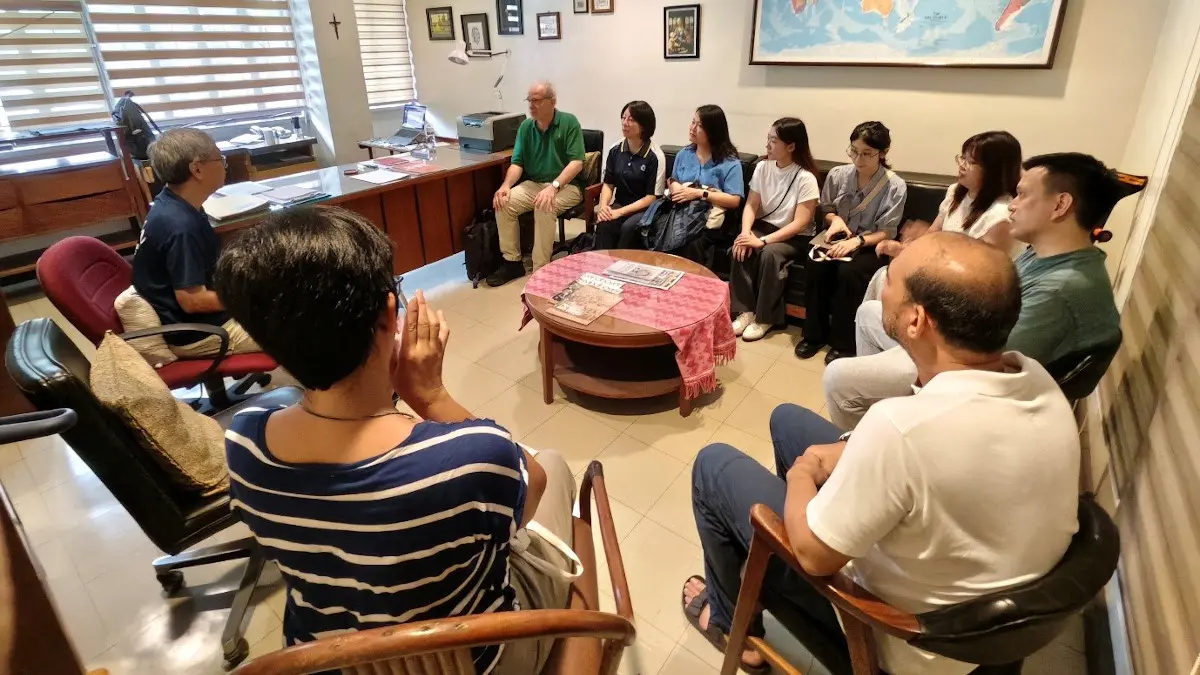
Courtesy visit to JCAP President Fr Jun Viray SJ
In the spirit of the Ignatian Pedagogical Paradigm (IPP), the journey began with a cultural orientation to ground participants in the local context. Accompanied by Scholastic Rex Coz SJ, the delegation attended Sunday Mass at St Joseph Molave Chapel in Payatas, Quezon City, and interacted with the local community, gaining a glimpse into the lives of ordinary Filipinos.
Over the subsequent days, the delegation visited several academic and social institutions to learn and exchange ecological and sustainable initiatives. These included the Ateneo Institute of Sustainability (AIS), Institute of Environmental Science for Social Change (ESSC), Xavier School (San Juan and Nuvali campuses), De La Salle University–Dasmariñas, and Tuloy Foundation
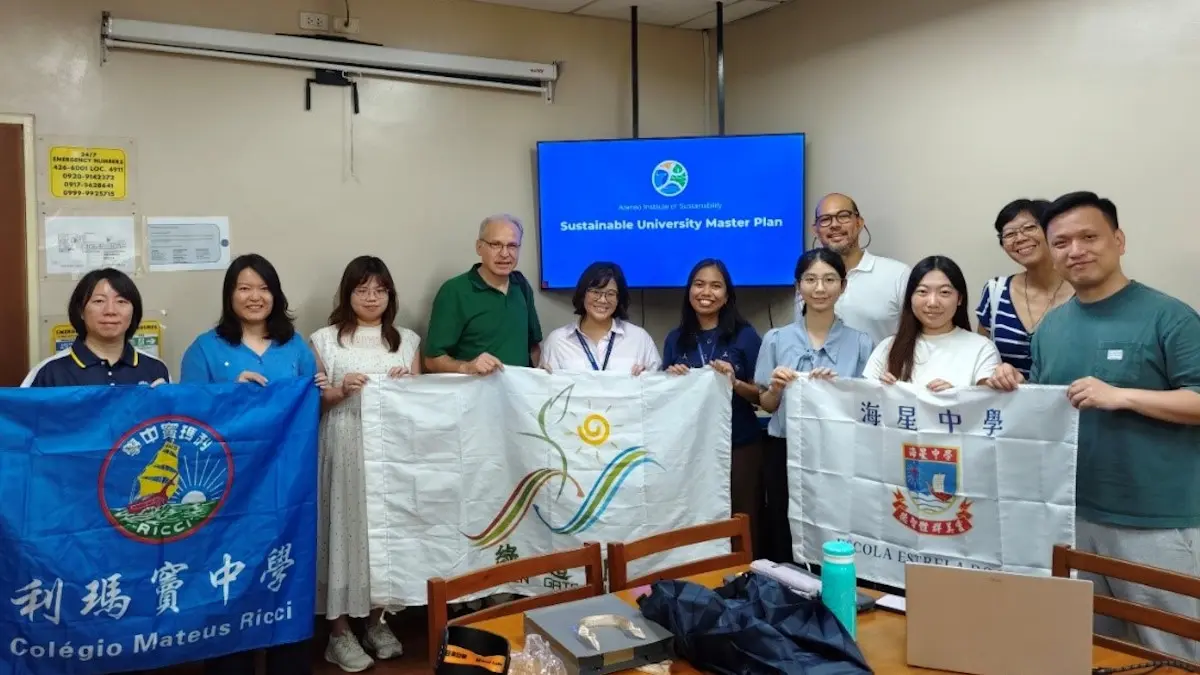
Visit to Ateneo Institute of Sustainability (AIS)
The exchanges focused on institutional sustainability practices, student initiatives, and the integration of ecological education into school curricula. These efforts represent concrete and creative ways to respond to Pope Francis’s call to care for our common home.
In addition to these exchanges, the delegation also had the opportunity to immerse themselves in nature. Led by Ateneo Wild, they explored the Ateneo de Manila University campus and were surprised to discover such a rich biodiversity that is often overlooked. This experience of wonder invited them to slow down and appreciate the beauty of creation, which is a frequent starting point for ecological conversion.
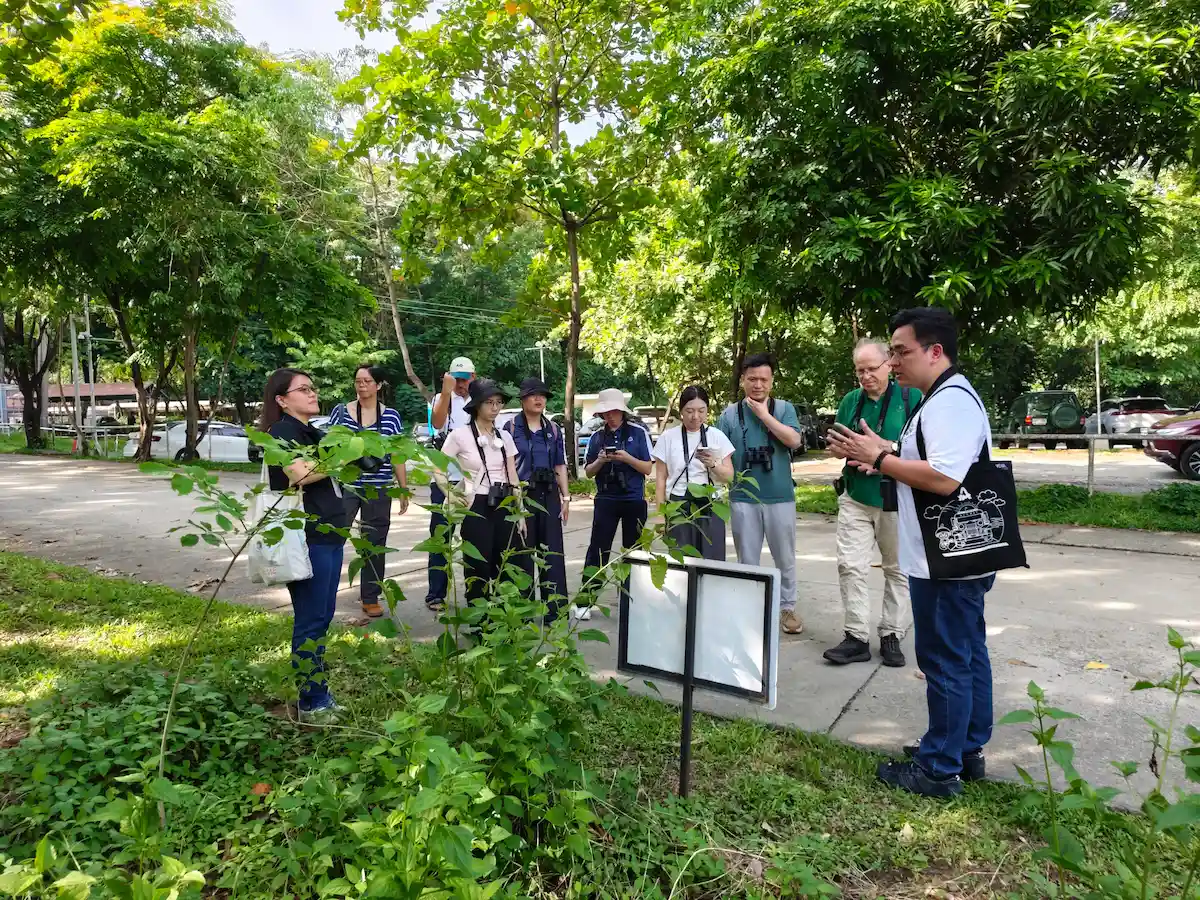
Discovering the rich biodiversity around the Ateneo de Manila University Campus
The visit concluded with a recollection led by Fr Gabby, which helped participants reflect on their experiences and gather the fruits of their visit. What stood out during the sharing was the profound generosity and hospitality of the host schools and institutions. Each institution made a significant effort to welcome the delegation and openly share their work. It was a true building of relationships, beautifully echoing the saying of Confucius: “Is it not a joy to have friends come from afar? (有朋自远方来, 不亦悦乎?)” For the delegation, these experiences were tangible graces born from a shared commitment to care for our common home.
The group expressed a collective sense of inspiration, which was enhanced by the enthusiasm of the individuals they met and the deep commitment of the host institutions. While they acknowledged that a long road lies ahead to translate these learnings into action, they returned home spiritually renewed. Guided by the spirit of Laudato sí and the principles of integral ecology, Green Gate Way begins its work not just with new strategies but with a deepened commitment to apostolic action for our common home.


