

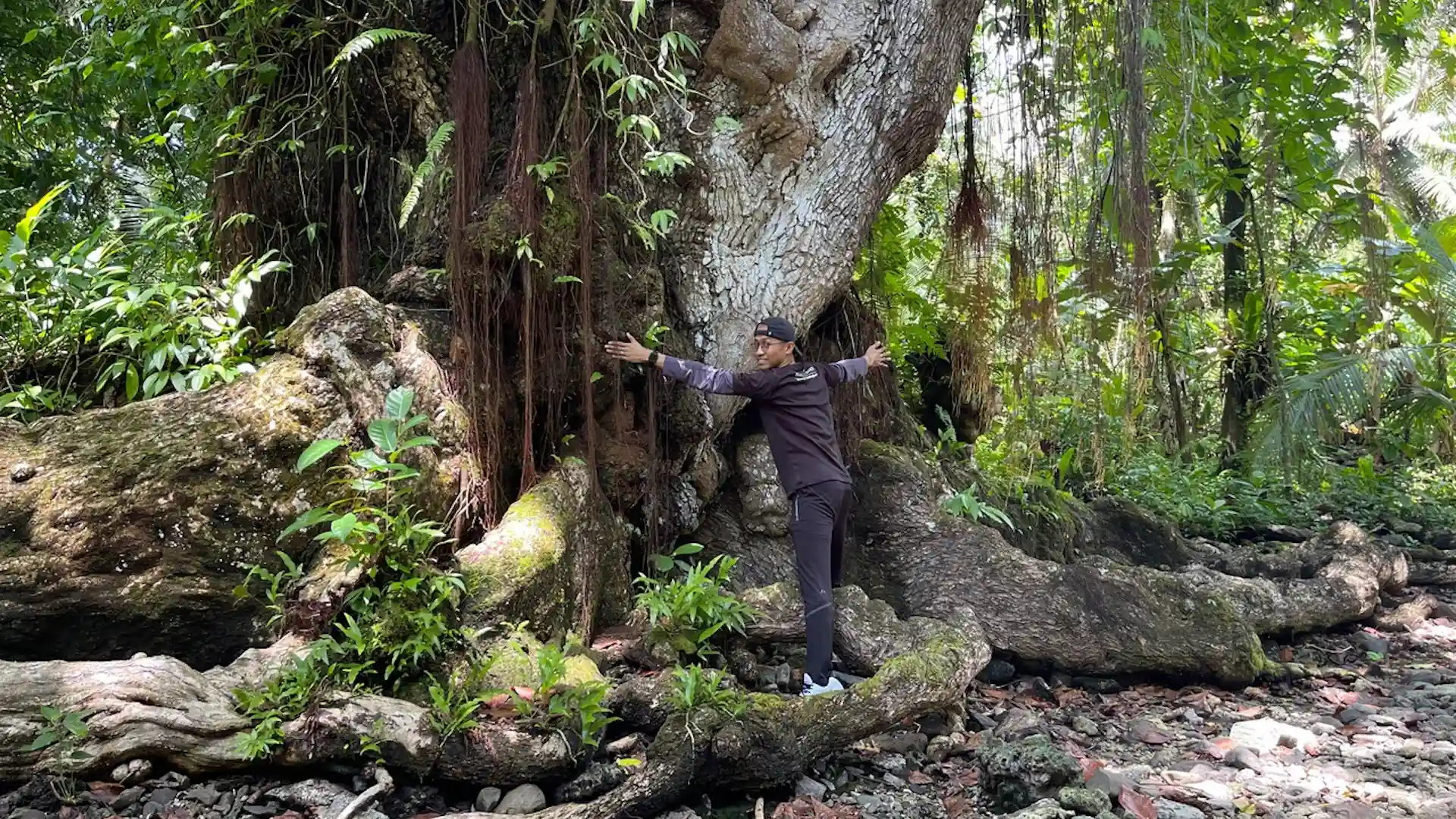
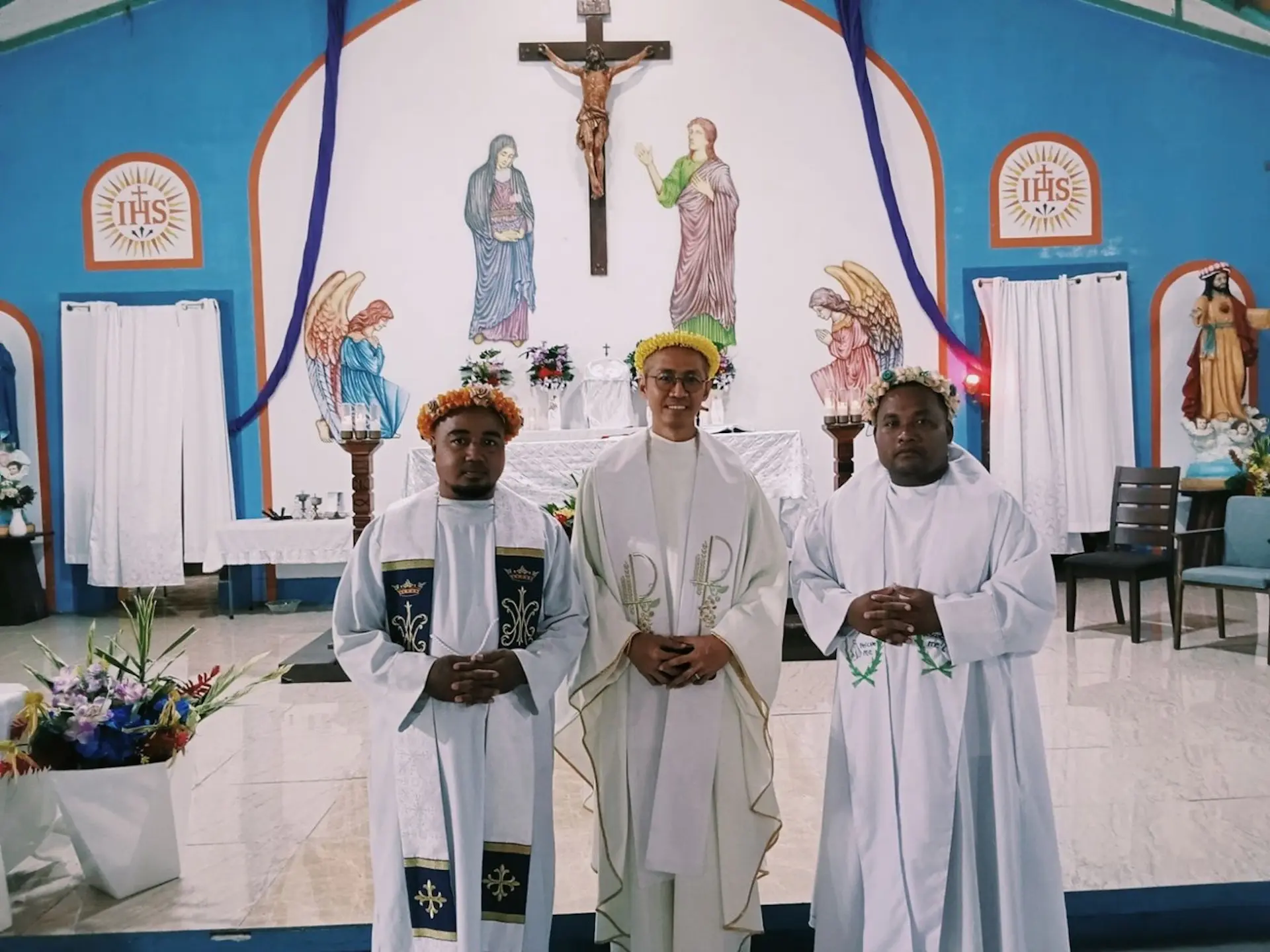
 For nearly three weeks in June, I had the privilege of ministering in Pohnpei, Federated States of Micronesia, where I facilitated a series of retreats for the Marie-Auxiliatrice Sisters, the youth of St Peter Parish, and the faculty and staff of Our Lady of Mercy (OLM) and Pohnpei Catholic School (PCS). During my stay, I also met many Filipinos serving generously in schools, hospitals, and parishes across the island. Their dedication and quiet witness contribute greatly to the life of the local Church and community.
I was likewise struck by how many Pohnpeians continue to fondly remember the ministry of our Jesuit brothers, especially the late Fr Bill McGarry SJ. I can now personally attest to the words of Fr Francis Hezel SJ, former Regional Superior of Micronesia: “Fr McGarry did nothing by half measures.” The enduring witness of these missionaries continues to inspire and bear fruit in the lives of the people they served.
My reflections on Micronesia continued after I returned to the Philippines through my conversation with William Kostka, Director of the Pacific Community’s North Pacific–Micronesia Regional Office and a respected educator and environmental leader. Looking back on the experiences of the previous weeks, our conversation became more than an interview. It evolved into a shared reflection on the gifts, challenges, and enduring wisdom of the Federated States of Micronesia (FSM) and on what other countries—including my own, the Philippines—might learn from this island nation.
Kostka described FSM as perhaps the most culturally diverse nation in the Pacific. Although composed of only four states, it embraces numerous languages and cultures. He described it as “like putting four countries into one”. Rather than viewing this diversity as a burden, he sees it as one of the country’s greatest strengths. Coupled with vast marine resources, rich biodiversity, and the preservation of traditional knowledge, this diversity forms the foundation of Micronesian identity.
I came to appreciate how deeply this cultural heritage is integrated with the Christian faith during my stay. I witnessed strong family relationships, vibrant parish life, and communities where traditional customs coexist harmoniously with the Gospel. Rather than replacing indigenous culture, Christianity has enriched and strengthened it. The values of family, mutual support, and communal responsibility remain at the heart of Micronesian society.
 Our conversation also turned to the challenges confronting FSM. The nation’s scattered islands make transportation costly and difficult, while climate change, biodiversity loss, and the growing influence of social media present increasingly complex concerns. Kostka observed that today’s “village” extends far beyond physical communities to include Facebook, TikTok, and the internet. While these technologies offer many benefits, they also bring misinformation and outside influences that can weaken traditional values if left unchecked.
Yet what impressed me most was his confidence in the sources of Micronesian resilience. He spoke of strong families, the Church, traditional leadership, local food systems, and communal ownership of land. Land, he explained, is not merely an economic asset but the foundation of identity, security, and cultural continuity. While some development partners encourage greater foreign ownership of land, FSM has deliberately chosen to protect local ownership, believing that genuine development cannot come at the expense of the people’s dignity and future.
This same philosophy is reflected in the country’s ecological stewardship. Pohnpei has established watershed forest reserves that prohibit development above 400 metres in elevation, protecting vital water sources, forests, and biodiversity. Marine protected areas likewise safeguard fisheries and coral ecosystems for future generations. As I listened, I could not help but compare these efforts with the ecological challenges we face in the Philippines, particularly the consequences of mountain development and deforestation. Micronesia offers a compelling reminder that authentic progress must always include care for creation.
I learnt too that Kostka had been profoundly shaped by the Jesuits. He revealed that Fr McGarry had baptised and named him. He recalled his happy memories with the Jesuit whose influence extended not only to him but also to several generations of his family. That he personally knew Fr McGarry and received spiritual accompaniment from him touched me. It reminded me that the quiet fidelity of missionaries continues to bear fruit long after they have gone, living on in the faith, values, and lives of those they accompanied.
Enriched by these reflections, my visit to Micronesia became much more than a ministry of giving retreats. It became a pilgrimage of listening, labouring, and learning. In a world that often equates development with economic growth alone, the people of Micronesia offer a different vision—one rooted in community, faith, stewardship of creation, and the conviction that the true measure of progress is the flourishing of both people and the Earth.