
 The Asia Pacific Theological Encounter Program (APTEP) is a life-changing journey that invites participants not only to learn about other faith traditions but also to meet people of different beliefs with openness, humility, and mutual respect. We live in a world increasingly marked by religious polarisation, prejudice, and violence committed in the name of religion, but APTEP offers a living example of how dialogue can lead to deeper understanding, genuine friendship, and lasting peace.
For me, the experience was not just a chance to learn about Islam; it was an invitation to encounter God in unexpected places and through people I never would have imagined. As a Sister of the Sacred Heart of Jesus (RSCJ), I have come to realise that true mission does not begin with speaking but with listening; not with convincing but with encountering; not with emphasising differences but with acknowledging the dignity that God has bestowed upon every human being.
One aspect that touched my heart deeply was learning about Islamic Sufism. Understanding the mystical dimension of Islam revealed profound similarities between Islamic spirituality and Christian contemplative traditions. The emphasis on purifying the heart, loving God, humility, and compassion resonates deeply with my own spiritual formation. Though expressed through different theological frameworks, both traditions point toward a life centred on God and transformed by divine love.
Equally meaningful was learning about the role of Islamic boarding schools (pesantren) in Indonesian society. I realised that pesantren are not merely educational institutions; they are communities that integrate intellectual growth, spiritual discipline, moral formation, and shared life. This holistic approach to education reminds me that true formation unites mind, heart, and action, a principle that lies at the very heart of Christian religious life as well.
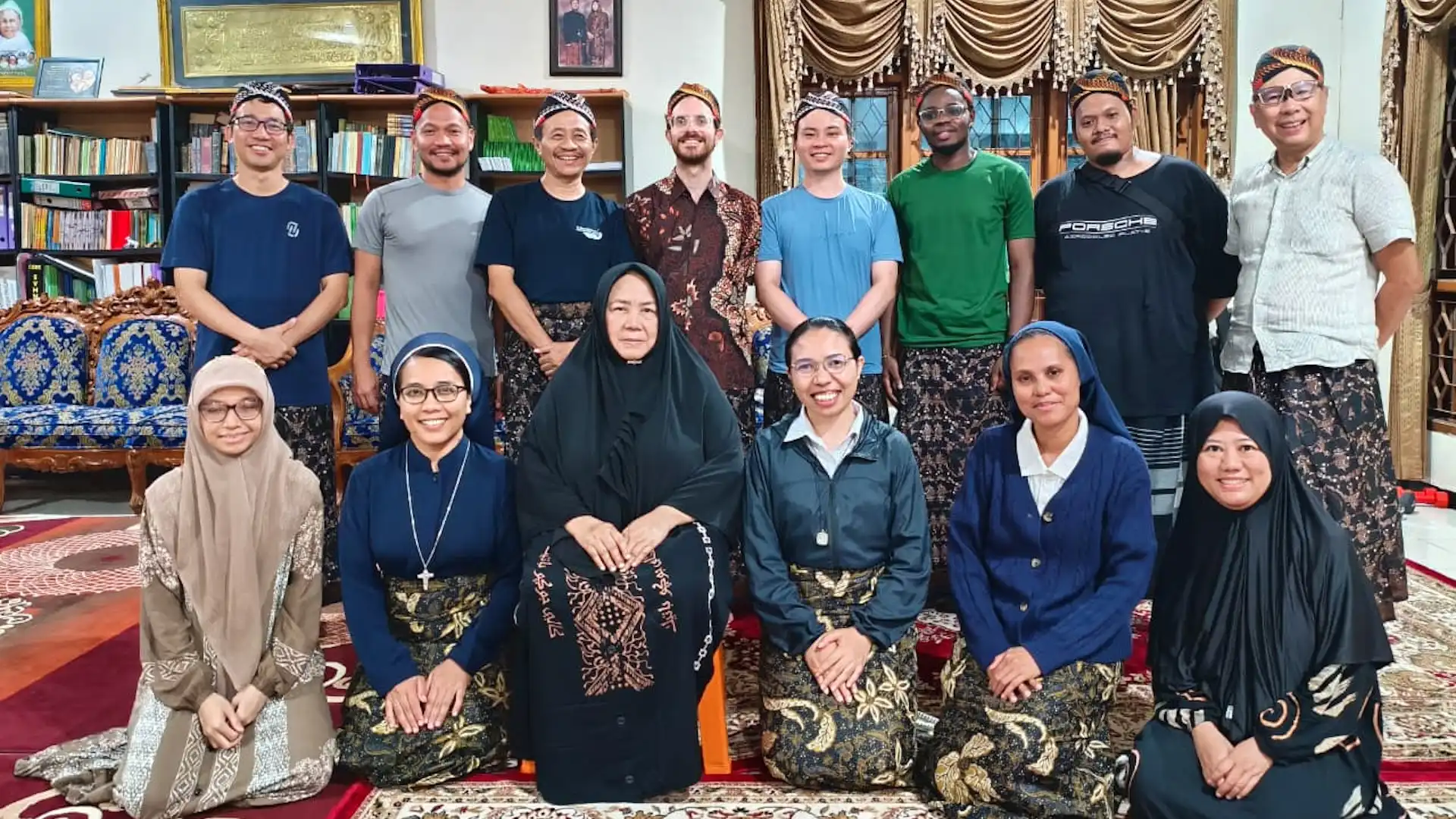
Living at Al-Hidayah Islamic Boarding School in Karangsuci, Purwokerto, offered a deeper encounter with Islam as a living, practised reality. Staying alongside the female students (santriwati) allowed me to observe the rhythm of daily life shaped by worship, study, discipline, and togetherness. I deeply admired their extraordinary commitment to memorising the Quran, faithfully performing the five daily prayers, and embracing a simple, disciplined way of life. What struck me most was their intentional limit on mobile phone use to nurture focus, spiritual growth, and self-mastery.
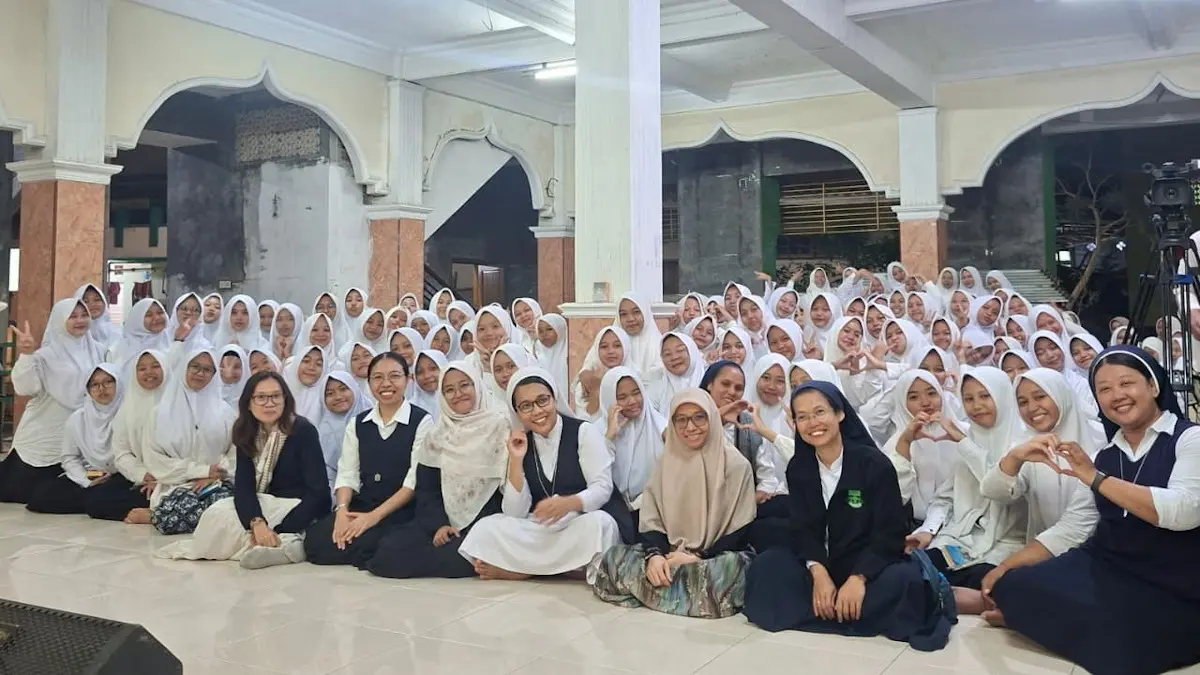 More importantly, living in the pesantren reshaped my understanding of interreligious dialogue. Dialogue does not happen primarily in formal discussions or structured seminars. Instead, it unfolds naturally over shared meals, in everyday conversations, through laughter, hospitality, and the ordinary moments of life. It is through these simple acts that true friendship takes root.
One principle that left the deepest impression on me was shared by Ustaz Muhammad Labib Syauqi, quoting the late Kiai Noer Iskandar Albarsani, founder of Al-Hidayah Islamic Boarding School:
“They are not siblings in faith, but they are siblings in humanity.”
These words captured the very heart of authentic interreligious dialogue. They affirm that despite differences in theological belief, all human beings are united by equal dignity as creatures of God. Though I came as a Catholic Sister, I never felt like an outsider. On the contrary, I was welcomed with extraordinary generosity, kindness, and respect. The warmth shown to me and my fellow participants reflected a profound openness that transcends religious boundaries.
Witnessing the faith of this Muslim community also invited me to reflect on my own relationship with God. Their faithfulness in daily prayer, reverence in worship, and commitment to religious discipline challenged me to deepen my reflection on my own calling and spiritual practice. Far from threatening my Catholic identity, this encounter strengthened it. It deepened my appreciation for the ways God works beyond the boundaries we often draw ourselves.
The Second Vatican Council’s declaration Nostra Aetate calls Christians to recognise and honour the truth and holiness present in other religious traditions. Living within a Muslim community let me experience this teaching not just as a theological principle but as a lived reality. I met God through the kindness, generosity, and faithfulness of people whose religious tradition differs from my own.
In their simplicity, I saw a powerful witness of faith. In their hospitality, I felt the universality of God’s love. And in our shared humanity, I learned that genuine encounter has the power to turn fear into friendship, prejudice into understanding, and difference into a source of shared richness.