

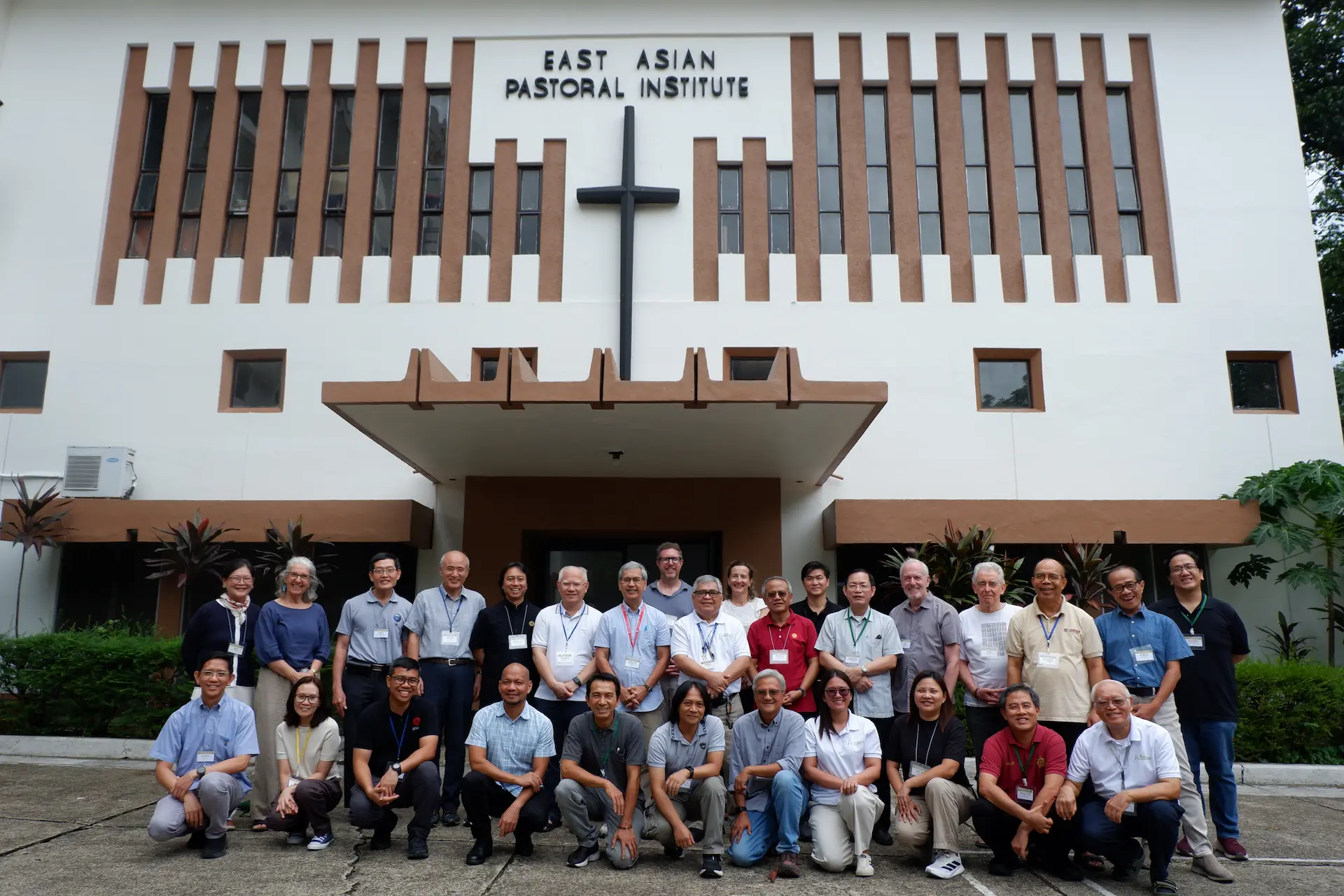
 Every October, the usual rhythm of our Jesuit conference leadership gives way to discernment. The president, his consultors, secretaries, coordinators, conveners, and directors of works set aside their usual agendas for the Extended Consult in Manila. For a few days, their shared task is to listen for where the Holy Spirit is at work across the conference’s missions and where the conference is invited to respond.
Three important projects were presented at this year’s Extended Consult held from 19 to 21 October. The first seeks to strengthen our shared mission of accompanying communities on the margins through listening and discernment. Angela Ford and Chanthea Nou of Jesuit Mission Australia introduced a regional learning ecosystem approach that builds on what already exists within the conference. This prompted discernment in small groups on strengths and resources across our networks, as well as gaps in leadership and spiritual formation, discernment, governance, safeguarding, and financial stewardship.
What became clear was that the conference already holds extraordinary wisdom, experience, and innovation. What is needed is not another organisation but a stronger way of connecting resources and expertise already present. The results from the workshop will be important inputs as this process unfolds.
The second initiative, presented by Dr Jowel Canuday, is a course on migration and forced displacement to be offered next summer. The programme is a collaboration between the Migrants and Refugees Network and Tagpuan Ateneo Centre for Dialogue, Research, and Collaboration, modelled on the Pedro Arrupe Summer School in Forced Migration at Oxford University.
JCAP’s version will respond to the realities of migration and displacement in Asia Pacific, where economic, political, social, and ecological pressures often overlap. Through dialogue, applied learning, and regional exchange, it hopes to form participants who can better accompany communities, address structural injustice, and advance dignified, rights-based, and sustainable responses.
The third project is the ongoing JCAP Apostolic Planning. JP Villanueva updated the delegates on where the conference is in its journey of discernment and action. While 2026 has focused on the “learning phase” characterised by data gathering, network-level spiritual conversations, and consolidating conference-wide learning, next year, the conference will take the next step to discern together our shared apostolic priorities, collaboration initiatives, and a new apostolic plan.
In recent years, the Extended Consult has also become a space to reflect on emerging global issues and trends. This year, Fr Roy Cenon Ragas SJ, a board-certified psychologist in the Philippines, spoke about Generation Z and the challenges and opportunities they present for ministry. He described how young adults are caught between the pressures to grow up quickly and barriers that delay independence, leaving them anxious about reaching adult milestones.
Fr Ragas urged those in youth, socio-pastoral, and spiritual ministries to create “spiritual spaces that honour waiting, normalise uncertainty, and inspire systemic justice”. He challenged educators to make our schools “a sanctuary of discernment and true purpose” rather than a driver of credential pressure that contributes to student anxiety.
He also reminded Jesuit formators that “Young Jesuits enter formation carrying the same developmental anxiety as their peers” and that “formation must heal, not compound, this tension.”
As usual, members of the Extended Consult also shared updates from their networks – their lights and shadows and their plans for the future. It was a great consolation to hear from one another, to be edified by each other’s work, and to be reminded that none of us is alone in the mission.
Fr Paul Kriangyot Piyawanno SJ, who coordinates the Buddhist Studies and Dialogue Group, summed it up nicely: “Being in the conference reminds me to think global but act local.”
Each of our local missions is connected to the larger mission we share. But the reverse is also true: what we encounter and learn locally can deepen how the universal Society understands and lives her mission.


