
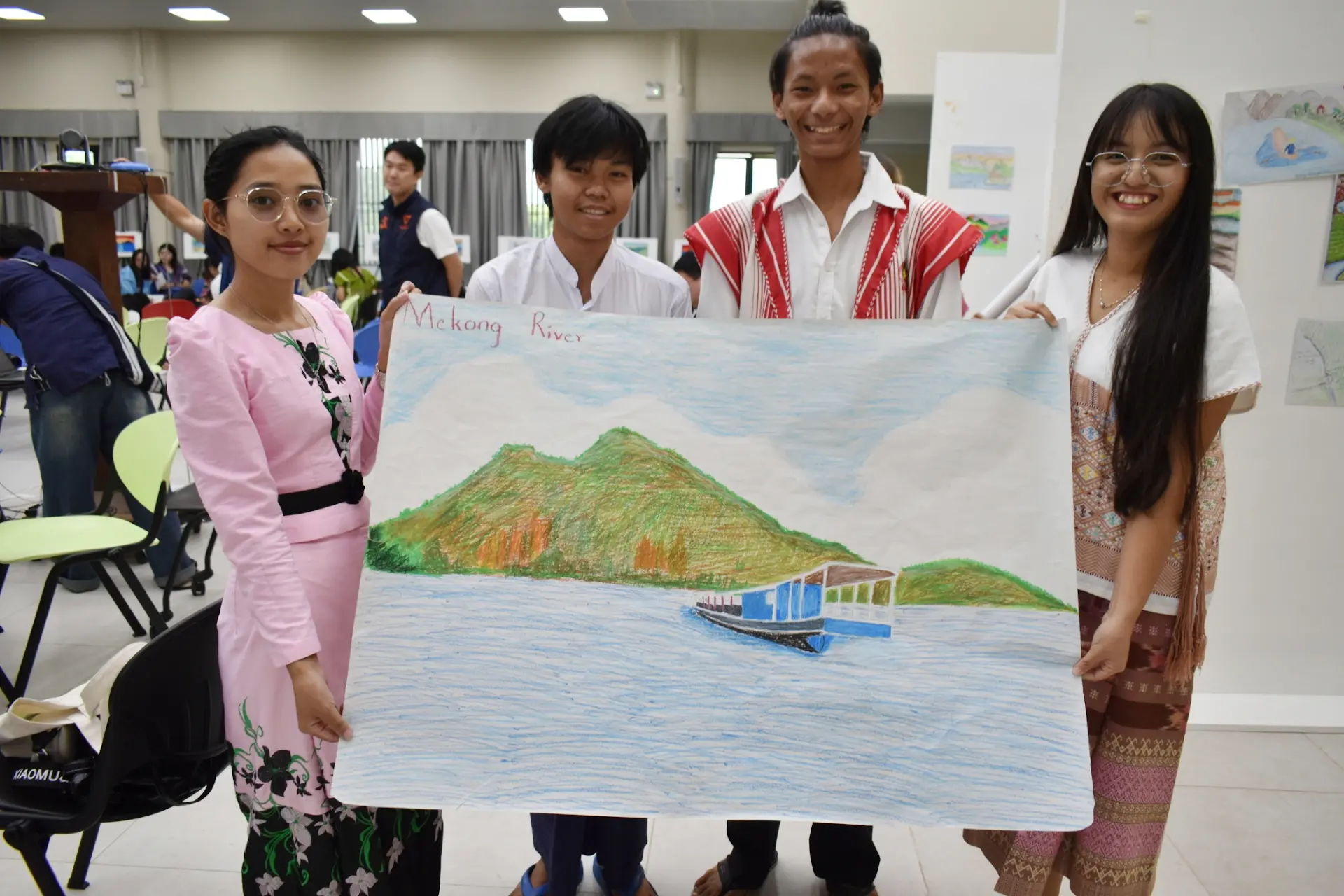
 Saengtham College, Xavier Campus/ Xavier Learning Community (XLC) in Chiang Rai hosted the House of Representatives of Thailand’s Committee on Children’s Activities for a seminar titled “Youth, Women, Elderly, Persons with Disabilities, Ethnic Groups, and LGBTQ+ Communities in the Mekong Environmental Crisis.” The event on 5 July brought together over 150 participants from Thailand, Myanmar, Laos, and other neighbouring countries—including academics, students, local community leaders, and civil society representatives—to confront the growing environmental threats facing the Mekong River Basin.
The seminar aimed to raise awareness of the toxic transboundary pollution affecting the Mekong and its tributaries while amplifying the voices of vulnerable groups most impacted by this ecological emergency. SC-XCC / XLC, as the host institution, reaffirmed its commitment to integral ecology, inclusive dialogue, and empowering youth to become active agents of environmental and social change across borders.
Experts from Mae Fah Luang University, Saengtham College, Xavier Campus / XLC, independent researchers, and grassroots leaders presented detailed studies confirming that the root cause of the pollution lies in large-scale mining operations in Myanmar’s Shan and Kachin states. These areas host more than 300 active mining concessions. The mining has released high levels of arsenic, lead, and manganese—well beyond international safety thresholds—into the Kok, Sai, Ruak, Mae Sai, and Mekong Rivers, with downstream effects on the Thai side of the border.
This toxic contamination has devastated aquatic ecosystems. Fish populations in the Kok and Ruak Rivers now exhibit severe lesions and abnormal growths, rendering them unsafe for consumption. Local fishermen, some with over 30 years of experience, reported that they can no longer sell their catch, destroying a vital source of income. Alarmingly, rice crops—a major export of Chiang Rai—are also showing signs of heavy metal contamination, and residents in areas like Tha Ton rely on tap water sourced directly from the polluted Kok River.
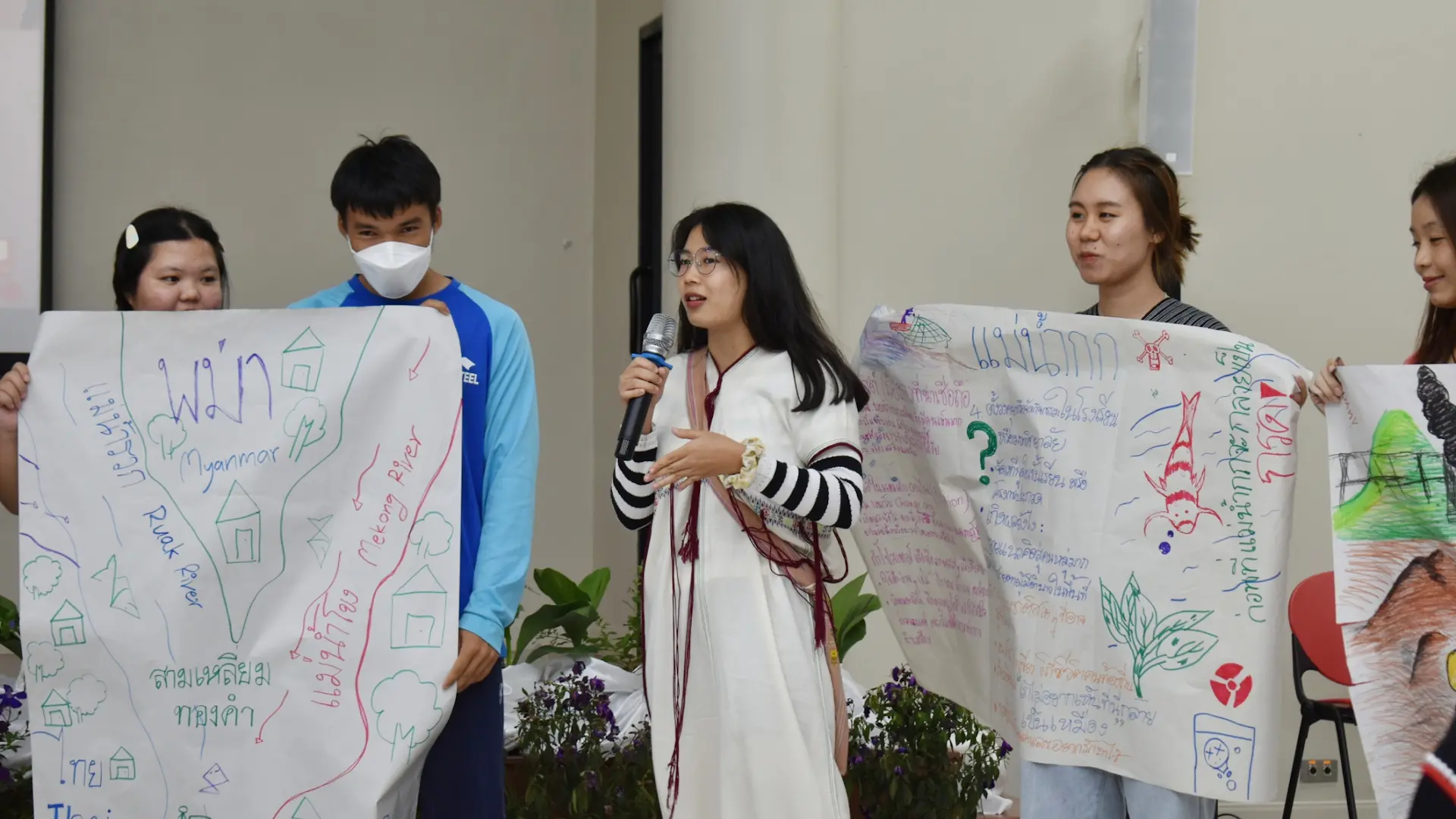 During the seminar, youth and ethnic minority representatives voiced their frustrations, fears, and hopes. One student representative from Thailand stated:
“As a young person, I want to say that we are facing a major crisis. We’re not against progress, but turning our rivers into dumping grounds for mining waste is unacceptable. This is an injustice when policies protect corporations and mines instead of the people. The fish are dying, water is poisoned, and people are getting sick. How can this be allowed to continue?”
The youth emphasised their desire to be part of the solution, not just as observers but as active participants.
“We want to learn. We ask for the opportunity to visit the affected areas, to understand the science, to talk to the people. We want to work together for solutions. This is our future, and we refuse to be left out of the fight.”
A Burmese student added:
“The Mekong River already suffers from dam construction. Now, mining pollution is making things worse. The only solution is to stop these mining operations. But how can we—the people of Thailand and Myanmar—work together to peacefully pressure our governments to listen to us?”
Another young leader said:
“We are a minority group. We do not oppose any individual personally, but we oppose the system that has turned the Mekong River into nothing more than a drainage ditch for corporate waste.
“If this so-called ‘progress’ means arsenic in our blood, then we choose to stand with nature—not with big capital. That city dwellers have electricity and gold stored away, while people along the river lack even clean water to drink—this is not progress. It is injustice born from policies that protect profits over real people.”
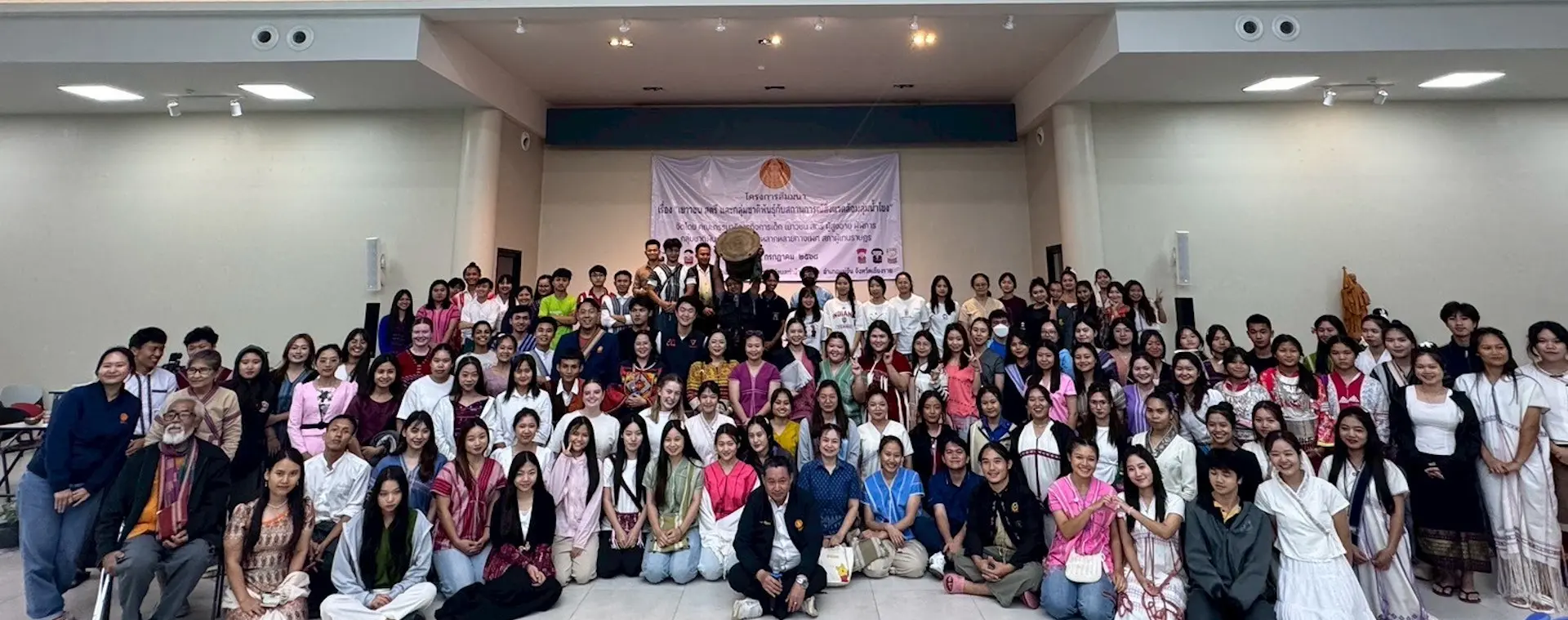 The youth reminded all participants that the Mekong River does not belong to corporations, governments, or the powerful but to the people—the present and future generations. It is not a commodity to be exploited, they said, but a lifeline to be protected.
Their plea was heartfelt and urgent:
“We truly want you to see our problems. To truly reach us. We live in the same world. Why should we harm each other? Let us join hands and restore the river to cleanliness. Let us ensure it remains a source of livelihood for our children, our grandchildren, and generations to come.”
“We, the youth, the women, the elders, and the ethnic communities, entrust these small voices to you.”
Tackling this crisis requires careful diplomacy among key stakeholders, the government, investors, ethnic leaders, and local authorities. The seminar proposed taking inspiration from the Doi Tung Development Project Phase 2, a Thai government initiative that successfully addressed deforestation, poverty, drug addiction, and environmental degradation through holistic, community-based approaches. Rooted in sustainability, peace-building, and local empowerment, the project was presented as a viable model for cross-border environmental cooperation in the Mekong region.
“Since nature knows no borders,” one speaker noted, “we must respond by building bridges between communities. Only through mutual understanding and cooperation can we protect the river systems we all depend on.”
The seminar concluded with a renewed call for solidarity among all stakeholders—particularly youth and marginalised communities—who must be recognised as essential actors in shaping a sustainable and just future for the Mekong River Basin. We hope that the seeds of education and cross-border collaboration planted that day at Saengtham College, Xavier Campus/ Xavier Learning Community will bear the fruit of long-term solutions.