

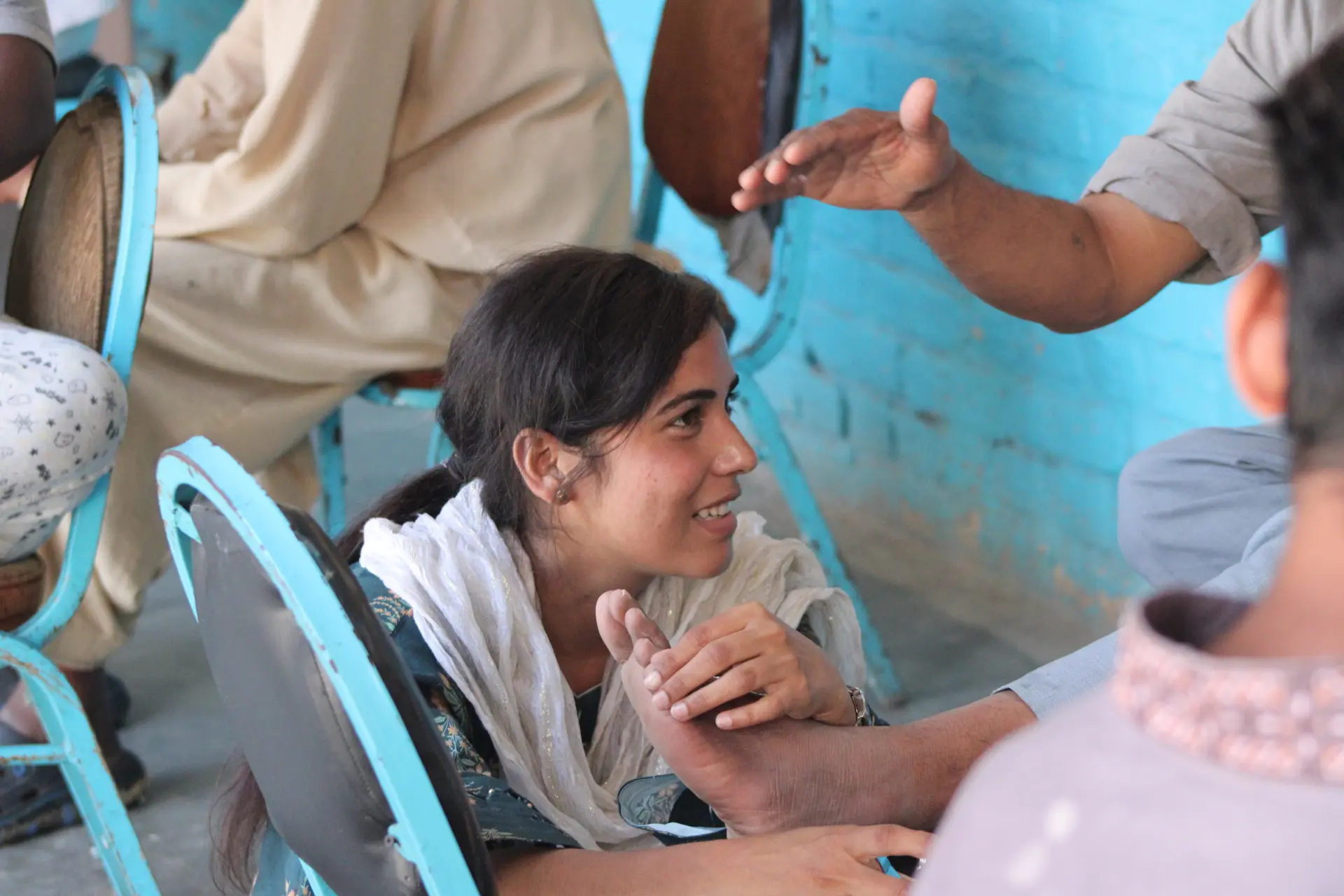
Meerab Waris, a teacher at St Mary’s Jesuit High School, touches the feet of a resident at Dar-ul-Karishma, a home for special-abled persons
“Service is what prayer looks like when it gets up off its knees and walks around in the world.” —Fr Michael J Graham SJ
The Loyola Hall Prayer Group in Lahore is a community of young people committed to spiritual growth, reflection, and service. Started by Scholastic Peter Long, a regent from Vietnam, and rooted in the Ignatian tradition, the group provides a space where individuals come together to pray, share, and deepen their relationship with God while becoming more aware of their role in society. Its activities include regular prayer meetings, Gospel reflections, faith-sharing sessions, and outreach initiatives that encourage members to live out their faith through action.
Recently, under the guidance of Scholastic Long, the Loyola Hall Prayer Group organised a visit to Dar-ul-Karishma, a home for special-abled persons and individuals often excluded from society. Meerab Waris, a member of the prayer group and a teacher at St Mary’s Jesuit High School, reflects on this meaningful experience of encounter that reflected the group’s mission to go beyond prayer and embody faith through acts of care and solidarity.
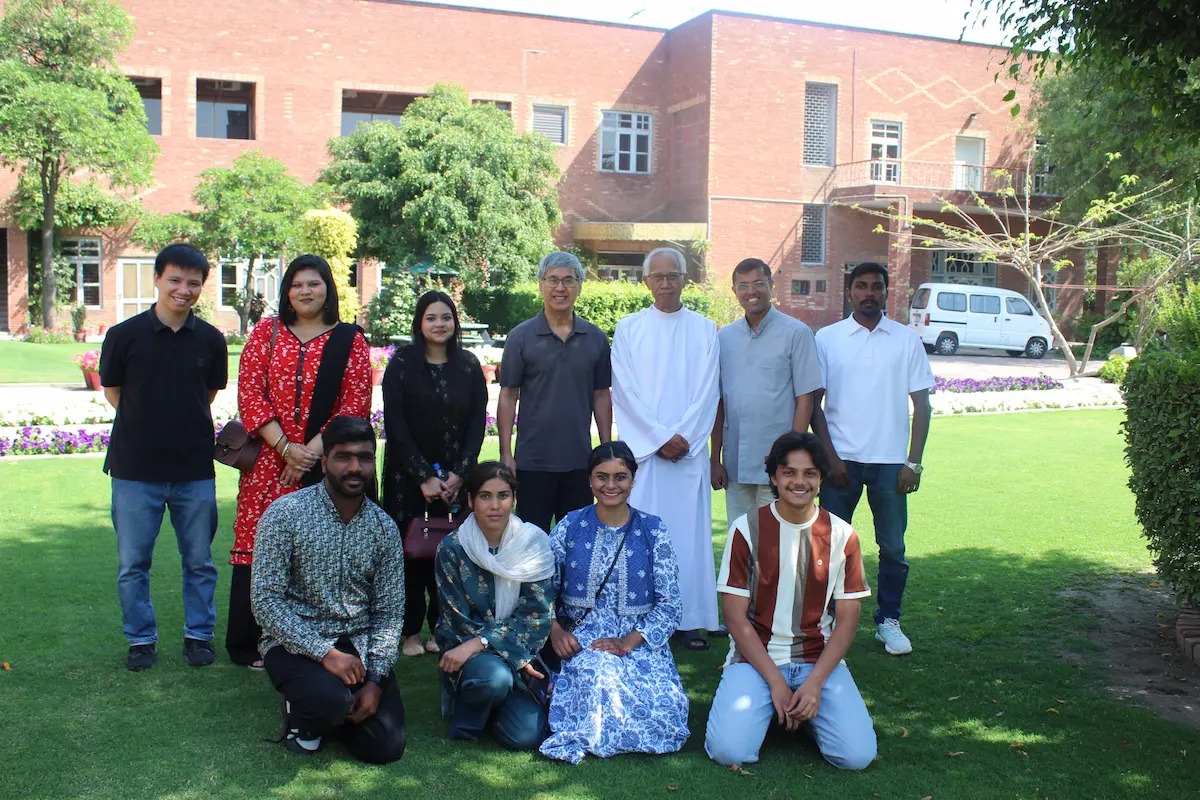
The Loyola Hall Prayer Group with Scholastic Peter Long SJ (standing extreme left), JCAP President Fr Jun Viray SJ (standing centre), and Pakistan Mission Formation Delegate Fr Riyo Mursanto SJ (standing third from right). Meerab Waris is in the front row, second from left.
The experience of visiting Dar-ul-Krishma proved to be profoundly meaningful from both a spiritual and reflective perspective. After participating in Holy Mass, we began our journey, which was challenging, with some confusion over directions, but was ultimately completed safely. We took this as a reflection of divine guidance and grace that led us securely to our destination.
Upon arrival, we were warmly received by the sisters, whose hospitality reflected the Christian values of love, humility, acceptance, and unconditional service. Their welcome created an atmosphere of dignity, peace, and spiritual openness, making the environment deeply comforting and respectful.
During our interaction, I observed that the residents there were not primarily in need of material support, but rather of emotional presence, attention, and meaningful human connection. They needed someone who could listen to their stories, spend time with them, and show genuine care and compassion. I realised the importance of relational care in human development, where dignity is expressed through empathy, presence, and understanding.
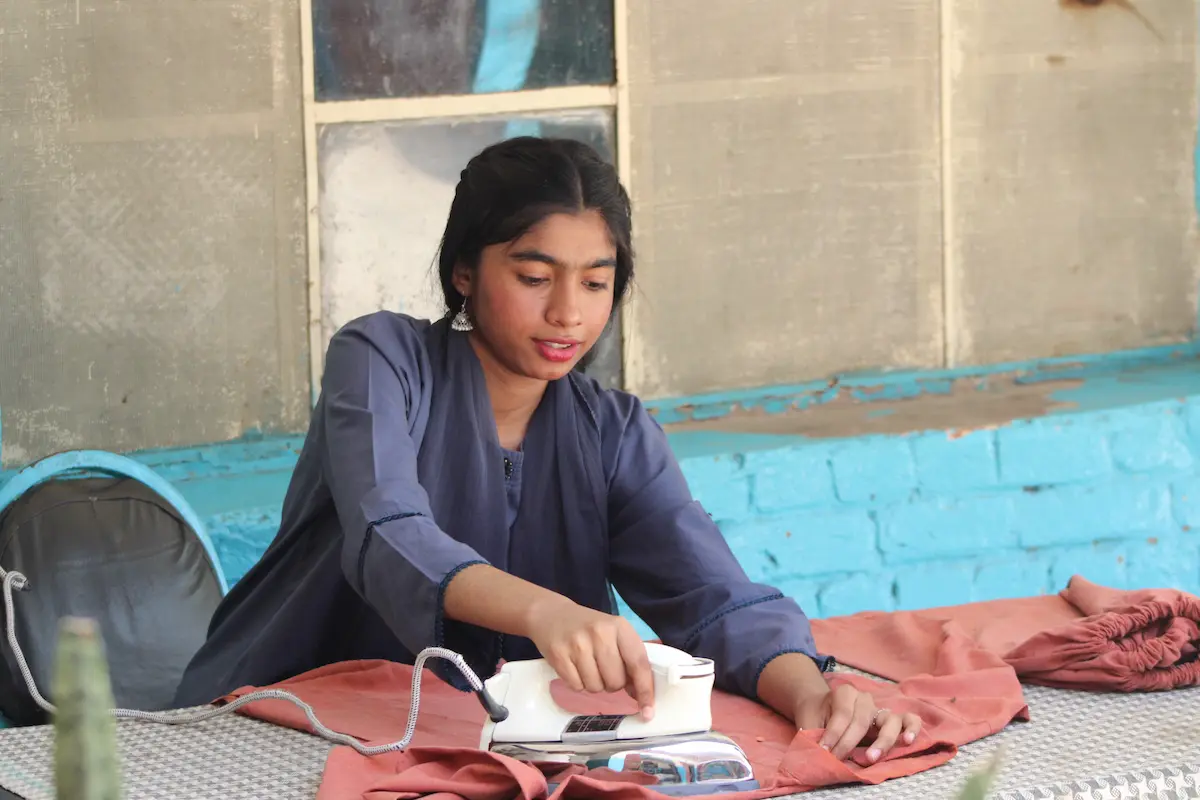
A member of the prayer group assists the staff in ironing clothes
Our experience affirmed that service to humanity is a direct expression of service to God. Acts of kindness, compassion, and selfless presence become a living form of faith, reflecting the essence of Christian love and moral responsibility. I also observed a deeply emotional response among those who were serving there. Some individuals cried, others became emotionally overwhelmed, while some experienced a deep sense of joy and fulfilment. Their expressions revealed to us the depth of human empathy and the transformative power of selfless service.
This whole visit felt like a silent prayer, where love became worship and compassion became faith. These feelings are unforgettable, and I will always carry them in my heart.