

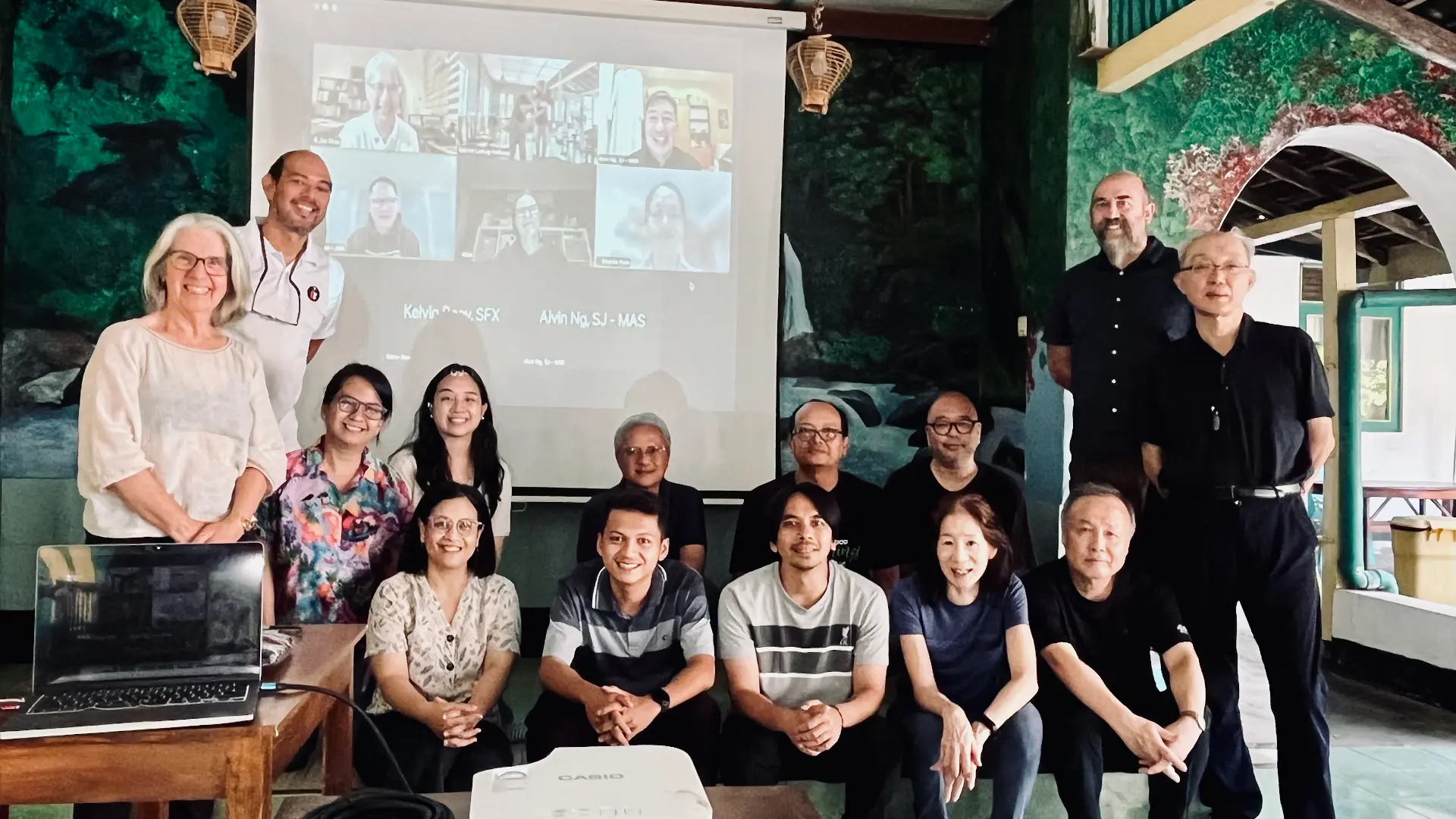
 Nestled in the heart of Central Java, Salatiga is a small city of about 200,000 people and is considered the most Christian city on the island. Here, the Jesuits of Indonesia have run an agricultural education programme called Kursus Pertanian Taman Tani Agricultural Course, or KPTT Salatiga, since 1965. During the height of the dry season in early August, members of the Reconciliation with Creation (RWC) Network of JCAP found their way to this place to meet face-to-face and online for a few days of gratitude, hope, and openness in their work. From sharing various efforts and projects to experiencing firsthand KPTT’s ethos of “finding God in farming” to connecting with a partner community by planting together, this gathering was significant in furthering the network’s vision of ecological conversion and reconciliation with creation through projects, partnerships, capacity building, and advocacy for the 4th Universal Apostolic Preference of the Society of Jesus.
JCAP President Fr Jun Viray SJ addressed the network virtually. He encouraged Jesuits and mission partners working in the social apostolate to find points of intersection for further collaboration and to work together in a more coordinated way. Fr Viray also announced the new coordinator for RWC, Louie Bacomo of JRS Asia Pacific, who replaces Fr Gabby Lamug-Nañawa SJ of the Philippine Province, who had served as coordinator since 2020. Meanwhile, Julie Edwards, who serves as JCAP Social Apostolate secretary, attended the meeting in person. She highlighted the need to reinvigorate the social apostolate in this most diverse conference and to stay grounded, interconnected, and integrated.
Certainly, the members of RWC have stayed grounded in their mission these past years. In terms of capacity building, Br Dieng Karnedi SJ of the Indonesian Province taught local farmers in Timor-Leste, alongside staff from Jesuit Social Services, about organic farming and spirituality: how the act of cultivation is a connection with God. Another dynamic member of the network, Caroline Seow, who is a board member of JRS Singapore, lent her experience and expertise in building effective partnerships. From the solid parish base of St Ignatius Church in Singapore, they have mounted exhibitions, found volunteers to plant mangroves, and established an internship programme to help refugees with their livelihood. They are also purchasing citronella candles made in Bendum, Philippines to support the community there. “They say in Singapore, we are in a bubble,” Seow observed. Their efforts have proven otherwise, because when there is compassion and commitment, any bubble will burst.
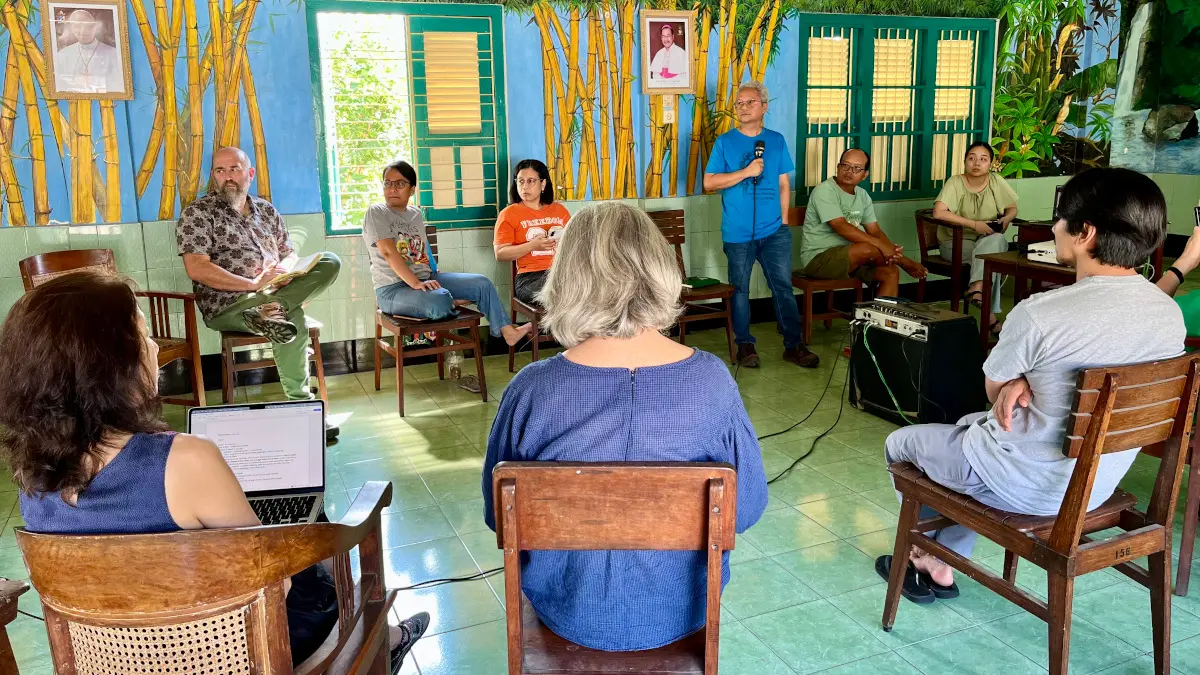 One of the highlights of this meeting was the presence of two Jesuits who are new to the network, from the provinces of Japan and Korea. Fr Ichiro Mitsunobu SJ, a retired professor of theology from Sophia University in Tokyo, shared not only how Laudato sí is applied in the Japanese context but also the various ecological issues that plague this developed nation, where industry, economy and security are still prioritised over ecology. Fr Mitsunobu pointed out that the Japanese Catholic Church is deeply involved in peace and reconciliation, especially in light of nuclear destruction during World War II and that environmental issues are connected to peacemaking. From the Korean Jesuit Province, Fr Francisco Hyunchul Cho SJ spoke about his own personal involvement in Green Korea United and the key ecological issues South Korea faces in the name of economic growth, despite huge leaps in this area. Fr Cho also shared about the protests they have organised in the past, displaying an audacity and passion that could strengthen the Jesuit faith-justice narrative in other parts of Asia Pacific.
Staying at KPTT Salatiga was truly a farm-to-table experience. At breakfast, there was fresh cow’s milk to be enjoyed. On the second day, participants met the actual cows who shared their milk, as well as the chickens who provided the eggs. There were cherry tomatoes to snack on and sweet potatoes, too. Participants walked through rows of organic vegetables cultivated in greenhouses, visited the coffee plantation where blooming coffee flowers filled the air with fragrance, and learnt that the piggery brought the heftiest profit, bringing home the bacon for them.
Renewed and refreshed from the exposure trip around the different areas of KPTT, communing with the cows and learning about biogas, the participants were ready to revisit the RWC Plan. Facilitated by incoming coordinator Louie Bacomo, the group reviewed their goals and initiatives, updated and revised them, and envisioned the next three years for RWC.
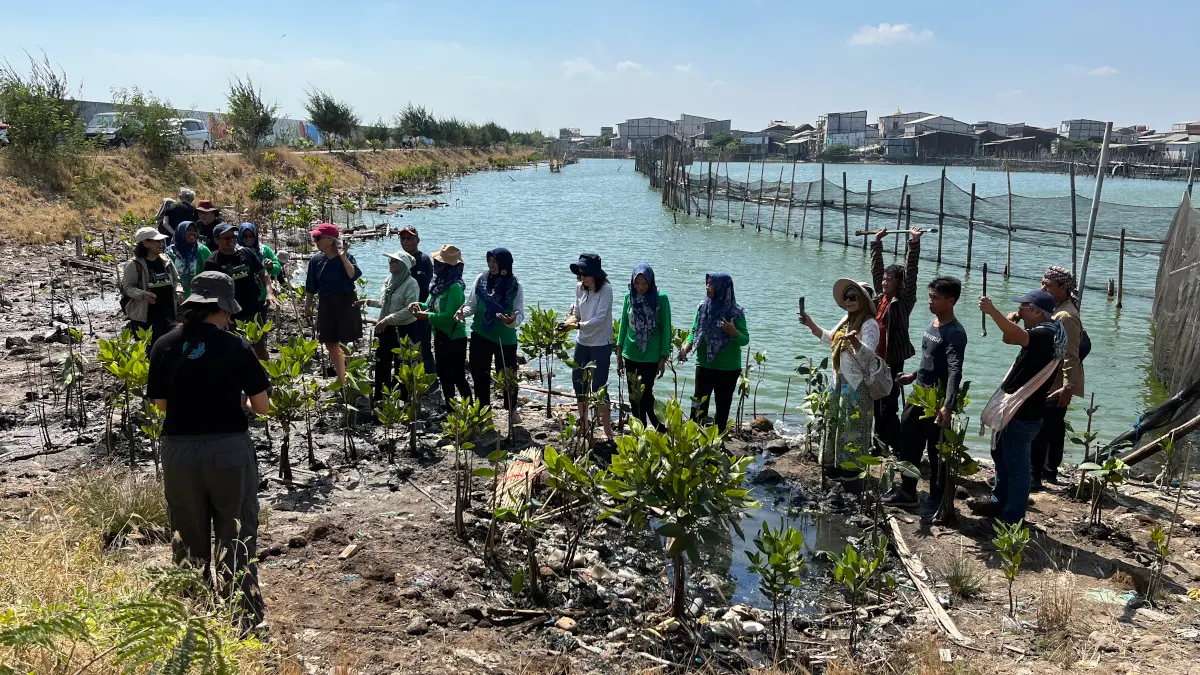 On the final day of the meeting, participants made an early visit to Area 15 in Tambak Lombok, an urban poor community in Semarang. Once considered a place where dead bodies were dumped, the area was infested with criminals and garbage and indeed was almost erased from the map by the government. The residents there consider garbage and waste management their main problem but refuse to move away. A meagre seawall was built to protect the houses built on the water—which is inundated with garbage when the water overflows—but they soon realised this solution was largely ineffective.
For over eight years, LPUBTN-KAS, a non-profit organisation that helps labourers, farmers, and fishermen and is supported by the Archdiocese of Semarang, has worked tirelessly with the community in Area 15. With support from JRS Asia Pacific, JCAP, and RWC, thousands of mangrove seedlings have been planted in the area to grow a sea belt that will protect the community from seasonal flooding and rising tides. Over 200 more mangrove seedlings were planted by the RWC network members alongside Muslim men and women from the community. Afterwards, they visited the community hall, where mothers and children mingled with the Jesuits and mission partners, and all enjoyed a simple lunch prepared by the community.
Despite many challenges and inherent differences, there are many points of collaboration and moments of celebration to be shared within this network and beyond. If the RWC network has gone through some birthing pains these past few years, there is solidarity and much consolation that keep its members going.


