

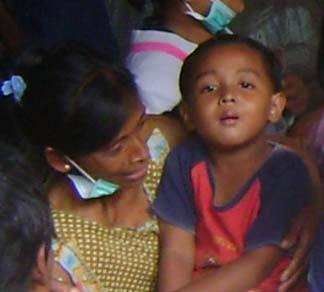
 The first big eruption of Mount Merapi was on the 26 October. A lot of people living as close as 10 km to the volcano were evacuated to safer areas. Like many other students in Yogyakarta, the Jesuit scholastics were still going to school on the following days, viewing the volcano spewing ashes which made a 2 km column of cloud, as they were riding their scooters to the campus.
However things changed suddenly on November 4. A bigger eruption occurred around midnight. Some of us heard the noise of the exploding eruption and felt the tremor as we were about to sleep. The glass windows were vibrating and the floor shaking. It was followed by a rain of ash and sand that made a different noise as it hit the roof of our scholasticate residence, which is about 30 km away from the angry volcano.
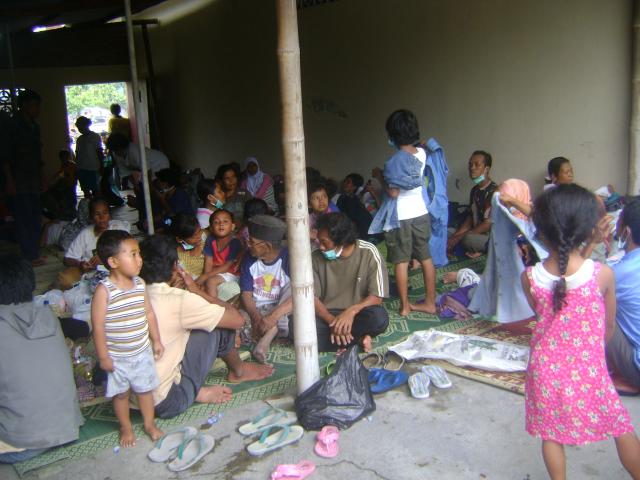 On the morning of November 5, we saw that everything outside was covered with white ash 1 mm. thick. Learning from the news that more people living near Mount Merapi were evacuated that night, we organized ourselves and reflected what we could possibly do for them. Though we were supposed to go to school that morning to celebrate the anniversary of our campus, we were totally occupied by the thought of helping those who were suffering from this catastrophe.
Finally, we decided to cook and send them meals twice a day – for lunch and the evening meal. The people we were helping were mainly those who were sheltered in Wonolelo, Muntilan and Sengon, Prambanan. There were actually more than a thousand of them and it was impossible for us to feed them all. However, we were not the only ones who helped them with meals. Many other groups of people were also providing help. We contributed only 500 to 900 rice boxes everyday. To transport the rice boxes to the people, we used our community car and got help from one volunteer who let us use his car. Both cars went back and forth twice a day, namely at 11.00 AM and at 4.00 PM. It took one to one and a half hours to reach the refugee camps.
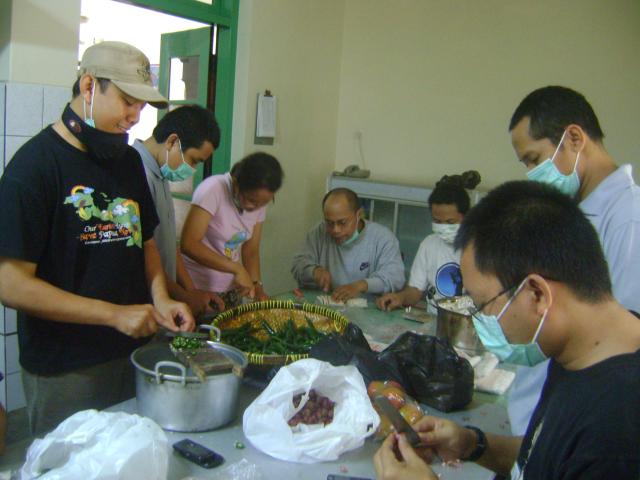 To prepare that amount of rice boxes was made possible only because we were helped by our best community cook, Mrs. Sri, and more then 40 young people, mostly college students who are colleagues in our apostolate (YSS, CLC, and Catholic Students). They came faithfully to our residence every morning. They sliced onions, fried eggs, prepared spices, packed rice, and so on, and went home late in the afternoon. The menu was set and changed every day, and it consisted of eggs, meat, or chicken and some vegetables like string beans, carrots, and cabbage. Sometimes there was fruit as well for dessert. However, food was not the only thing we gave to the people. We also distributed things they needed badly, such as blankets, toiletries, milk for babies, and clothes.
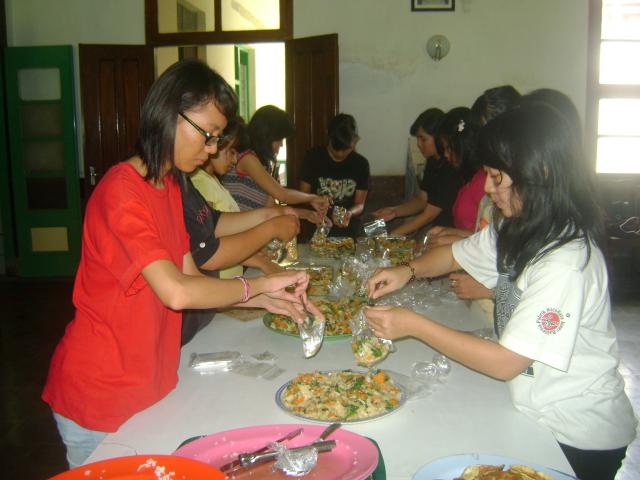 Where did we get the money and the goods? From the first day of our cooking activity, many people offered help. Some transferred money to our community bank account and others sent goods such as blankets, biscuits, rice, and toiletries. Thanks to the network each one of us has, we could deliver the goods directly to the people who were in need but somehow forgotten by the government due to its unnecessarily bureaucratic processes. We learned that when we help people, we are not alone. Others will join us and we work together as a team.
Sch. C. Bayu Risanto, S.J.


