

Have you ever seen or walked into a fancy handbag boutique selling the likes of Gucci, Louis Vuitton, and Dolce and Gabbana? Even if we have never walked into one, we all know that these bags are pricey, high class, and beyond the reach of most people. What about bags branded “Rag2Riches”? You can find them in major shopping malls in the Philippines and in Anthropologie shops in Singapore, Malaysia and many countries in Europe. They are beautiful and sewn with great attention to detail – and they are produced by women who are part of a social enterprise developed to help poor families living in a Manila dumpsite.
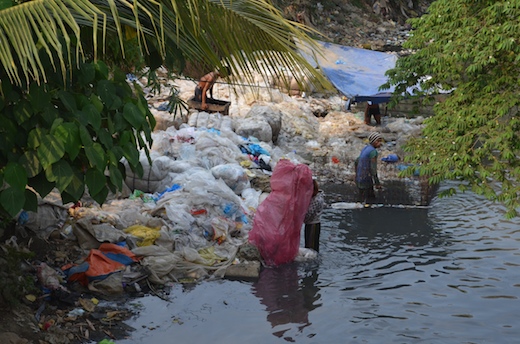 The story behind these bags was told to a group of Jesuits and co-workers during the annual Jesuit Conference of Asia Pacific Social Apostolate meeting, which this year was held in Manila from August 18 to 22. The nanays (Filipino for “mothers”) who make these bags came to tell their tale themselves. They live in Payatas, the largest dumpsite in the country, and used to eke out a meagre living by making floor mats out of scrap cloth they found in the dumpsite. A Jesuit scholastic came across a mat during his weekend apostolate in the area, and thought the nanays could get much more for their mats which were beautiful and well crafted. Several bazaars and exhibitions later, the Rag2Riches brand was launched in 2007 and the nanays became part of a company that sells high-end bags made of rags, a social enterprise.
Social enterprises were the focus of the meeting, and over the course of four days, the 40 participants from 12 countries learned about the concept, heard several testimonies and visited a number of such enterprises. “Social enterprise is a new concept for many Jesuits in the region and it is a growing phenomenon especially in the increasingly urban Asian context. It may offer a new tool to help the poor,” said Fr Benny Juliawan SJ, JCAP’s Coordinator for Social Apostolates.
On the first day Fr Patxi Alvarez SJ, Social Justice and Ecology Secretary of the Curia, spoke about the Ignatian leadership qualities that should form the core of any social entrepreneurship. Fr Juliawan then traced the economic and Catholic social teaching backgrounds of an ethical business in today’s context. Fr Rene Tacastacas SJ of Xavier University in Cagayan de Oro spoke of various schemes to help farmers in the Philippines, and Fr Xavier (Javy) Alpasa SJ walked the participants through a business model using the example of Rags2Riches.
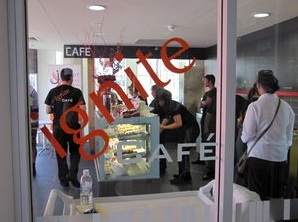 On the second day, the participants heard stories of social enterprises in other parts of the region. Antonius Sumarwan founded Pelita Sejahtera (Light of Prosperity) Credit Union in Jakarta to help small-scale merchants who would normally not be eligible for microfinance schemes. Filipino Scholastic Firmo (Jun-G) Bargayo SJ recounted the lights and shadows of running the Ang Snuol Farmers’ Solidarity Association when he did his regency in Cambodia. From a totally different context, Julie Edwards, CEO of Jesuit Social Services in Australia shared about its initiative of opening Ignite Cafés and a catering service in Melbourne to provide a training environment for disengaged youths and the long time unemployed.
Day three saw the participants visiting three social enterprises in and around Manila. The first was the Gawad Kalinga Enchanted Farm where underprivileged children are taught to be entrepreneurs. The next stop was the Rags2Riches workshop in Payatas and then to one of its pop-up stores in Glorietta Mall in Makati district. The day ended with dinner in Earth Kitchen Restaurant, which prepares organic food produced by farming communities across the country. The restaurant and its parent organization, Got Heart Foundation, are the brainchild of Melissa Yeung, an Atenean who wanted to give back to the poor communities she lived with during college exposure programmes.
All the inputs and exposures led to a reflective and engaging session on the last day. Everyone knew that social enterprises are not a panacea for all social problems. The structural inequalities that characterize many developing countries remain and need to be addressed with different strategies. Yet social enterprises offer a tool to help the poor get back on their feet. The participants took home some learning points, from the practical such as planning an on-site learning programme about microfinance and agricultural enterprises to the more conceptual.
An absolute requirement for running a social enterprise is the Ignatian freedom from inordinate attachments. This capacity frees the heart and mind and moves the will to put the poor in the centre of the activities, not as an add-on or object. It is at the end of the day the work of the poor and with the poor, although business provides for the sustainability of the effort. As Fr Mark Aloysius SJ from the Malaysia-Singapore Jesuit Region put it, an Ignatian social enterprise has to espouse elements of the spirit, the heart and the routine. Or as Timorese Scholastic Zitu Rebelo SJ pointed out succinctly, “It is all about God, people and planning.”
Responding to the enthusiasm of the participants, it was agreed that Fr Alpasa will act as the reference person, and will pursue, together with Fr Juliawan, strands of partnership across the region to nurture and mentor budding social entrepreneurs within Jesuit circles and institutions.


