

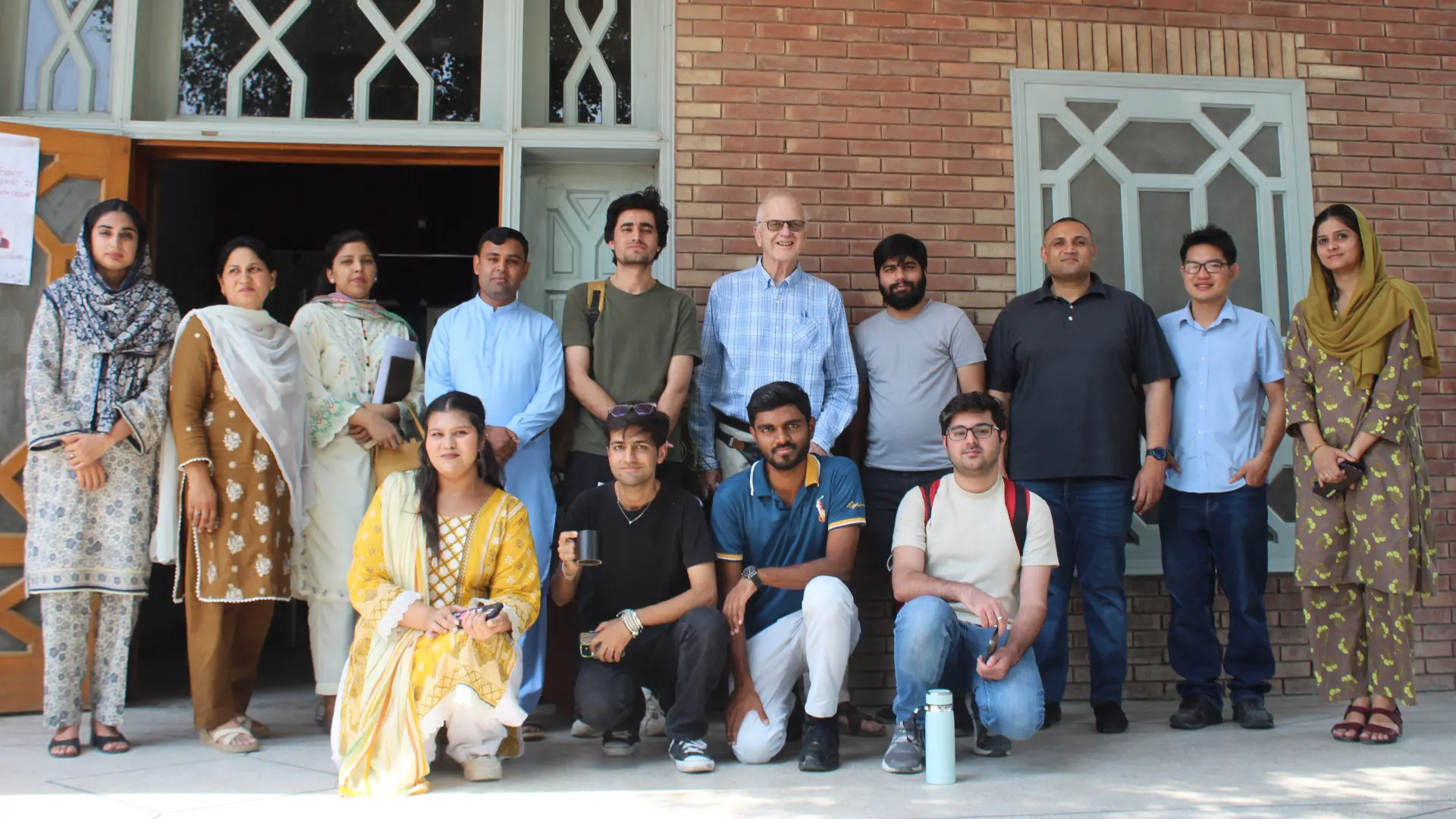
 The Critical Thinking Workshop Series at Butler Library, Loyola Hall, Lahore, held throughout May, was for me a deeply personal and intellectually meaningful experience. It brought together participants from different walks of life to engage with ideas often overlooked in our fast-paced, emotionally charged culture, reason, ethical inquiry, and reflection. In a culture where loud opinions often outweigh thoughtful ones, this series offered a rare chance to slow down and think carefully.
The series began on 3 May with Dr Herman Roborgh, a former Jesuit and distinguished scholar of philosophy and religion, who led a session on “The Enlightenment and the Birth of Critical Thinking.” He traced the evolution of reason during the Enlightenment, introducing us to the values of autonomy, scepticism, and inquiry. He emphasised how these intellectual shifts continue to influence global thought. The session reminded us that critical thinking has historical roots in resistance, not just against tyranny or superstition but also against intellectual complacency.
Dr Roborgh returned on 17 May for the second session, “Critical Reason and Modernity: Shaping Values Through Rational Inquiry.” The focus shifted from historical roots to contemporary application. He encouraged us to examine how rational inquiry can shape personal and societal values in an age overwhelmed by moral confusion and ideological noise. The discussion offered clarity, not in the form of final answers, but in the courage to ask better questions. For me, this session underscored that critical thinking doesn’t weaken belief or tradition; it refines them.
On 24 May, the series continued with two back-to-back sessions. The first, led by Joseph Chung SJ focused on “Fallacies in Thinking: Common Errors in Reasoning.” Through practical examples and lively engagement, participants examined how flawed arguments influence our daily lives, from media to conversations, from public debates to private reflections. His approach was not about intellectual superiority but about cultivating responsibility in how we process and respond to information.
 The second session that day was conducted by Sana Iqbal, a Scripture scholar with an STL from the Pontifical Biblical Institute in Rome. Her topic, “Application of Critical Thinking in Daily Life,” explored how this discipline shapes not just ideas but habits. Her words were rooted in experience, inviting us to see critical thinking not as a skill for the classroom but as a way of being, to be mindful, honest, and ethically aware. She reminded us that critical thinking is not separate from our emotions or relationships but works alongside them to foster a balanced life.
The final session on 31 May, also facilitated by Sana, addressed “Critical Thinking in the Age of AI.” This session explored how technology is transforming the way we think, decide, and communicate. Rather than painting AI as a threat, she challenged us to remain conscious and discerning in a world shaped by algorithms. In a time when information is abundant but wisdom is scarce, this session left a lasting impact on all of us.
One of the most beautiful aspects of this series was the spirit of shared purpose that extended beyond the participants and facilitators. Every member of the staff played an important role, from registration desks to mic arrangements, from serving refreshments to collecting feedback. Their silent commitment was a reflection of what Jesuit education truly stands for—collaboration, service, and attentiveness to detail. They weren’t just supporting an event; they were participating in a mission—making space for dialogue, learning, and the slow but steady formation of conscience.
As I reflect on the series, I recognise it as more than an intellectual programme. It was a quiet manifestation of the Jesuit mission in Pakistan. Rooted in the Ignatian tradition, Jesuit education is not just about producing experts; it is about forming thoughtful, morally anchored individuals. In a country where young people face ideological confusion, rigid educational systems, and limited exposure to reflective discourse, the Jesuit mission offers a deeper alternative—one that fosters curiosity, courage, and conscience.
What these sessions offered was the space to think not only with the mind but also with integrity. And, in today’s world, that is not only rare—it is vital.