

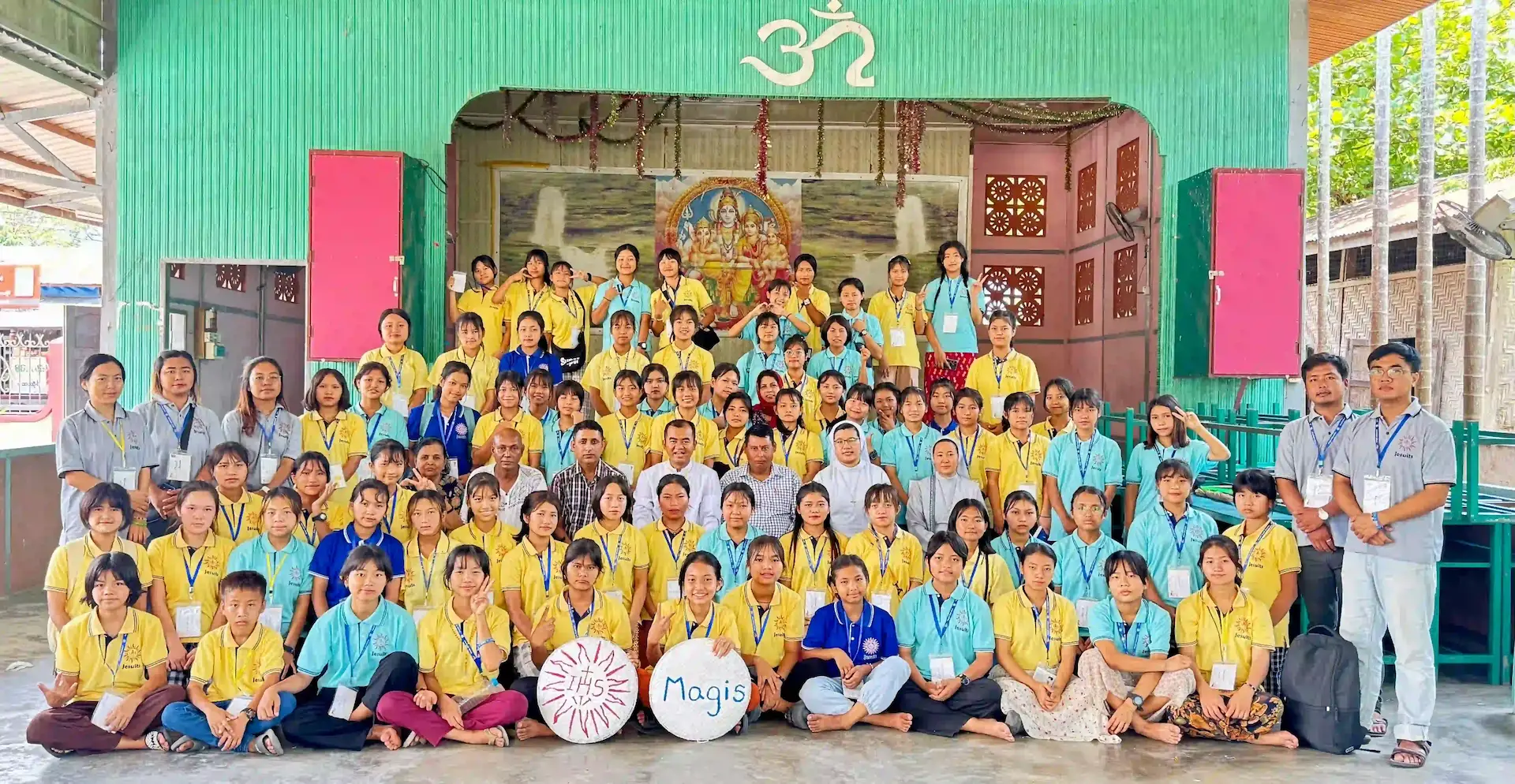
 Under the leadership of seven Magis animators and a Jesuit priest, about 80 young women gathered at St Joseph Convent, within the premises of St Mary’s Cathedral in Kalay, for an eight-day Magis programme. As Myanmar faces conflict, displacement, and the fear of conscription, the gathering was a courageous act of hope. Despite difficulties in travel and the strain many families endure, the animators came with a deep desire for these young women to encounter God, accompany one another, and listen to the movements of the Spirit in their hearts.
The first five days focused on immersing the participants in the heart of Ignatian and Catholic life. Through daily meditation and contemplation, twice-daily examen, plenary inputs, and steady journaling, the young women entered more deeply into their relationship with God. The Magis Circles created spaces for them to articulate their consolations and desolations, sense God’s presence amid uncertainty, and discern where the Spirit might be calling them. These practices reminded them that Ignatian spirituality is something lived—quietly, courageously, and with interior freedom—even in unstable times.
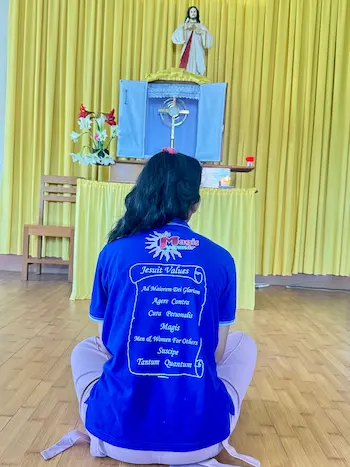 Paulina Ngun Tha Nei Iang shared how the Magis Circle helped her overcome the fear of speaking in public. She explained, “The group sharing makes [us] reflect and share [our] experiences. No one is excluded from the Magis Circle; hence, all of us are trained to become reflective persons, listeners and speakers.”
She also reflected on how the programme taught her the value of cura personalis or caring for others holistically, a key concept in Ignatian spirituality that addresses physical, psychological, and spiritual well-being.
“For physical health, a doctor and a nurse taught us personal hygiene, first aid, and preventive measures in the conflict zone. For psychological health, they educated us to console the broken hearted and soothe their trauma. For spiritual health, meditation and examen calm the mind, enhance one’s spiritual life, and draw us closer to God.”
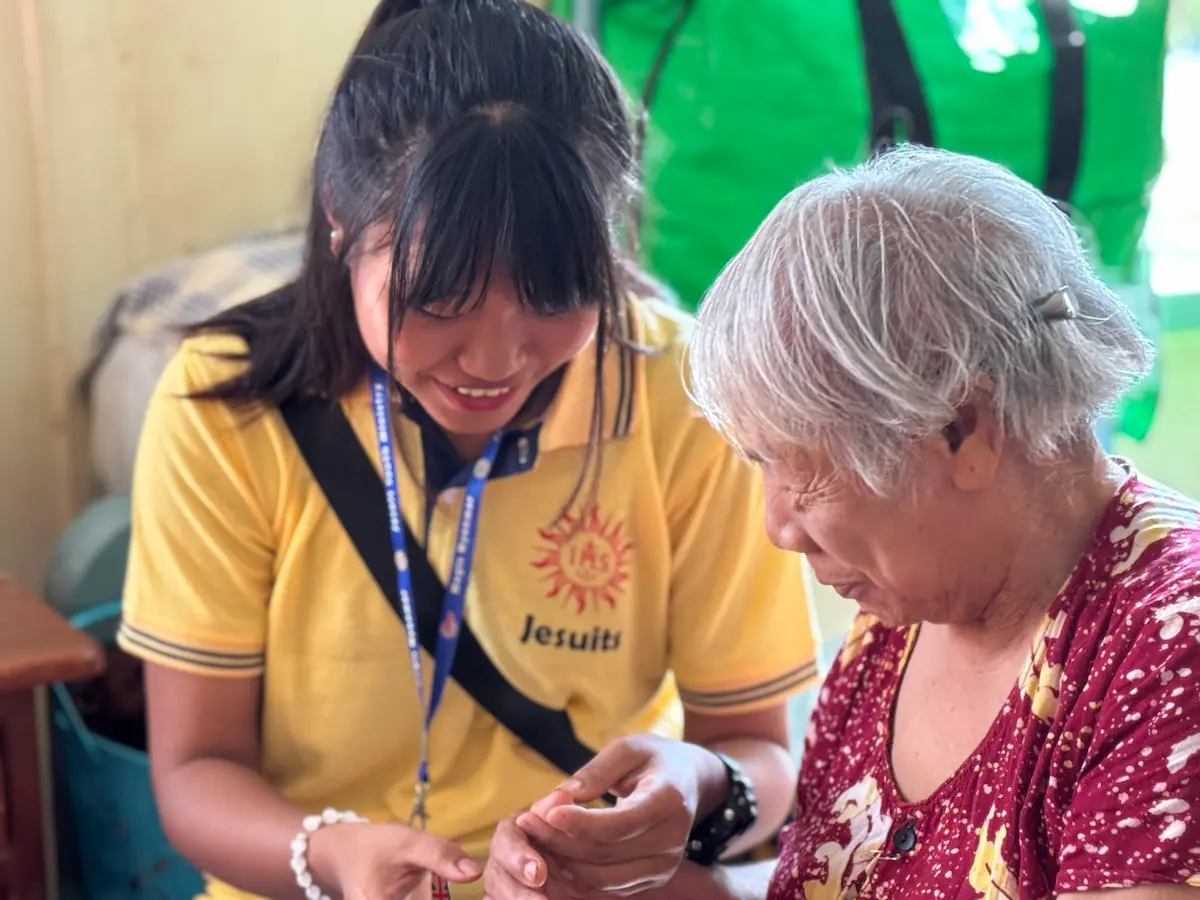
On the sixth day, in the Ignatian spirit of being “contemplatives in action,” the group went on a mission to a nearby old-age home. Cleaning living spaces, caring for the residents, and offering simple companionship, the young women encountered Christ in the elderly. Their songs and dances brought joy and light; their simple presence was a healing balm that no words could ever replace.
The following day was dedicated to interfaith encounters. Visiting a pagoda, a Hindu temple, and a mosque, the participants listened to the stories and traditions that shape Myanmar’s religious landscape. These encounters invited them to become bridge-builders in a country fractured by division—embracing dialogue not as a task but as a mission of reconciliation.
“By visiting these places of worship of the Buddhists, Hindus, and Muslims, I learnt to appreciate, respect, and understand the beauty of other religions, beliefs, cultures, and traditions,” shared Mary Van Sui Par.
 That evening, the group entered a period of silence and recollection, which culminated in the sacrament of reconciliation the next day. Many experienced a deep sense of mercy and interior healing. Later, an afternoon of swimming and joyful play reminded them that God also speaks through friendship, laughter, and community—gifts especially precious to young people living under stress and fear.
On the eighth day, the programme concluded with reflections, letters of gratitude, and creative skits expressing the lessons of the week. A final agape meal and a cultural celebration filled the evening with renewed energy and hope.
Organising a Magis programme in a conflict-torn country is never easy, yet the fruits are unmistakable. These eight days formed young people in prayer, discernment, resilience, and service—qualities Myanmar urgently needs today. In Kalay, the women Magis youth embraced once again the Ignatian question that guides disciples in difficult times: “Lord, what more do You ask of me?” From this question, new pathways of courage, hope, and service are taking root in a Myanmar wounded by conflict yet yearning to rise.
Watch highlights of Magis Kalay 2025:


