

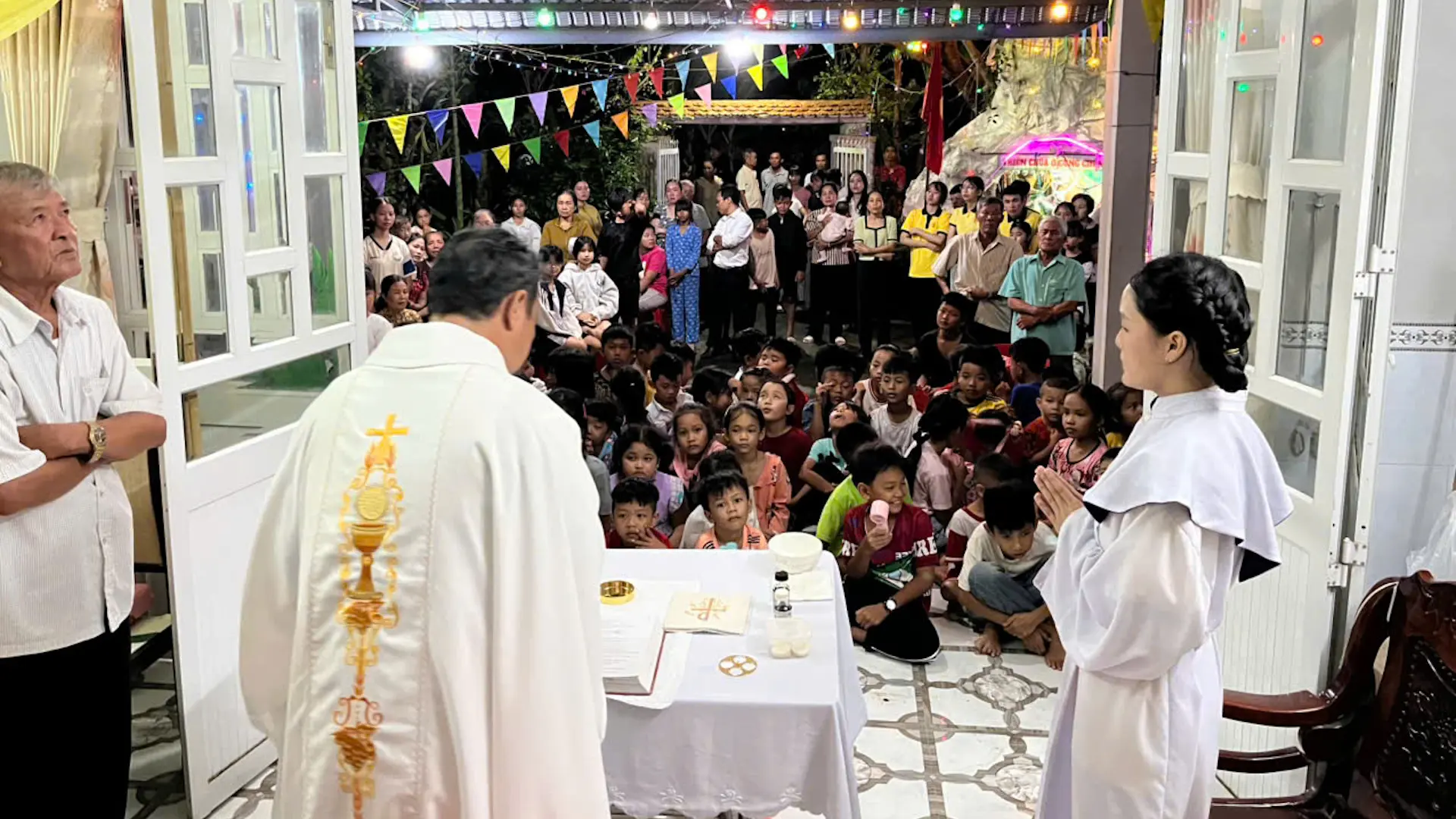
 Christmas came to us quietly this year, in a small village where there is no chapel—no building set aside as a church. And yet, on that night, the Church was unmistakably present.
There were no bells, no stained glass, no pews aligned in careful rows. Instead, there was a simple courtyard, a few strings of lights, and a small Nativity scene lovingly prepared by people who had little but gave everything they could. Under an open roof and the night sky, the mystery of Christmas unfolded.
The children came first—and they came in great numbers. They sat close together on the floor, shoulder to shoulder, some holding younger siblings, others quietly watching. Their faces were open and attentive. They were not concerned with liturgy or ceremony, nor with how Christmas should look. They knew only this: there was a manger, and in it lay the Child Jesus.
During the homily, nothing complicated was said. The priest spoke as one speaks within a family, asking the children simple questions. Was Jesus’ family rich or poor? Did Mary and Joseph have money for a place to stay? Was Jesus born in a hospital?
The answers came quickly, without hesitation. Poor. No. No.
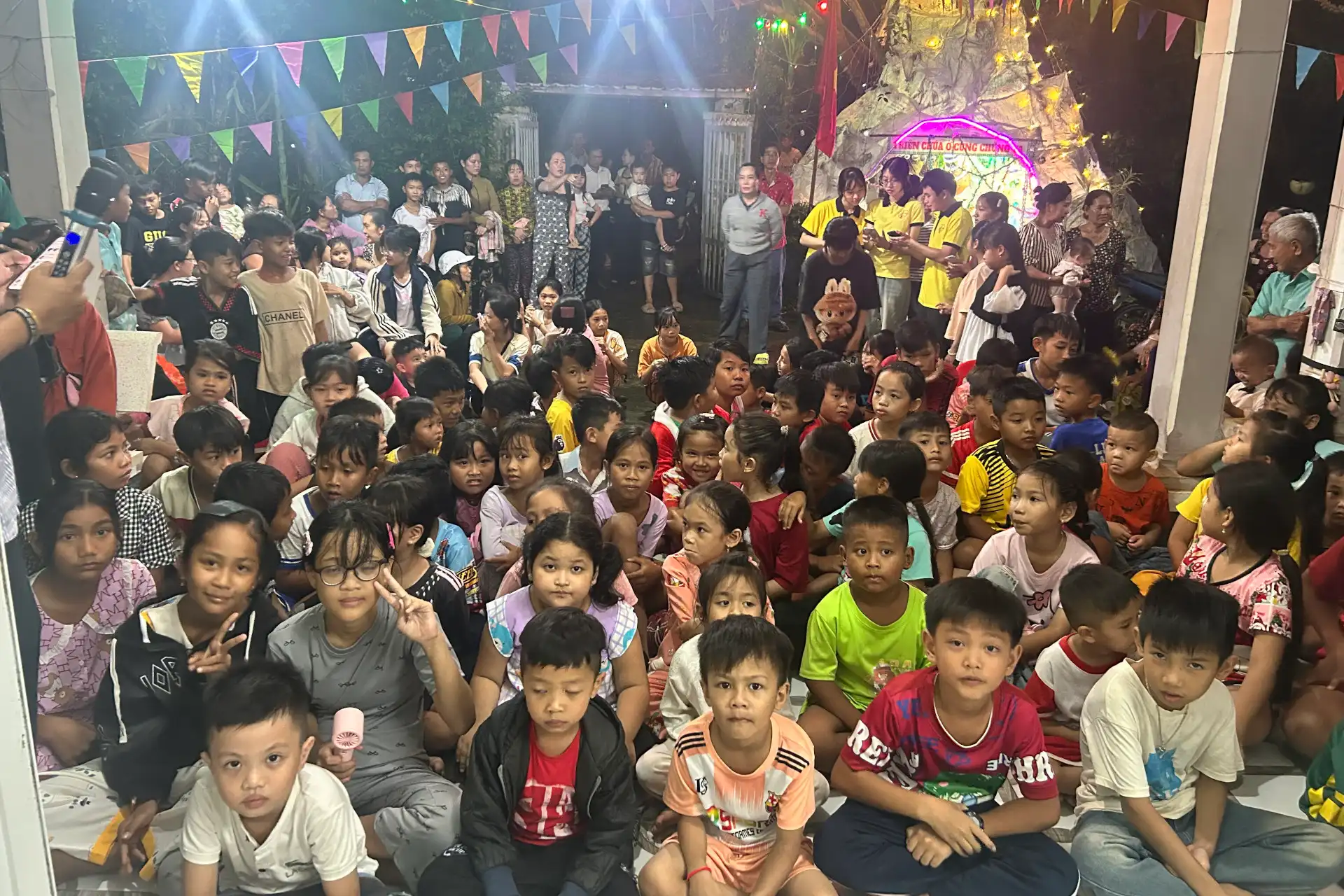 And in those simple responses, the heart of Christmas was revealed. The children understood—without explanation—that Jesus chose poverty. Not as an idea, but as a way of life. Poorer even than many of their own families.
From there, the message was gentle and direct: Jesus loved His parents. He was obedient. And so the children were invited to do the same—to be good and to love their parents. Their soft “Yes” rose quietly into the night, small in sound, yet full of warmth.
In that moment, it became clear that the Gospel had truly been proclaimed. Not through amplification or spectacle, but through everyday language, sincere listening, and the attentive eyes of children fixed on a humble manger.
Jesus was not welcomed amid music and grandeur. He was welcomed by a poor community—adults patiently preparing what little they had, children waiting with simple joy. There was no chapel, yet there was faith. No comfort, yet there was reverence. No structure, yet there was communion.
This is how the Gospel is lived and shared in a village in the Mekong Delta: quietly, simply, patiently. It is a path that requires love more than resources, perseverance more than efficiency. And it is here, in this very poverty, that Christ is received most tenderly—as a small Child among the poor, recognised not by words, but by the clear and trusting eyes of children.


