

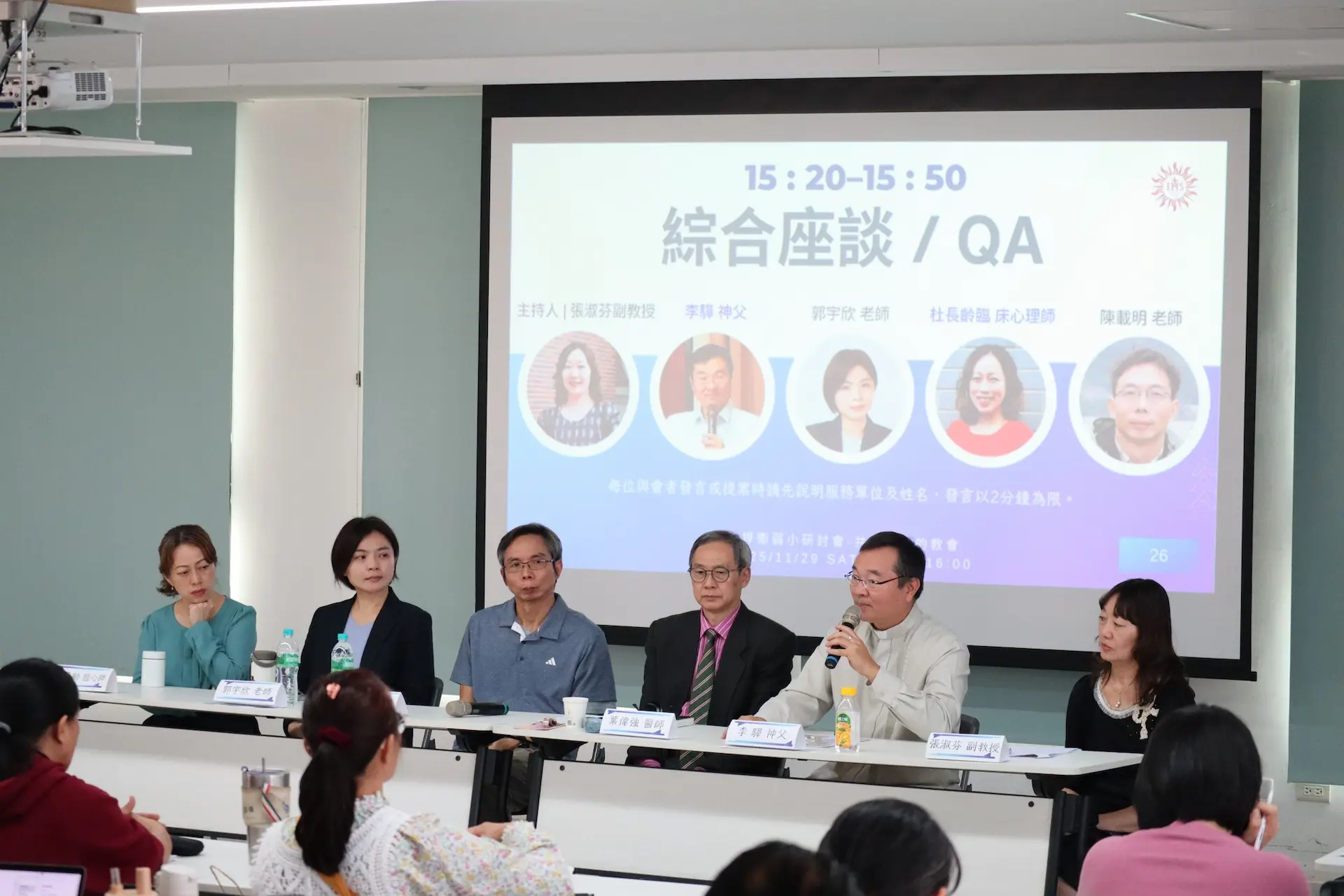
Fr John Lee Hua SJ speaks at a Protection of Minors conference on the themes of self-safety, community safety, and Church safety
In Taiwan, there is a lone Jesuit institution responsible for safeguarding minors and vulnerable adults in the Catholic Church. Fr John Lee Hua SJ is the Director of the Office of Child and Adolescent Protection in the Chinese Province of the Society of Jesus. With a background in Ignatian Spirituality, he found himself immersed in the province’s safeguarding mission.
Stepping away from his role as provincial, Fr Lee took a sabbatical year in 2018. “Fr Hans Zollner said to me, ‘John, if you have nothing to do, come to Rome!’ So I said, ‘Okay!’ I applied to go to Rome to take the Diploma in Safeguarding for six months,” Fr Lee recalls, referring to the course taught at the Department of Anthropology at the Pontifical Gregorian University. “I just went to learn. I did not have a very strong idea of what I could do in the future. Since there was a programme, I thought it might be helpful for myself and for the province, so I applied.”
Fr Lee’s decision was well-timed, as both the Vatican and the Society of Jesus were requiring all provinces to strengthen their safeguarding efforts. “Right after my studies in Rome, I was asked by the provincial at that time, Fr Stephen Chow SJ, now the Cardinal of Hong Kong, to establish this office. I said, ‘No problem!’ I had just learnt about it, and I agreed this was a very important thing to do. So that is the mission I received.”
Fr Lee takes a very proactive approach in spreading awareness about safeguarding. At the beginning, he admits, his focus was influenced by what he learnt in Rome: mainly dealing with cases, helping victims, and dealing with perpetrators. However, he soon realised that the mission of safeguarding does not stop with casework. “Actually, there are not too many cases here compared with Europe and the United States. Focusing on so-called scandals doesn’t make a good public image for the Church. So I realised that I had to change direction and focus on the safety of children, the family, and the church.”
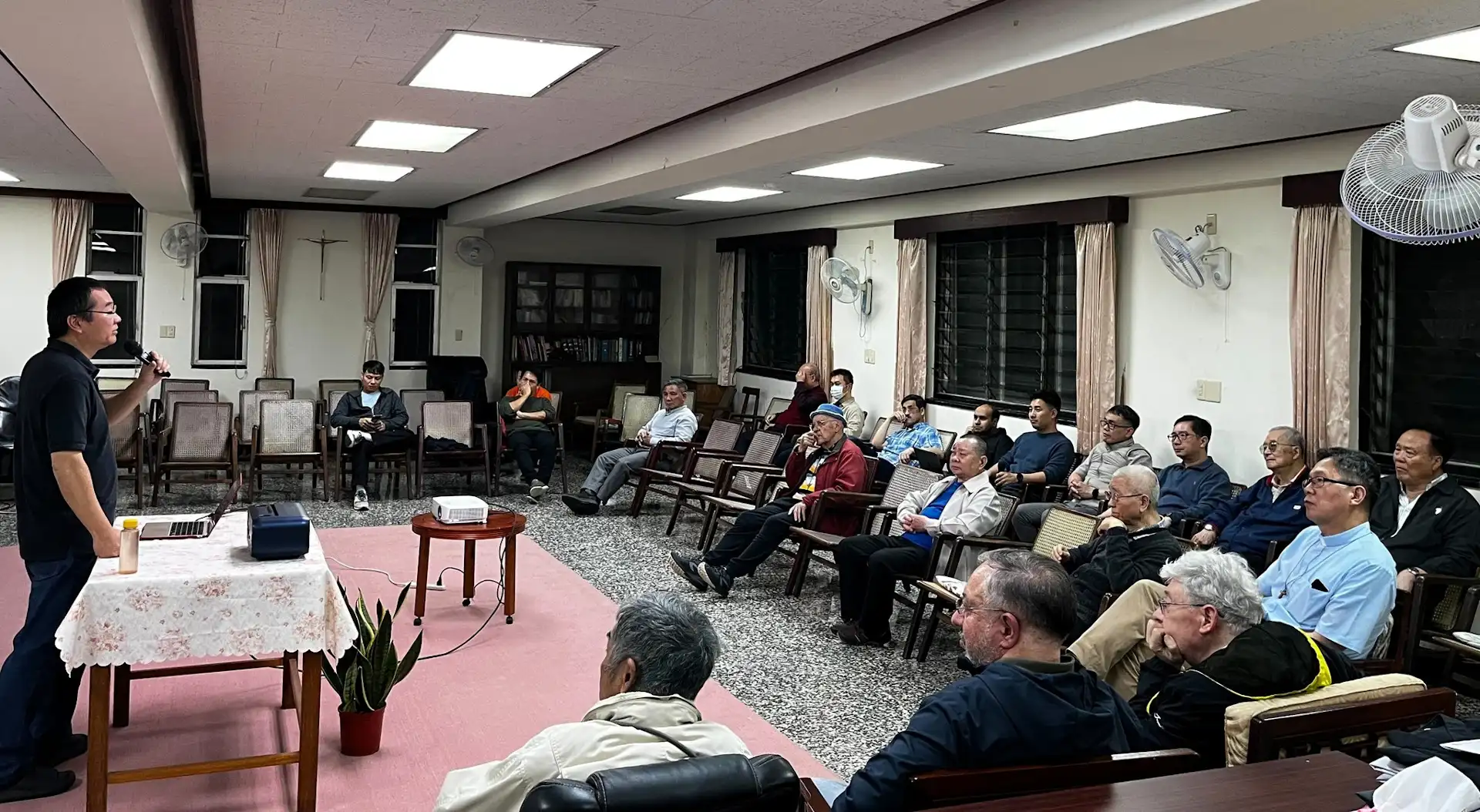
Fr Lee gives a sexual harassment prevention course for the Jesuit community at the Faculty of Theology of St Robert Bellarmine
Two years into the work, the office started offering prevention programmes. “We began offering safety programmes for the church. Then we started receiving donations, good enough to support the office. Since then, we have not received a penny from the province. Laypeople are very generous; they know how important it is,” he says.
Their approach to safeguarding is inclusive and encompasses everyone who works within the Chinese Province. “We have training once a year for Jesuits, staff, and safeguarding officers in each institution. We train them so the system is well established,” he shares. “We not only have regulations; we also have programmes for all staff and volunteers—all the documentation is there. And we also have healing programmes, which are externally monitored,” says Fr Lee. “We have almost everything. Actually, I’m very proud of this office.”
Fr Lee’s office now serves not only the Chinese Province but the Catholic Church in Taiwan and beyond. “Prevention is very welcome and needed,” he notes. “Since then, I have received a lot of requests from laypeople, religious congregations… I have also received invitations from local bishops, so I have offered programmes for diocesan priests as well,” he shares.
Through these initiatives, Fr Lee’s office is steadily building awareness of safeguarding. “Step by step, more and more people realise that in our Catholic Church in Taiwan, there is an office focusing on this.”
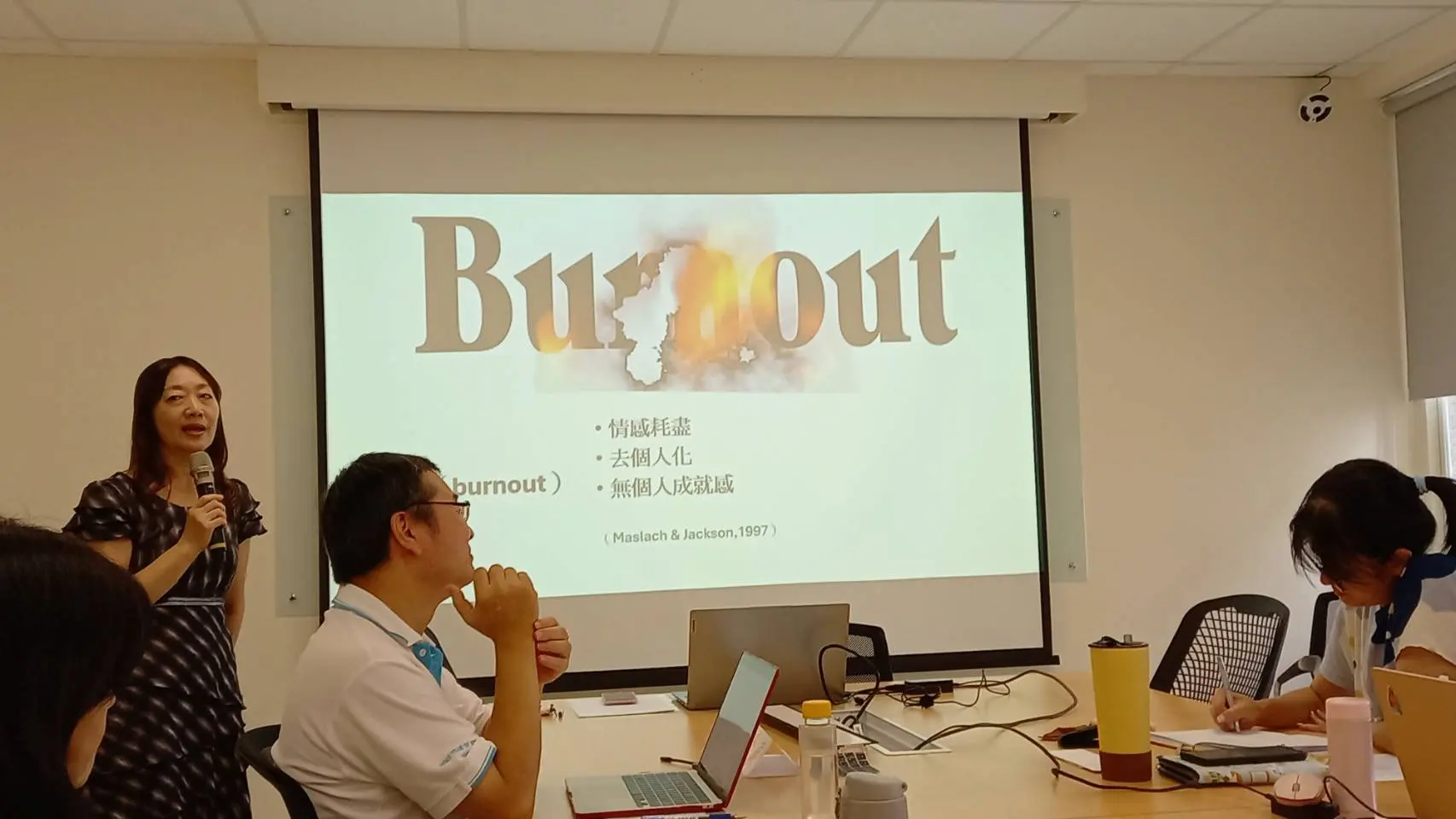
A training workshop for volunteers on professional well-being and burnout prevention, attended by participants from safeguarding-related professions
The office also offers professional guidance on sexual misconduct and other forms of inappropriate behaviour, such as workplace bullying. From time to time, Fr Lee says, they receive requests from victims or survivors, who come to them to disclose their experiences. “They seek help or advice… most of the time they do not know where to ask for help. So we offer them information, resources from the government, from the Catholic Church, or from our own office.”
“When Fr Stephen Chow became the Cardinal of Hong Kong, he invited me to train the priests and sisters there,” Fr Lee continues. “If the Bishop of Hong Kong were not a Jesuit, I would not have accepted because I am already very busy. But since it was Stephen [Cardinal Chow] who said to me, ‘John, come and help,’ I went.”
Two participants from that training later pursued further studies in the field, one in Rome and another in Manila, where the programme is also offered by the Gregorian-affiliated Catholic Safeguarding Institute (CSI). “They learnt, and they came back to Hong Kong and established an office in the diocese: a very good centre, big, with staff. So, I’m very happy about that!”
To be sure, Fr Lee’s office, while busy, is very small. “I work for this office half-time, together with two full-time paid staff members,” he says. “So, all of us are very busy—organising programmes, answering questions, making connections with different churches, not only Catholic congregations but also Protestant churches.”
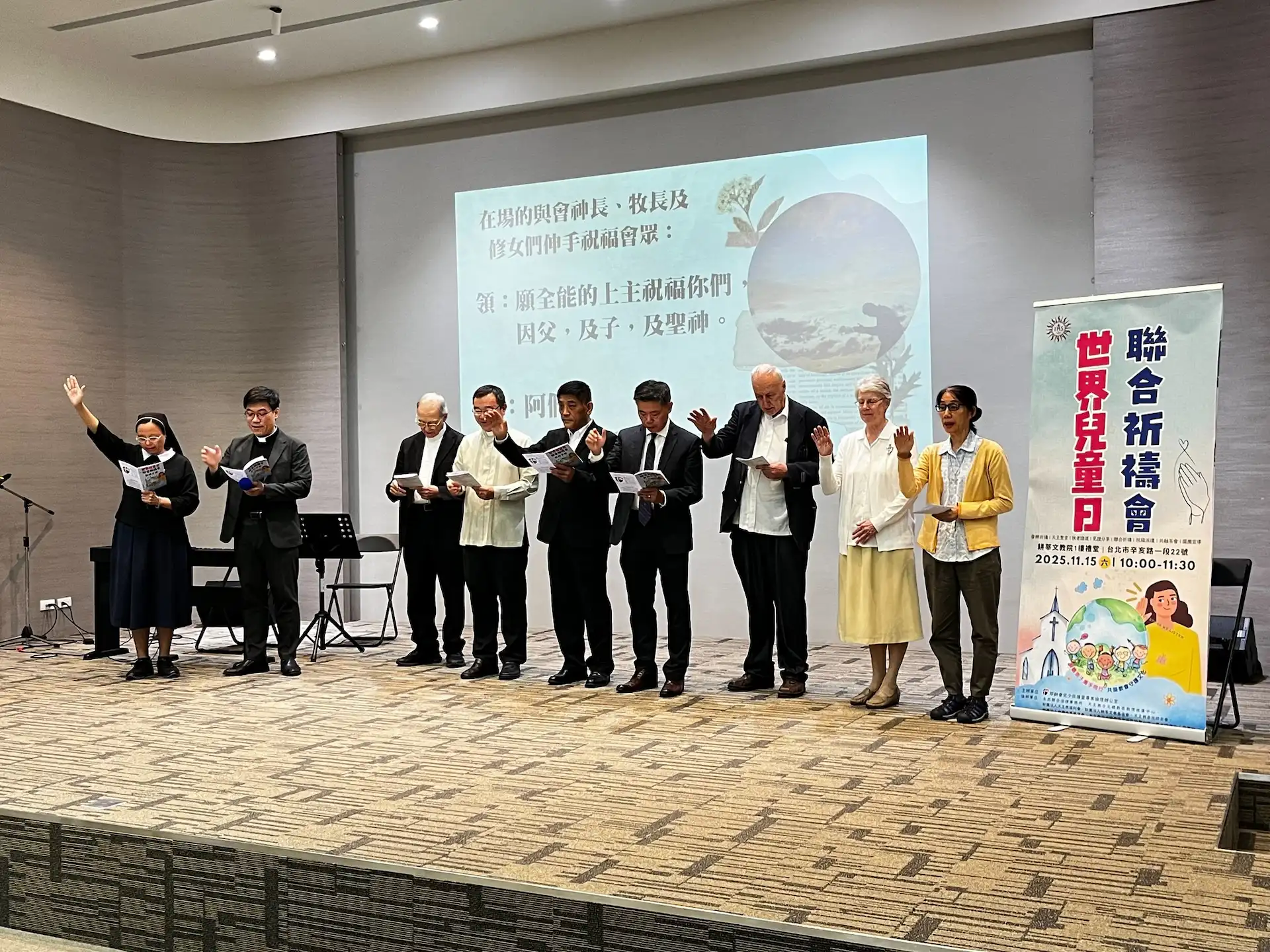
Religious leaders and children’s ministry representatives pledge unity, solemnity, and a collective commitment to the well-being of children during a World Children’s Day Joint Prayer Gathering.
As schools in Taiwan operate under civil law regulations, Jesuit schools there follow government regulations. “Of course, we ask our school directors to contact us if there is any case. They need to report it to the government, then to us. And they need to report it to me so that I know there is a case and how it should be handled. If necessary, I also write a report to the provincial,” he explains.
“When I was provincial, I dealt with some cases involving both minors and adults. At that time, I failed. I did not know what to do,” Fr Lee admits. “We were not trained. I could only act according to my own instincts. I didn’t know where to find a standard operating procedure to follow, or how to receive victims or perpetrators, or what criteria to rely on in my judgement. I had no idea. That’s why I said, ‘Okay, I will go and learn.’ And after learning, I said, ‘This is very important!’ So I committed myself to this mission.”
Despite the success of his work, Fr Lee reflects, “It was by accident that I jumped into this field. It was not in my plan. It was simply a mission I received from God. I didn’t plan it at all.”
Being led this way, Fr Lee says that he has been transformed by this mission. “More and more, I ask myself, ‘Am I safe enough for others?’ When I express my anger, I ask myself, ‘Is that appropriate, or can I find another way?’” Through this work,” he says, “I have been transformed. I feel happy about that, because I believe this is what Jesus wants me to do,” he adds with a smile.
Related story: Fr John Lee Hua becomes first priest in Taiwan qualified by civil authorities to lawfully investigate child protection cases


