
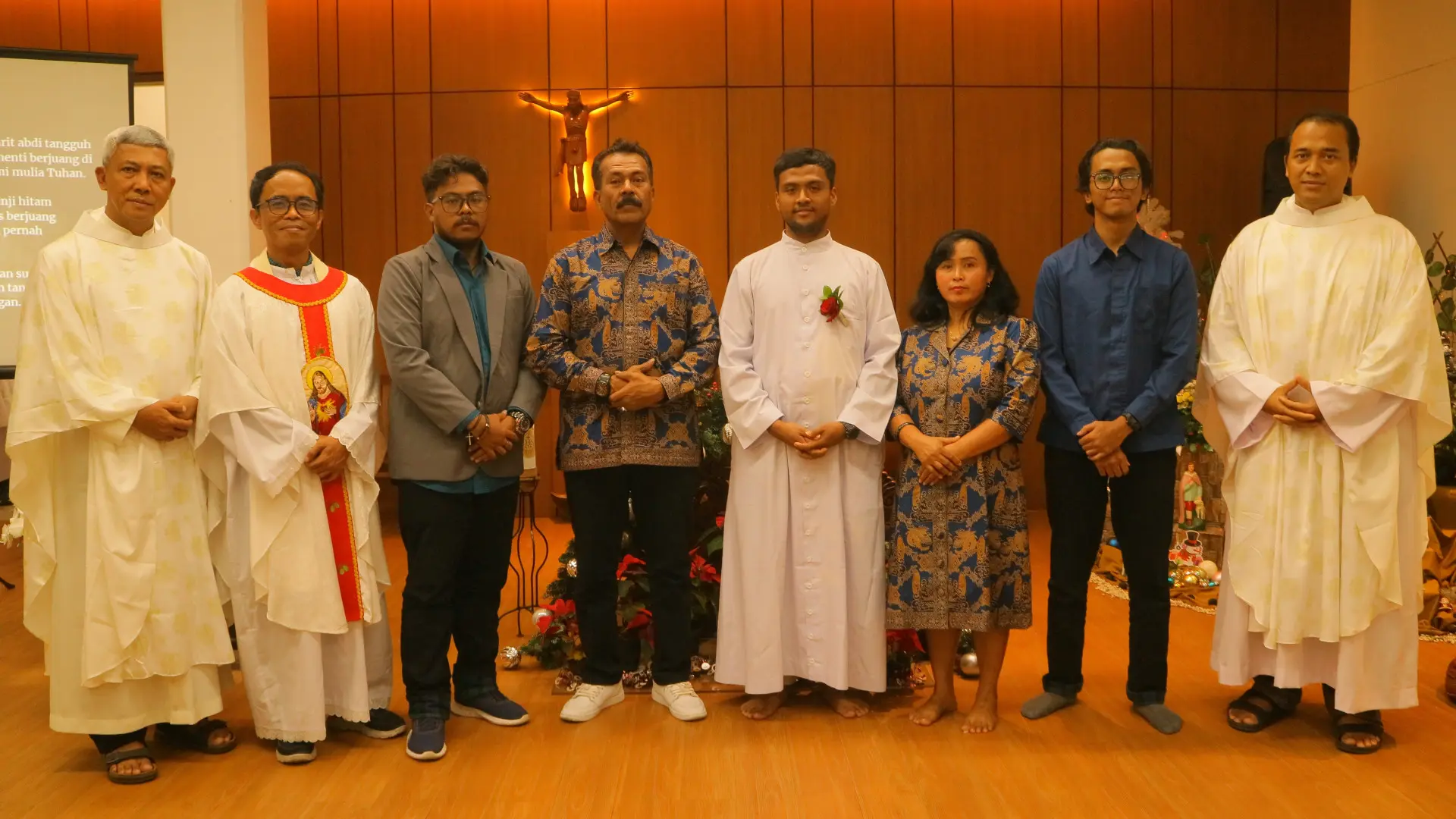
Alfa Almakios Dwi Prawira Leton SJ with Jesuits and his family at his First Vows
Sourdough is made with natural yeast derived from a water-and-flour starter. Its production is more difficult than that of other breads made with instant yeast because it demands patience and precision. However, if successful, it yields a unique flavour and health benefits.
Fr Benny Juliawan SJ, Indonesian Provincial, used this image to describe Jesuit formation during the First Vows of Alfa Almakios Dwi Prawira Leton SJ at the chapel of Hermanum College on 28 December. Six months earlier, Dwi’s nine companions had pronounced their own First Vows to the Society of Jesus.
Presiding over the Mass with Fr Augustinus Setyo Wibowo SJ, Rector of Hermanum College, Fr Juliawan noted that the formation process of a Jesuit, like sourdough, requires patience and care.
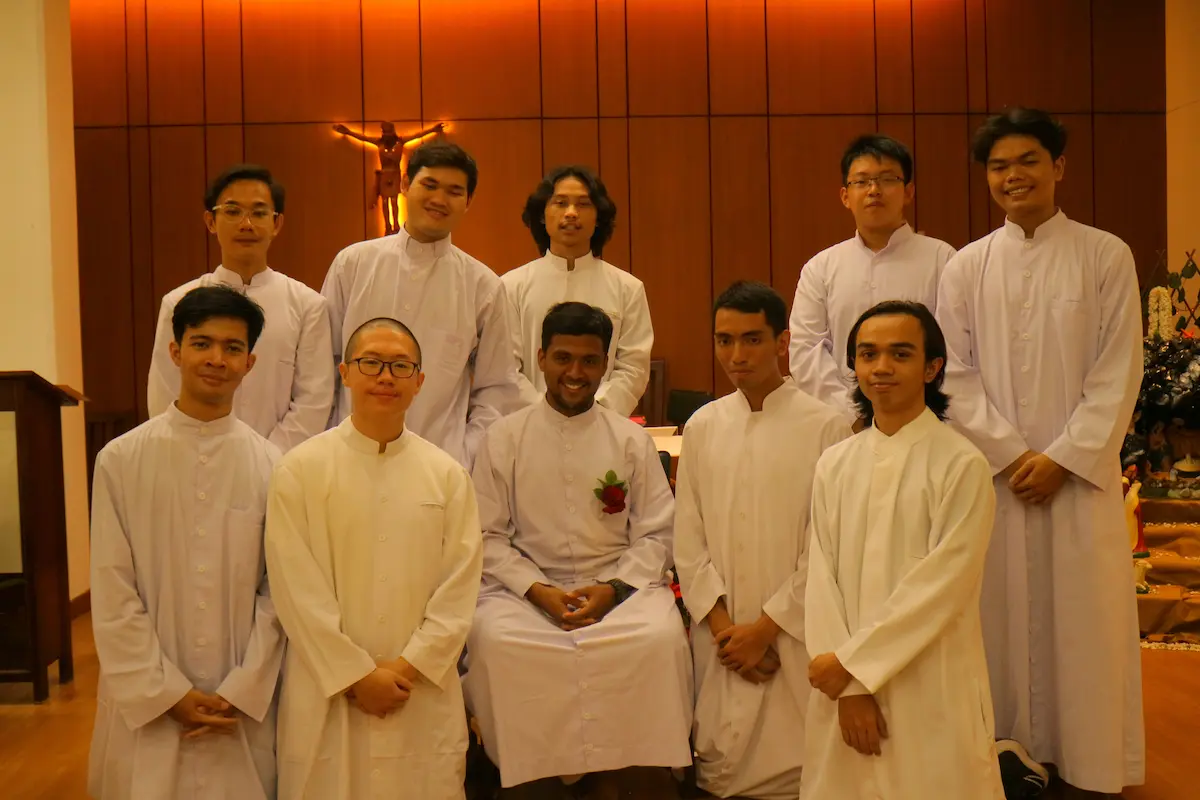
Dwi with his peers in the novitiate
After two years in the novitiate, Dwi pronounced his First Vows of poverty, chastity, and obedience, committing himself to the Society of Jesus in accordance with its Constitutions.
Unlike many other religious orders, where vows are temporary and renewed annually, those in the Society of Jesus are perpetual. The Society assesses a Jesuit’s suitability before inviting him to take Final Vows, which signify full acceptance as a member.
In modern times, the vows of poverty, chastity, and obedience might seem outdated. However, for the Society of Jesus, these vows hold deeper relevance. Jesuits recognise that worldly possessions belong to God and should be used to save souls. The vow of chastity does not preclude love; on the contrary, love encourages wholehearted service. Obedience does not make Jesuits robots but encourages them to live creatively and faithfully.
Like the flour and water in sourdough, these vows form the foundation. Jesuits “work out” their vows to nourish souls like good bread. Although the vows do not make a Jesuit holy and struggles persist, they provide direction and purpose. Jesuits must seek God’s guidance in living out these vows authentically, asking for the grace to do so according to His will.