
 How can Jesuits live and serve faithfully in the age of artificial intelligence (AI)? How do we discern when AI has permeated many aspects of human life? How does the light of Ignatian Spirituality continue to illuminate our ministry to young people, who are fascinated by technological developments? These questions guided the Scholastics and Brothers Circle (SBC) meeting, held from 22 to 30 December in Kuala Lumpur, Malaysia. Hosted by the Malaysia-Singapore (MAS) Region, the SBC gathered 43 scholastics from JCAP, as well as participants from Brazil, the United States, and Kenya, under the theme “Youth in relation to the Burgeoning of AI”.
We were warmly welcomed by the youth of St Francis Xavier (SFX) parish. Wearing traditional attire, they gave performances and shared local snacks, showcasing the richness of Malaysian culture. The atmosphere was vibrant and lively, revealing a hopeful vision of the future Church in a Muslim-majority country.
Following Ignatian Pedagogy, the SBC programme flowed through study, experience, reflection, and response. During the study sessions, Fr Francis Lim SJ and Fr Alvin Ng SJ introduced the Jesuit mission in the Malaysia-Singapore Region and their work with young people. The sessions continued with a presentation by the Chief of AI Singapore, William Tjhi, who shared about his work developing open-source language models for the Southeast Asian context. He elucidated how AI works, its hidden mechanisms, and the ways it shapes people’s daily lives. From an ethical perspective, Benedict Chang, a Singaporean theologian currently writing his dissertation on AI and the concept of Imago Dei, addressed both the advantages and challenges of AI, as well as the human responsibility behind its impact. Lively discussions added colour to the sessions, including about national-level AI regulation. William, who is also involved in government AI projects, noted that the challenges of creating regulations about AI lie in AI’s rapid and continuous development, which leaves laws perpetually outdated.
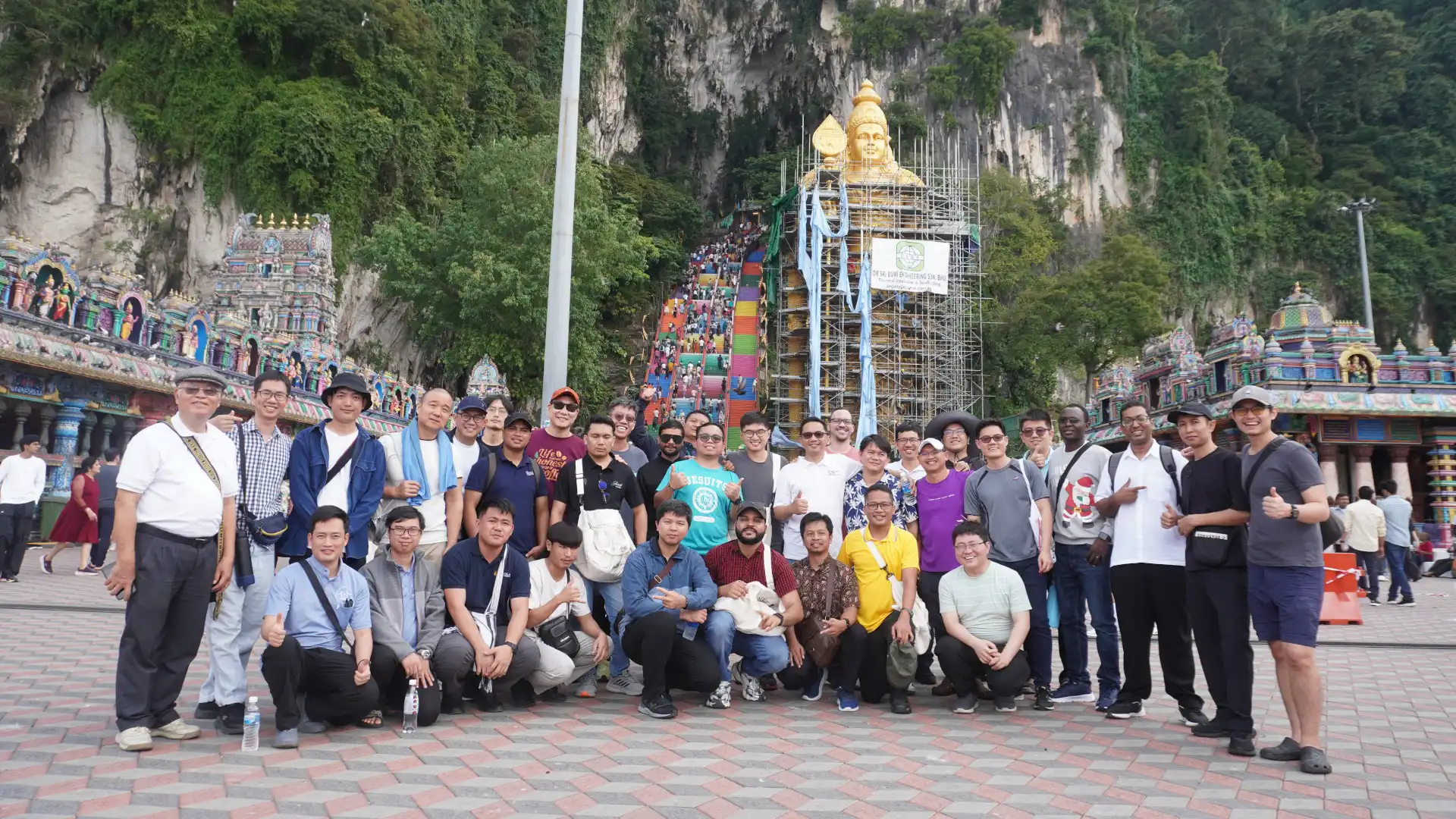
On Christmas Day, we took a break from our sessions to explore the city. Divided into six groups, we visited Batu Caves and the Chinese Temple and explored various sites in Kuala Lumpur. Some visited the National Mosque, while others went to the Twin Towers, all while strengthening bonds with fellow Jesuits.
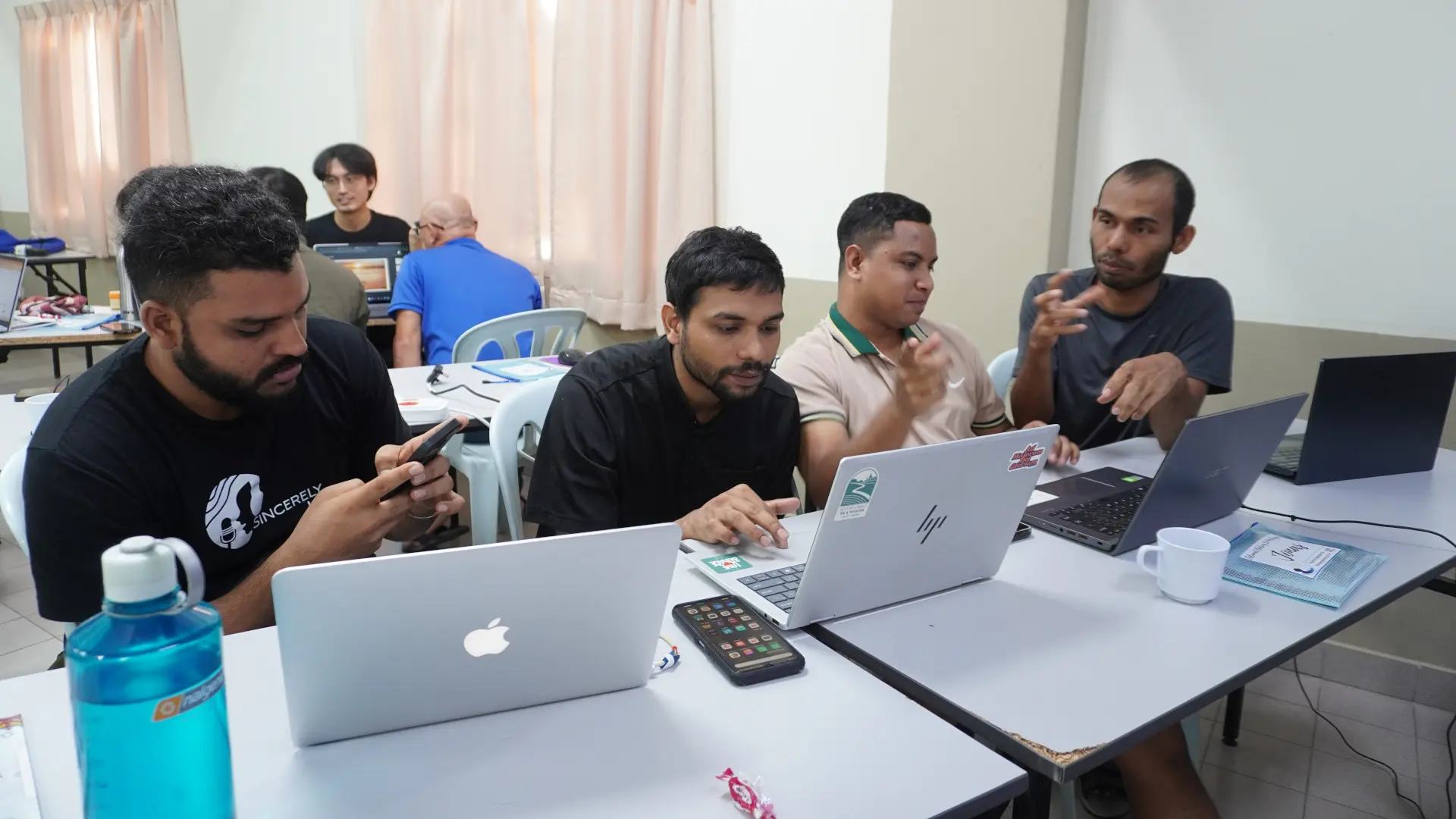
 The next couple of days focused on hands-on training as part of the experiential process. Accompanied by Darry Ma, Head of Digital Automation at CelcomDigi, we learnt how to create content using various AI tools. The final personal project was a biblical reflection, in which we interpreted a Nativity passage from the Gospel and connected it to our lives. We were struck by the reflection questions Darry posed at the end of our session: Should priests be allowed to use ChatGPT to prepare homilies? Is it acceptable for the Word of God to come from a bot?
Beyond learning how to use AI, the experiential process also included activities that highlighted “what AI cannot do”. Two of these were street feeding and an encounter with the elderly. Surrounded by the towering skyscrapers of Kuala Lumpur and notwithstanding the drizzle, we carried porridge, water, and medicated oil while seeking out the poor on the street. These encounters highlighted compassion, embodied presence, and human connection, none of which can be replicated by AI.
After being immersed in the technicalities of AI, we spent the last two reflecting on AI vis-à-vis our Jesuit identity. Fr Johnny Go SJ guided our discernment with these questions: (1) Since Jesuit ministries with the youth are closely tied to education, how do Jesuit schools respond to the rapid rise of AI with both its opportunities and challenges? (2) What is the significance of Ignatian discernment in situations where AI can provide many answers? At the conclusion of this process, Fr Johnny encouraged us not to become overly defensive critics or uncritical enthusiasts, but rather mystical discerners, who continuously seek and develop our own voices as Jesuits.
At the closing ceremony, we presented our cultures by country, including Thailand, the Philippines, Indonesia, Malaysia-Singapore, Pakistan, Brazil, Kenya, the USA, Vietnam, Timor-Leste, China, Myanmar, Cambodia, and South Korea. We ended with a gift exchange, sharing our cultural symbols with one another.
As technological advancement rapidly develops, our SBC meeting on AI and the youth served only as a springboard for deeper reflection and ongoing discernment. It invited us to respond creatively and responsibly to the development of AI while remaining firmly rooted in Ignatian Spirituality in both life and mission.