
 First of two parts
This August, something unprecedented unfolded across three Vietnamese dioceses. Three bishops—Archbishop Joseph Nguyen Nang of Ho Chi Minh City, Archbishop Joseph Vu Van Thien of Hanoi, and Bishop Joseph Nguyen Duc Cuong of Thanh Hoa—opened their doors to their priests in a way that broke with usual Vietnamese ecclesiastical custom. Not to issue instructions. But to listen, together.
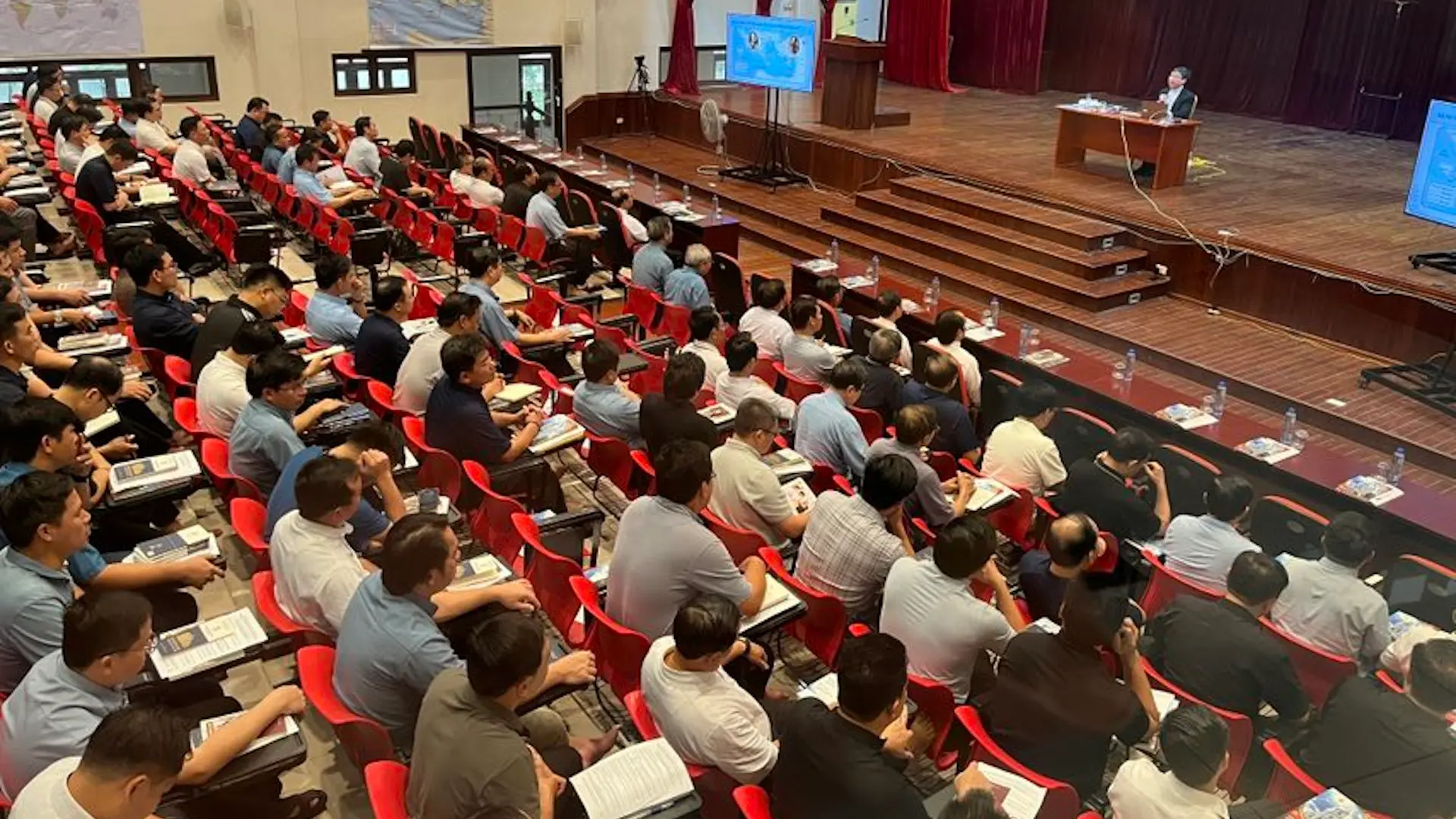
Nearly 800 priests gathered in three separate locations: 386 from Ho Chi Minh City, 216 from Hanoi, and 206 from Thanh Hoa. Leaving their parishes for a few days with an invitation: come and learn what synodality means. Come and practise it. For many, this was their first encounter with a listening Church—one where bishops and priests sit at round tables, equal in dialogue and open to listening to opinions different than their own.
The Vietnamese Center for Ignatian Spirituality (CIS/VN) had organised these conferences under the title “Synodality and Evangelisation Within the Vietnamese Church”. Everyone involved knew that in some way they would experience a glimpse into something new. A fundamental shift in how the Church in Vietnam understands leadership, authority, and the work of the Holy Spirit moving through the People of God of whom they are a part.
The timing was no accident. Just months earlier, the Catholic bishops of Vietnam had made their ad limina visit to Rome, meeting with Pope Leo XIV on 24 April. The message was clear and direct: synodality was no longer optional. During that same visit, Maltase Cardinal Mario Grech, Secretary General of the Synod of Bishops, met with the bishops and restated the Vatican’s expectation with unmistakable clarity: bishops were to learn synodality and implement it across their dioceses in “an orderly and consistent manner”.
But before Rome’s mandate could take root in Vietnamese soil, the ground had to be prepared. That preparation came through the Society of Jesus, working precisely as its mission intends, offering assistance to the local Church when bishops request it. The three dioceses called upon the CIS/VN, and the response was immediate and professional.
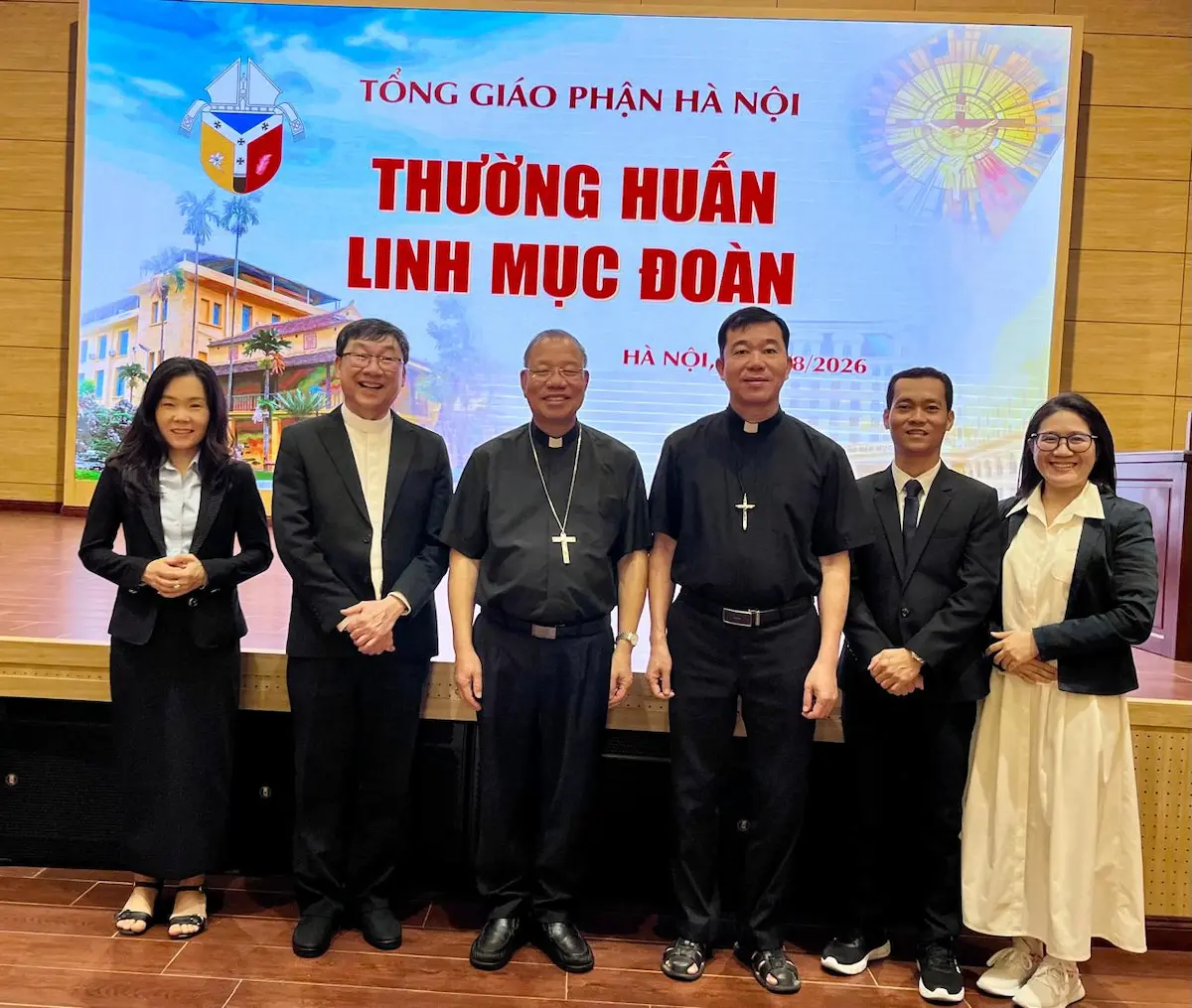
Lucia Nguyễn Thị Hoàng Lan, Fr Đaminh Nguyễn Đức Hạnh SJ, Hanoi Archbishop Joseph Vũ Văn Thiên, Auxiliary Bishop Joseph Vũ Công Viện, John Phan Hữu Sinh, and Teresa Bùi Thoại Trúc
Starting from the first of the three gatherings, Jesuit Fr Dominic Nguyen Duc Hanh, Director of CIS/VN, carried the theological foundation. At each location, he presented the history of synodality—the why behind the practice. For many priests present, this was revelatory. Synodality was not a new technique dreamed up by Pope Francis. It was rooted in the Scriptures and the practice of the early Church, developed through councils and local synods, and renewed at the Second Vatican Council. Understanding this history changes something fundamental.
This truth resonated deeply with Archbishop Joseph Vu Van of Hanoi, who captured what so many felt:
“Synodality does not begin by asking others to change; rather, it begins by allowing ourselves to be changed. Something was being discovered, not imposed.”
A surprise to most was the clear and dynamic presence of the lay members of the CIS/VN team. John Phan Huu Sinh spoke at each conference on the training and responsibilities of the table coaches—lay and clerical facilitators positioned at each round table whose task is of key importance: keep the conversation open and respectful and create the conditions where genuine dialogue could occur. Teresa Bùi Thoại Trúc brought her friendly disposition to discuss with bishops and priests their thoughts and feelings about the conference. Lucia Nguyễn Thị Hoàng Lan is a Synodality coach and lectures on church finances at CIS/VN. And Maria Vũ Phương Hồng Yến managed the logistics with precision.
The Archbishop of Hanoi captured the spirit of gratitude that flowed toward those present:
“We are deeply grateful to Fr Hanh, CIS Vietnam, and the Society of Jesus for generously giving their time to accompany and serve our archdiocese. It is a joy for us to have such a dedicated and professional team working alongside us. The way the team itself works, especially its respect for and recognition of the role of the laity, offers a compelling model of synodality in practice, one from which our priests can learn.”
What makes these three conferences remarkable is that nearly 800 priests and three bishops and their auxiliaries have now tasted what honest listening actually feels like. They know conversations and dialogue matter. They have tasted synodality as a lived practice and not as a theory.