

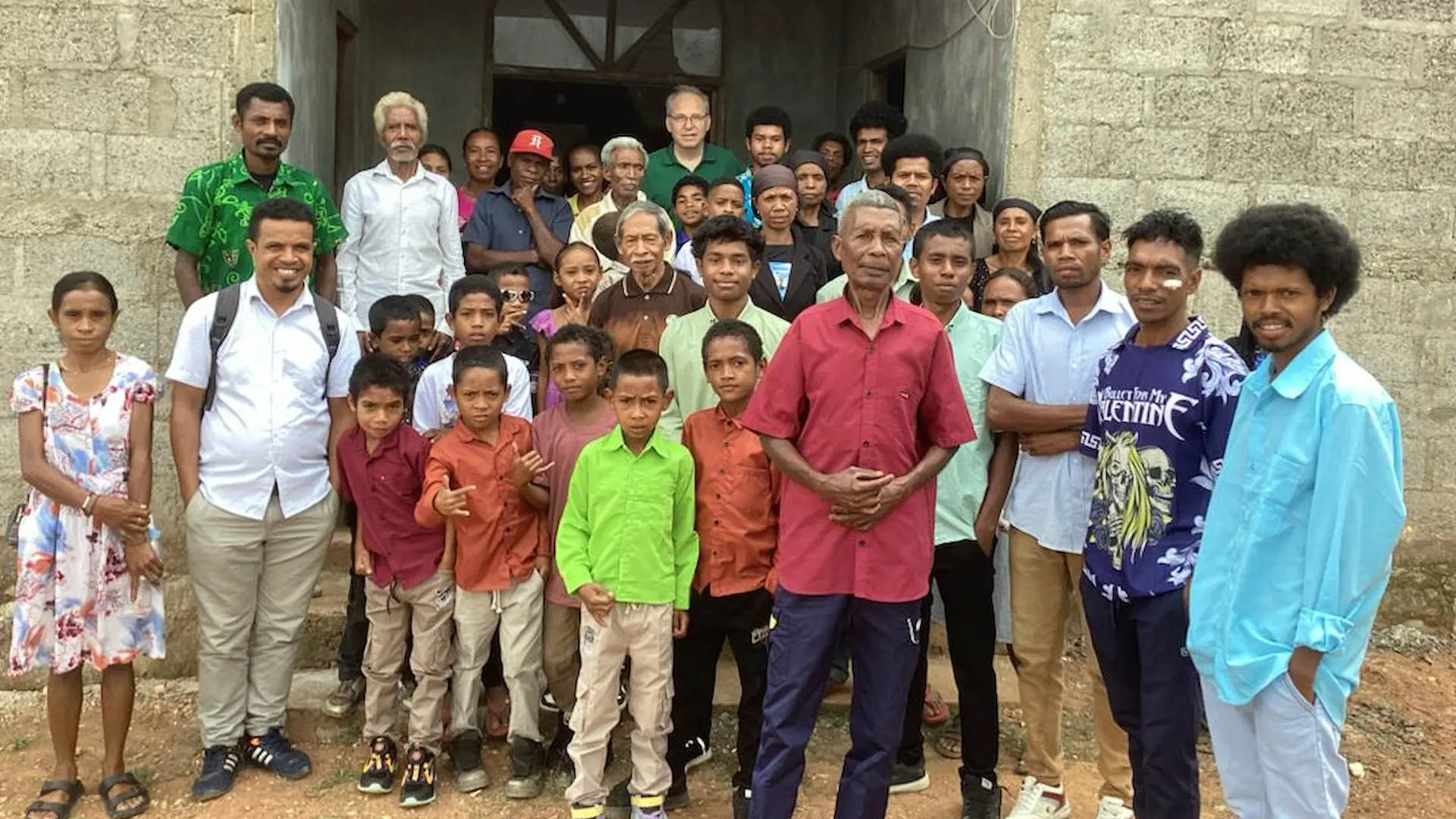
Villagers of Railaco, Ermera District in Timor-Leste; Fr Fernando Azpiroz SJ is in the back row, centre
The urgency of the ecological crisis was a hot topic at the gathering of social delegates from across our Jesuit conference. Building on discussions from the recent Migrants and Refugees Network meeting, they explored how their local efforts might ripple outward from their vision of a grounded, interconnected, and integrated social apostolate. Timor-Leste, where the meeting was being held in Dili from 6 to 9 March, served as a fitting metaphor: an emerging nation grappling with its land, people, and place in the world.
Bringing the context alive was the Jesuit mission in the country and a visit to Railaco, where the Jesuits provide pastoral care, education, healthcare, and nutrition to vulnerable communities in the mountainous Ermera district. Presentations from two notable guests provided a wider field of view. Ego Lemos, renowned musician, environmental activist, and Ramon Magsaysay Awardee, shared his programme of permaculture, teaching young people to heal their ecosystem by putting their hands in the soil.
The other speaker, Dr Rui Maria de Araujo, former prime minister and presidential hopeful, traced Timor-Leste’s 400-year path to nationhood. One of his most poignant statements was that without the support of other nations, their cause might never have been heard. This resonated with the delegates’ own raison d’être for coming together, as the meeting emphasised how ground-level ministries can contribute to interconnected networks and integrated global advocacy efforts.
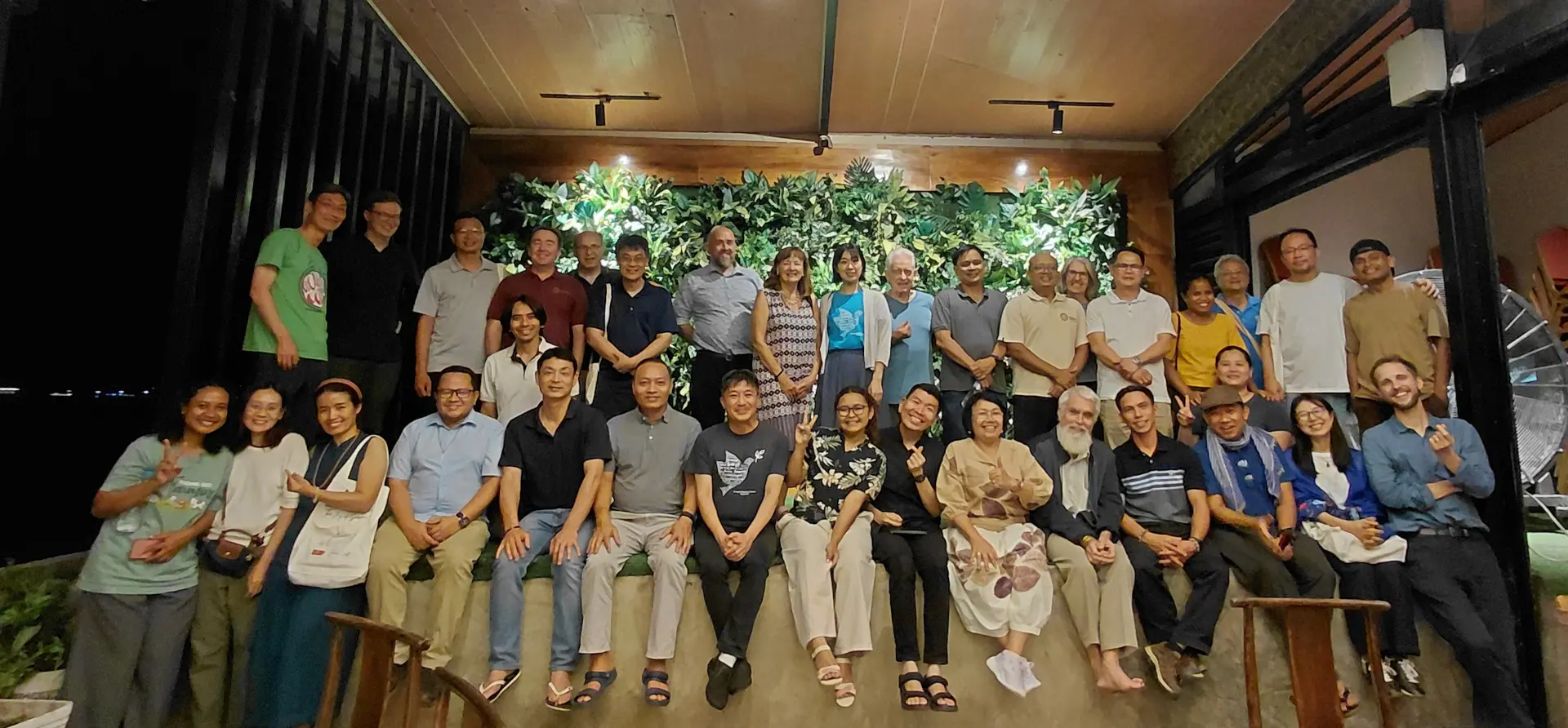
Members of the Migrants and Refugees Network and the social delegates came together for a one-day joint session
Julie Edwards, Secretary for Social Ministries, noted something striking from the start: she’d never heard so many delegates speak of connection and collaboration. “We understand we’re one and interconnected,” she reflected. But the real question is: how do we live it out?
Much of the conversation that ensued in small groups and plenary sessions wrestled with this question, seeking ways to move forward as a network. There was no dearth of examples—from Jesuit Social Services’ experience at the grounded level to their collaboration with the Environmental Science for Social Change and the work of the JCAP ecology network at the interconnected level.
Integrated models for action came from the experience of the River Above Asia and Oceania Ecclesial Network (RAOEN) and the Society of Jesus’ call to join the Jesuits for Climate Justice Campaign. Fr Roberto Jaramillo, Daniella Alba, and Fr John Kennedy from the Social Justice and Ecology Secretariat shared lessons from their COP 30 experience, with Fr Jaramillo underscoring the importance of not just serving communities but also conducting research, raising awareness, and engaging in advocacy work.
In this spirit, a new JCAP role focusing on ecological justice and advocacy was introduced to strengthen efforts. While its exact fit with other networks within the conference remains to be clarified, Edwards encouraged the group to “love it into life”.
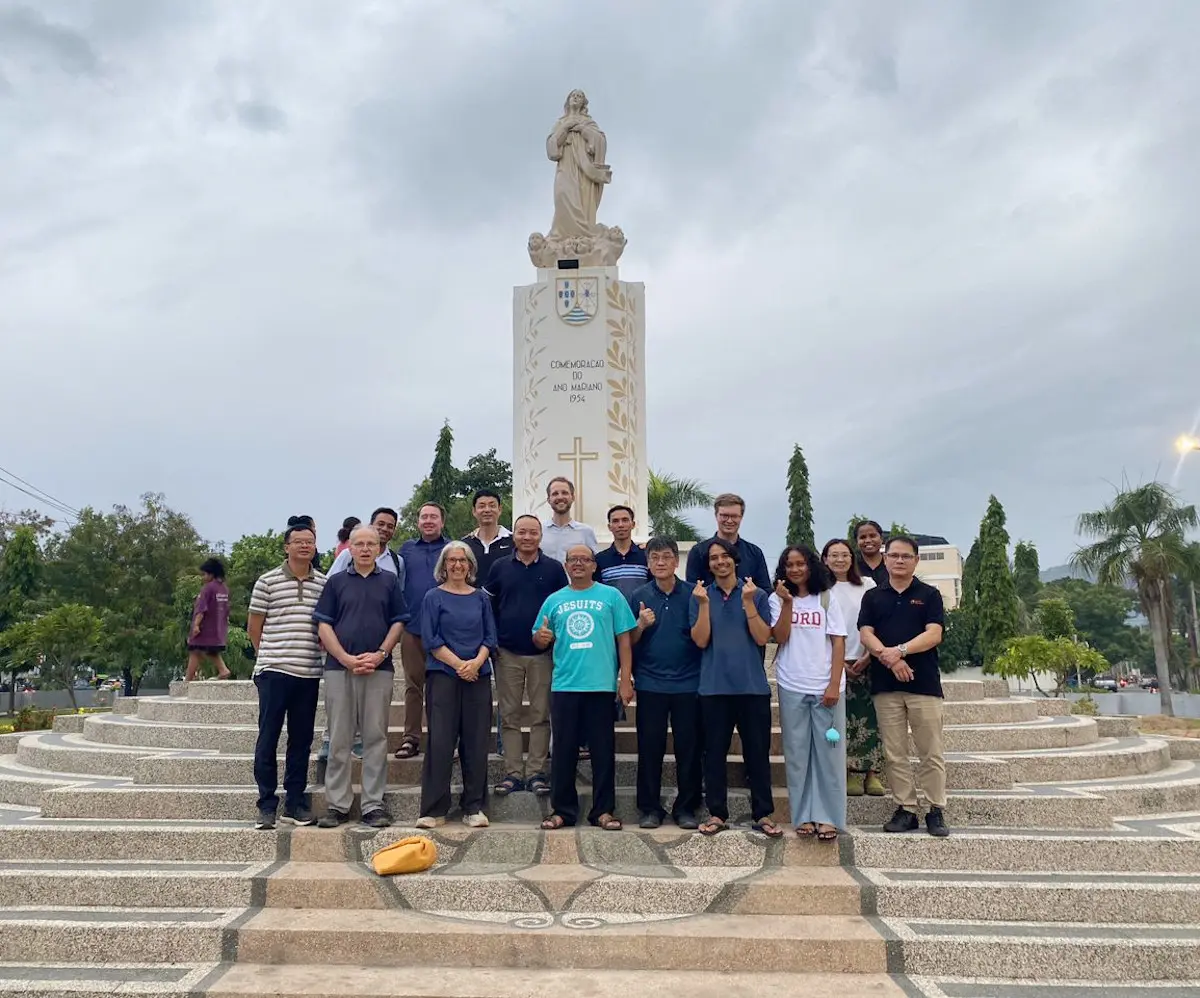
The social delegates on the last day of their meeting, standing in front of the statue of Our Lady of Lecidere across the Dili waterfront | Photo by Julio Souza SJ
As the conversations progressed, the air felt charged with the urgency of addressing the climate crisis at an integrated level and the tension to remain grounded, where the impact can be seen, smelt, heard, tasted, and felt. Ideas flowed, including forming working groups, pursuing key partnerships, and sustaining dialogue. One suggestion was to see the three levels as a continuum, three ways of belonging to ensure that no one is left behind.
Fr Fernando Azpiroz noted that the process of discernment in common means accepting frustrations and recognising discomfort. In the forest image of the social apostolate, he reminded them, “We are not the only trees in the world.”
In the end, “Leadership is up to each one of us,” said Fr Jun Nakai. And as the meeting drew to a close, Edwards’ parting words to the delegates were to “keep heart and make our way steadily with trust and a real fire in our belly”.


