
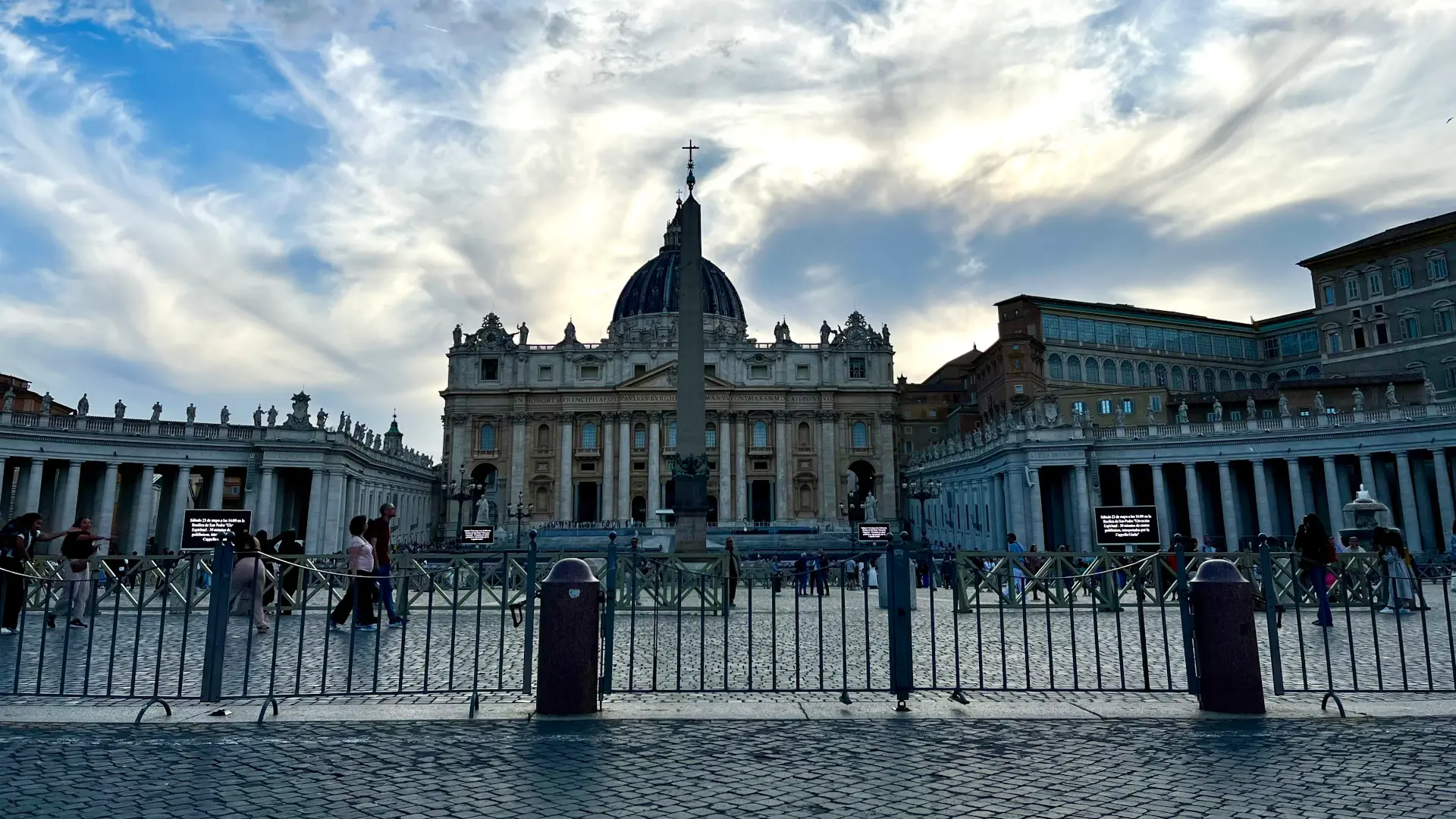
 I am obliged to make a trip once a year to attend a meeting at the Jesuit curia—the headquarters of the Society of Jesus in Rome—which is located on the Borgo Santo Spirito just around the corner from the Vatican. Droves of tourists come to this area to visit St Peter’s Basilica, the mothership for all Catholics and, for everyone else, truly a sight to behold. Thus, it is often crowded, dirty, and noisy, beset with audacious and plump seagulls waiting to swoop in on some hapless tourist’s lunch.
When in Rome, I tell myself I am not a tourist; I am a pilgrim. There is a practical reason for my long journey as well as a spiritual one. Above the din of a dozen different languages simultaneously spoken, I line up patiently to enter the basilica, meekly surrender my water bottle at the security check, and try my best not to be hassled by the sheer number of people there. True consolation comes upon me as I pass through those gargantuan doors, that wave of relief from the baking heat outside, and then inevitably, the goosebumps, not only from the sheer size and beauty of this church but also, more than anything else, from a deep sense of the divine. Here is God’s house.
This year, the timing of the annual meeting of conference delegates with the General Curia Communication Office could not have been better. Rome is not as crowded as it is during the summer; in the springtime the air is cool and crisp. In the third week of May, I joined five other delegates from the different Jesuit conferences from around the world to meet about all things related to our work in communication. We also share snacks from our home countries and swap stories about our families and pets, enjoy a great dinner together, and participate as best we can in the programme thoughtfully planned by the General Curia Communication team.
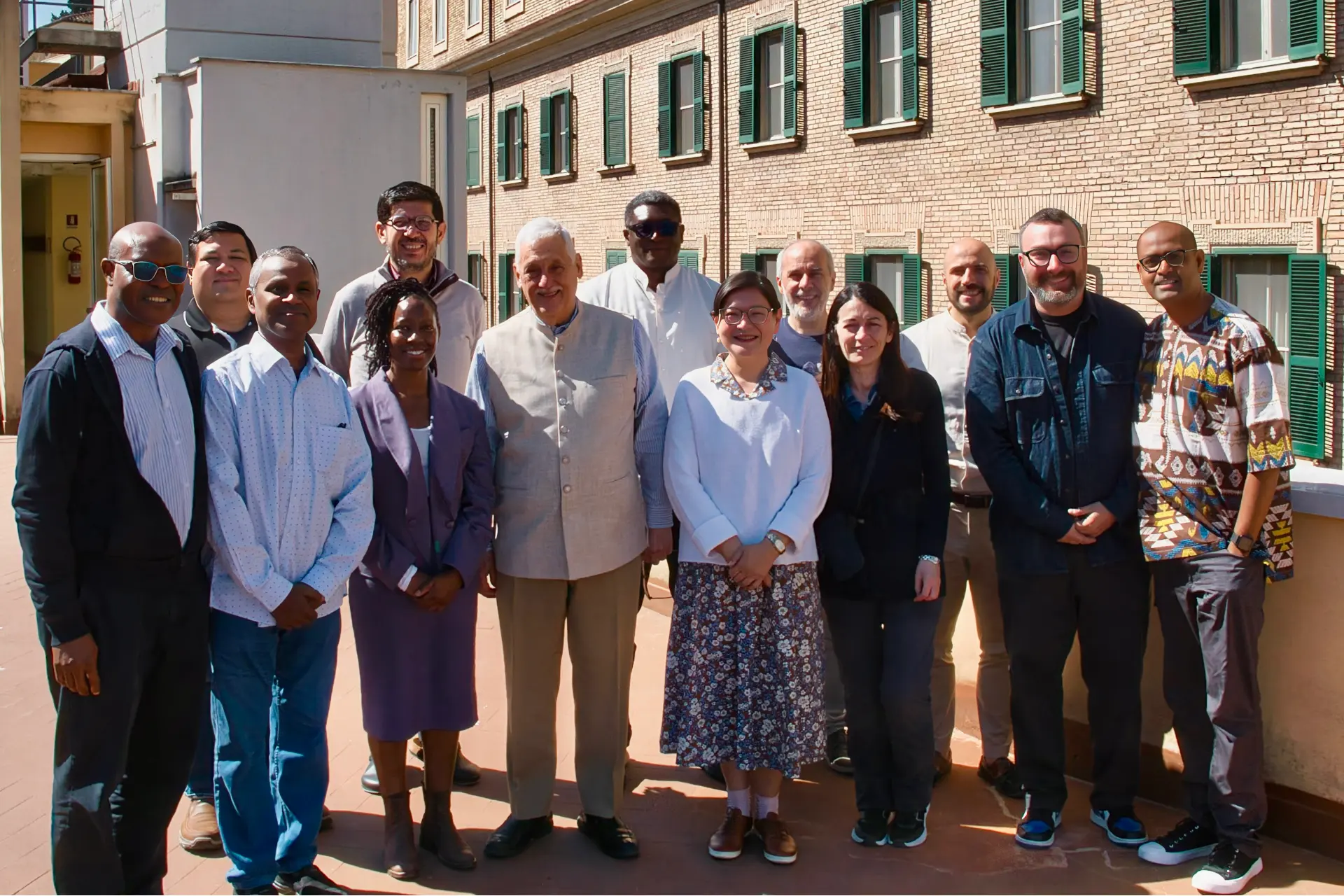 As the delegate from Asia Pacific, I probably travel the furthest, going from the Philippines, transiting through the Middle East, and landing in Rome more or less twenty-four hours later. The Jesuit curia, where we are graciously hosted, brings huge consolation and comfort after such a long trip. The mother house is a universe in itself, and I am constantly lost in its hallways. But once I had gotten over the jet lag and had visited St Peter’s, I was fortified and ready to share our best practices, discuss the challenges we face, and think of ways we can collaborate better with each other.
The group is a mix of Jesuit fathers and laypersons, each bringing a unique contribution to the table: from the media training of scholastics in India, to the creative workshops centred on Ignatian spirituality from the United States, to the strong brand identity developed in Latin America, reflecting and representing their own vibrant mix of cultures. I have come to appreciate more the work of my colleagues from other parts of the world, where their own contexts shape the way they approach the mission. Our context in Asia Pacific is one of diversity and plurality—they are not the same thing, as Cardinal Stephen Chow SJ of Hong Kong once noted—and I believe our perspective of living together in harmony, despite differences in language, culture, and religion, is significant in the world today.
Despite his busy schedule, Fr General Arturo Sosa always finds the time to address our small group and to answer questions during this annual gathering. On the second day of this year’s meeting, Fr General pointed out that we as communicators are at a crossroads of the Jesuit charism and technological change, as well as fidelity to our identity as we engage in the digital space. Once more, Fr General Sosa invited us to go to the frontiers, “where maps are no longer useful, places of risk”, and reminded us that we are called to take risks. He asked us how to maintain ethical communication and admonished us to stay credible, truthful and courageous, committed to the truth even when uncomfortable, and to innovate in our work. Also, he gave us a consoling message: “You are engaged in a Ministry of Hope,” he said, where we must “encourage dialogue, invite reflection, inspire a deeper encounter with God.” Fr General’s invitation is for us to “take a prophetic approach, which takes inspiration from the Word of God”.
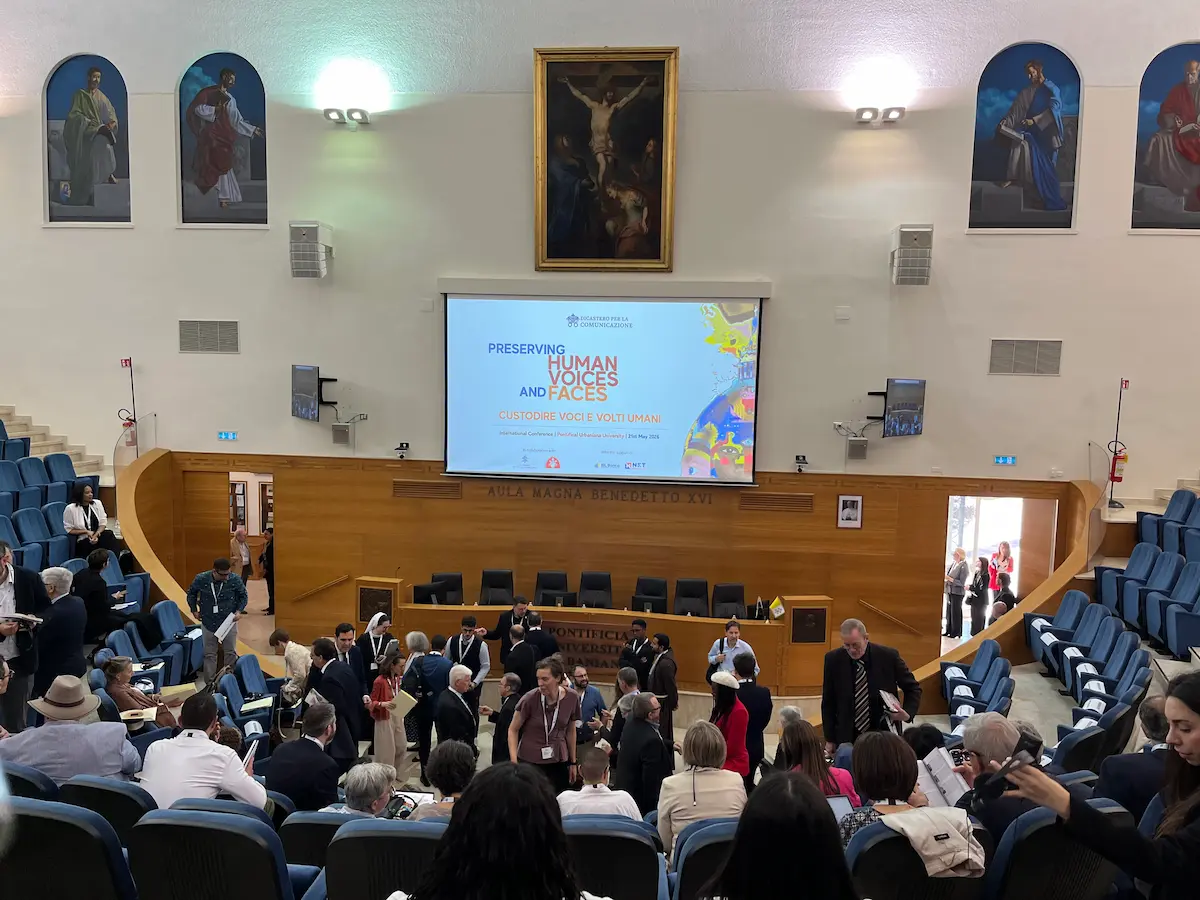 Armed with this advice, on the third day we trooped over to the Pontifical Urbaniana University, which overlooks the Jesuit curia, to attend an international conference organised by the Vatican’s Dicastery of Communication to mark the 60th World Day of Social Communication. Billed “Preserving Human Voices and Faces,” the conference included a lineup of top-notch speakers, all experts in their fields, from technology, education, journalism, computer science, engineering, sociology, and communication. While artificial intelligence was the prominent feature of all the sessions, the conference also focused on the human aspect of living with AI. Instead of mere information overload and a spate of new terms, the underlying message is that we are in an age where to see is no longer to believe—and that it is essential to emphasise critical thinking, to stay connected to other people by collectively organising ourselves as we advocate and build counternarratives that keep us grounded in our humanity.
The conference was indeed timely because on 25 May, Pope Leo XIV’s first encyclical letter, Magnifica humanitas, was released. It opens with this statement: “Humanity, created by God in all its grandeur, is today facing a pivotal choice: either to construct a new Tower of Babel or to build the city in which God and humanity dwell together.” Today it seems the whole world—not just the Catholic church—is talking about it. Circling back to Fr General Sosa’s encouragement to take a prophetic approach, his words on discernment provide another deep consolation. Discernment, he said, is an exercise of listening. “Listen to the Spirit,” Fr General told us with his characteristic directness. “What are the signs of the times? Listen to the reality that surrounds us, read the signs of the times, and confront the reality. Receive the message… be convinced, and share it!” These are words we carry in our minds and hearts—united in the mission as we come back to our far corners of the world.