

Floods have devastated Cambodia since August and at the beginning of October had affected 1.2 million people. Tess O’Brien, a volunteer with Jesuit Refugee Service in Cambodia, provides an update.
Driving from Phnom Penh to Siem Reap, water stretches out as far as the eye can see. Lush rice paddies have been transformed into a calm, murky ocean whose surface is only interrupted by palm trees and the occasional tin rooftop. You have the sensation that the entire country has been transformed into an enormous floating village. However, the seemingly peaceful landscape is misleading. Water, the giver of life, can just as easily take it away.
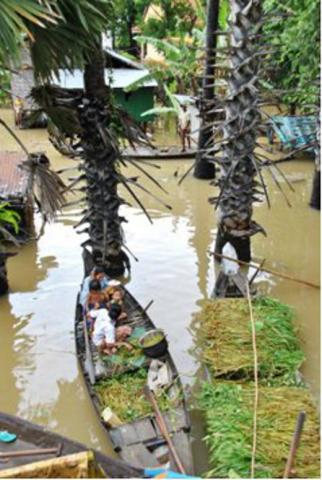 Since August, Cambodia has been experiencing its worst natural disaster of the past decade. Devastating floods throughout 19 provinces have claimed 207 lives, 52% of which are children, and affected 1.2 million people.
“Many homes have been completely destroyed. Some people are living in the pagoda, others are with their brothers and sisters,” said Srey Mom, director of Metta Karuna Jesuit Service Siem Reap. “Just yesterday in a community where we work, a family’s boat tipped and the entire family of six drowned. Stories like this are coming in every day.” According to the latest statistics released by the Cambodian Disaster Relief Committee, nearly 22 000 families are displaced in Siem Reap Province alone.
The floods have been particularly devastating in Kompong Goe where Fr Jup is the community parish priest. The lower level of every single house in the community is submerged in water and seven families whose homes have been completely destroyed are now living in the church’s kindergarten. Pumi, a Spanish volunteer working with JRS, predicts more families will seek refuge in the church as the floods continue.
In a country where the majority of its people are dependant upon their own cultivation of rice and crops, the real impact of the floods has yet to come. According to the latest government figures, 150,000 hectares of rice paddies have been destroyed and an additional 200,000 hectares remain flooded and at risk of being lost. As a result, the people in Cambodia have a very hungry season ahead.
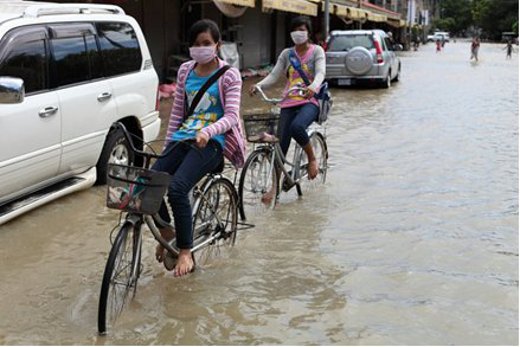 The Cambodian Disaster Relief Committee is coordinating the efforts of many local NGOs, including the Cambodian Red Cross, to implement a comprehensive disaster relief program. Emergency supplies continue to be distributed to the worst affected areas but there are still thousands of people in desperate need of support. Caritas has been distributing food, drinking water and temporary shelters, bringing relief to 7,000 families in six provinces.
Some international aid has also begun to roll in from the World Food Program and the Asian Development Bank, but certain NGOs are critical of the government for not having launched an international appeal for aid.
JRS workers have been spending time in flood-affected areas, particularly in the villages, accompanying those in need.
“If we get donations, we would like to try to focus on the vulnerable people in the areas really in need,” said Sr Denise Coghlan, JRS Cambodia Director.
Mercilessly, the rain continues to fall but the Cambodian people are resilient. Unable to tend to their crops, people now kayak through the rice paddies with their fishing nets. Makeshift elevated walkways, made with planks of wood, plastic bottles, sticks, whatever materials are at hand, link peoples’ homes to land not yet submerged in water. People are adapting as best they can to the challenging circumstances.


