

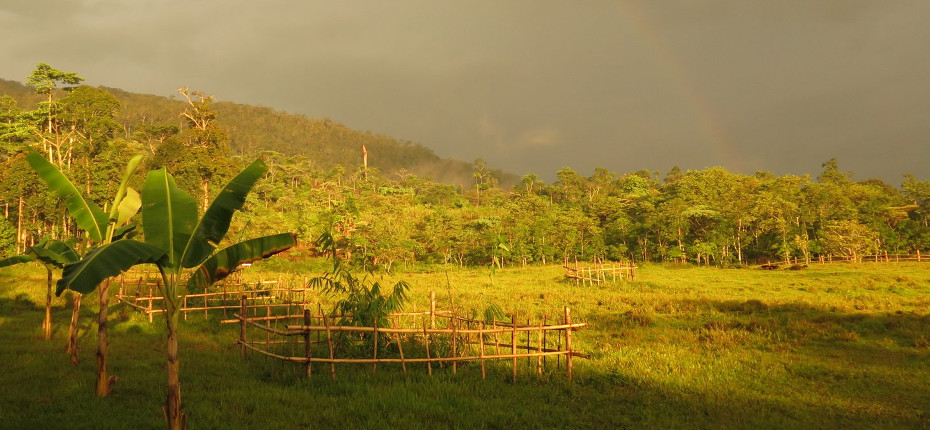
 It meant three days with no Internet connection or cellular phone signal, but 35 people from 10 countries within the Jesuit Conference Asia Pacific (JCAP) happily gathered in a rural part of the Philippines for an ecology workshop in early June. They worked together, shared experiences, and developed 60 joint actions for strengthening networks, collaboration and communication as communities of practice.
They acted as one during the local exchanges and sessions despite coming from very different contexts – Jesuit social, pastoral, and education apostolates, the local diocese and archdiocese, and a local community group of teachers and youth. The search for peace and human development in the Philippine Jesuit Province’s “Roadmap of Mindanao” helped all to connect.
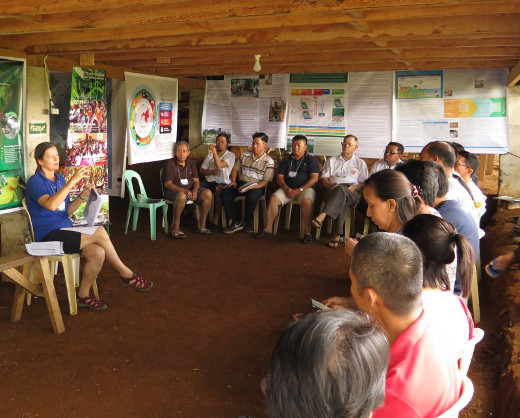 They were inspired by the workshop’s emphasis on beginning with gratitude and reflections on the letter of Father General Adolfo Nicolás SJ in preparation for the 36th General Congregation, the calls “to accompany vulnerable migrants, refugees, indigenous and homeless people”, “to care for both our human and natural environment” and “develop sustainable ecological and social practices both within our Jesuit communities and apostolates”. This affirmed the objectives of the first JCAP Reconciling with Creation Reflection workshop held in Bendum, Bukidnon, from June 6 to 10.
 Each morning, Bendum’s clouds inspired gratitude and depth in reflections on Laudato si’. Engagements with children in their simple classrooms, with the youth in the regenerating forest, and with farmers on their degrading land reminded all of the complex social and environmental realities. The Tribal Council’s message of peace and the children’s gifts of salay, luko and bukana opened participants to “draw courage and strength from those who suffer yet live with hope”.
The modest venue allowed for hearty and practical discussions of challenges in constructing new buildings and common experiences of sharing designs with ecological accountability, as well as the importance of a green building code.
 Reflecting on self and social inclusion helped in understanding how important it is to have a list of commitments, to acknowledge how difficult it is to change, and to find joy in being more accountable.
Sharing on apostolic action and youth inspired possible long-term engagements with the Sustainable Development Goals (SDGs) and the Intended Nationally Determined Contributions (INDCs) of COP21 Paris to integrate these global strategies more deeply in local apostolates and mission and at the margins.
Discussing concerns of science and society opened ways to become part of a global strategy of deep reflection and lived actions. It was acknowledged that even as people work with local apostolic commitments, there is a great need to be further informed of the breadth of ecological concerns. For example, even though there is limited involvement in advocacy for the oceans, overfishing was cited as an ecological challenge.
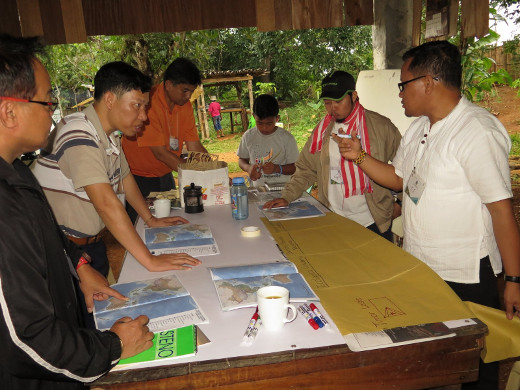
Nurturing a community of practice for reconciling with creation helps foster a more effective network for justice. If we can collaborate in Asia Pacific and people know what the different apostolates are doing even if the actions are small, then connecting with the global is workable. The active engagements from which the participants came were depicted in the JCAP map of ecological concerns, and they were asked to draw relationship lines from the more than 30 ecological concerns shown. The result was a visual representation of 60 action points that can be done together. Renewed life and mission is giving depth to ecological action.
The workshop is titled A Call to Share Transformed Lifestyles for Action and the participants acknowledged that this action has to come from within and that it is deep. The openness and willingness to commit as persons, not just as professionals, as job seekers, or as project implementers, was most striking and significant.
As JCAP President Mark Raper, SJ wrote in his welcome message, “Given the enormity of the environmental challenges, we know that what we can do may never be enough. Find motivation in the knowledge that all humanity is affected, most especially the poor… We have a base on which to build.”
Related story: Transforming lifestyles for greater social and environmental action


